


The BioCoherence Blog
BioCoherence 26.35
주요 사회적 업그레이드: 게시물 및 쇼케이스, AI 도우미 배지, 소셜 미디어 기능, 그리고 팔로우 시스템. 보상, 이정표, 및 장치 간 클라우드 동기화를 포함한 새로운 홈페이지 덱. 무료 체험, 더 스마트한 초대 코드, 및 개선된 구독 관리. 더 빠른 시작, 더 강력한 클라우드 신뢰성, 그리고 수많은 UX 개선. Read the newsBioCoherence 26.34
대규모 콘텐츠 업데이트: 4,400개의 새로운 가이드 명상, 886개의 TCM 레시피, 그리고 수백 개의 새로운 기본 프로그램. 자동 조화 세션, 더 나은 평가 및 맞춤 추천이 포함된 더 스마트한 기본 프로그램. 모든 사람을 위한 더 많은 접근: 200개의 프로그램 잠금 해제, 무료 체험 제공. 성능 및 사용자 경험 개선: 더 빠른 시작, 더 나은 온보딩, 클라우드 구독 동기화... Read the newsBioCoherence 26
버전 26이 출시되었습니다! • 새로운 인터페이스와 더 빠른 탐색 • 크로모테라피 및 실시간 바이오마커 시각화 • 새로운 하모나이저, 업데이트된 침술 지도 • 기본 프로그램의 주요 확장(개인 평가 포함) • 맞춤형 AI 음악 생성 • 개선된 AI 도우미, 통찰력, 번역 • 수백 가지 최적화, 안정성 및 화면 꺼짐 수정 • 새로운 언어(히브리어 추가) Read the newsSummit 25 videos, Summit 26 pre-booking
Dear Friends,
BioCoherence 1.32
Read the news
BioCoherence 1.31
BioCoherence 1.30
실시간 인앱 알림, Play 홈페이지의 새로운 코드 시각화, 그리고 토스트 스타일 시스템을 통한 더 스마트한 알림. 탐색 동기화는 이제 기본적으로 원활하며, "마지막 저장자" 정보와 자동 클라우드 저장으로 협업이 더 명확해졌습니다. 또한, 많은 수정 및 최적화가 로딩 속도, 화면 레이아웃 및 전반적인 사용자 경험을 개선합니다. Read the newsBioCoherence 1.29
새로운 QR 코드가 포함된 보편적인 링크, 앱 내 알림 및 온라인 미리보기가 공유 및 온보딩을 그 어느 때보다 쉽게 만들어 줍니다. 개선된 클라우드 동기화, 하모닉 부스트 재생 및 전문가와 사용자를 위한 스마트한 알림이 추가되었습니다. 가족 청구, AI 추천 부스트 및 세련된 비주얼이 업데이트를 완성합니다. Read the newsBioCoherence 1.28
새로운 도움말 센터와 Q&A 및 650개의 비디오 답변 - 사전 계산된 하모닉 부스트: 화면 꺼짐 상태에서 미디어 제어 기능 사용 - 새로운 사례 보고서 양식, 업데이트된 재생 홈페이지 - 개선된 연락처 및 프로그램 공유, 초대 코드 옵션 - 새로운 사용자를 위한 소개 팁, 오프라인 모드 개선 Read the newsBioCoherence 1.27
실시간 알림과 새로운 알림 센터 - 범용 링크를 통해 프로그램 및 초대 공유 - 보고서에서 스크린샷 주석 추가 및 관리 - 새로운 발견 흐름을 통한 안내 툴팁 - 새로운 키 입력, 메뉴 및 상황별 도움말 - 개선된 클라우드 협업 및 오디오 내보내기 Read the newsBioCoherence 1.26
새로운 글로벌 일관성 점수 (0—100)로 더 나은 추적 - 향상된 곡선, 꽃, 진행 통찰력을 위한 타임라인 - 바이오마커 및 자극을 위한 새로운 AI 도우미 (Pro) - 가족 구독 가능 - 내장된 자극을 갖춘 재설계된 기본 프로그램 레이아웃 - 인터랙티브 신체 지도: 확대 및 교차 맵 탐색 - 새로운 메뉴, 툴팁 및 단축키로 더 부드러운 탐색 - 27개의 새로운 심리 자극 사운드 향상 - 성능 개선 및 버그 수정. Read the newsIntroducing IC, the Integral Coherence score
Introducing Integral Coherence (IC): A New Milestone in BioCoherence
With version 1.26, BioCoherence takes a major leap forward with the introduction of the Integral Coherence score—IC for short. This new feature represents the very essence of what BioCoherence stands for: a unified, systemic understanding of your energy, body, and mind.
To activate it, simply go to Settings > Experimental, and enable "Show Integral Coherence score." Once activated, you'll find the IC score beautifully displayed at the center of each BioCoherence flower.
What is IC?
IC is a renormalized coherence score built on the foundation of our previous internal coherence metrics. But this time, we've made it universal—translating complex internal values into an easy-to-read scale from 0 to 100.
Behind the scenes, this transformation is powered by deep learning models trained on hundreds of thousands of data points across thousands of ECG recordings. For each biomarker, family, and type, we've computed thousands of internal coherence scores to ensure that the IC reflects a deep, data-driven understanding.
Why does it matter?
The IC score offers a powerful new way to track your overall systemic coherence. It reflects:
Internal qualities such as energy, agitation, attention, intention, and long-term vision.
External relationships like energetic exchanges with other systems, and the strength or fragility of those links.
Whether applied to a single biomarker, a family, an evaluation, or an entire exploration, IC captures the fundamental quality of coherence in the system being analyzed.
In some specific contexts—like problematic micro-organisms, negative emotional patterns, or restrictive forces—the IC may be computed using alternative algorithms or presented with a different computation, making it contextually relevant and meaningful.
A Name That Speaks Volumes
Pronounced "I see", the IC score encapsulates its purpose: to offer clear vision into your inner coherence and your ability to connect meaningfully with the world. It expresses both your inner vitality and your capacity to relate, help, and engage.
Track Progress Easily
With every new recording, the IC score can be re-evaluated and visualized over time through an intuitive progress curve. Its consistent 0–100 scale makes it easy to monitor change:
empty: Not computed (you can always recalculate a recording to compute the new IC score)
0–30 (Red flower center): Very low
30–70: Normal
70–99 (Green flower center): High — the "Resources" territory
See the Big Picture: The Global Flower
IC is also tied to the new Global Flower visualization, which presents an energy and agitation density chart. Each of the eight petals grows in proportion to the distribution of biomarkers—giving you an at-a-glance view of your system's balance and progress after each evaluation.
For each complete exploration and each of its parts (through re-evaluations), a global IC is computed that reflects the overall Integral Coherence of all biomarkers at the moment of the measurement. This gives you a clear, actionable way to track overall progress and state, with a global progress curve now added on top of the Progress section.
Integral Coherence is not just another metric—it's the heart of the BioCoherence philosophy: seeing clearly, connecting deeply, and evolving purposefully.
Ready to see your IC? Update to version 1.26 or higher (or 1.25.14 or higher on beta) and activate it in Settings.
Read moreBioCoherence 1.25
대규모 업데이트! 300개의 새로운 프로토콜, 1100개의 설명, 1500개의 바이오마커 매치, 그리고 목표 균형을 위한 새로운 "구조 공명" 카테고리. AI 헬퍼가 이제 기본 프로그램을 구축하고 맞춤화하며, PDF 결론을 작성하고 귀하의 이력을 기억합니다. 프로 온보딩은 쉬운 초대 코드로 더 원활해졌습니다. 새로운 프로토콜에서 ATP, 유전자, 효소 등을 발견하십시오. 미리보기: 프로 디렉토리, 교육 플랫폼, 확장 마켓플레이스 및 예술 갤러리가 곧 출시됩니다. 게다가, 게임화 및 더 스마트한 리소스를 향한 첫 단계도 포함되어 있습니다. Read the newsA Breakthrough Nature Study
The recent study titled "Acoustic modulation of mechanosensitive genes and adipocyte differentiation" published in Nature Communications Biology , presents compelling evidence that audible-range acoustic waves can directly influence gene expression and cellular behavior in mammalian cells. This research holds significant implications for the validation of BioCoherence—a concept proposing that biological systems exhibit coherent, wave-like behaviors that can be modulated or entrained by external physical stimuli.
1. Demonstrates Sound as a Biological Modulator
The study confirms that audible-range acoustic waves can induce mechanosensitive gene expression and even modulate cell fate (e.g., suppressing adipocyte differentiation). This validates one of the core principles of BioCoherence — that coherent sound or vibration can influence biological systems in precise, non-invasive ways. In the principles of BioCoherence, biological systems are thought to operate through coherent, wave-like processes that can be influenced by external physical forces. The study provides empirical evidence supporting the idea that mechanical vibrations, such as sound waves, can modulate cellular behavior in a predictable and coherent manner.
BioCoherence posits that structured, resonant inputs like sound can entrain biological rhythms and modulate cellular behavior. This paper gives molecular proof of that idea.
2. Highlights Specific Mechanisms (FAK → Ptgs2/Cox-2 → PGE₂)
This gives BioCoherence a mechanistic foothold: the modulation of the focal adhesion kinase (FAK) pathway by acoustic waves shows a tangible, intracellular route by which mechanical input becomes genetic/biochemical output.
BioCoherence can now reference Ptgs2/Cox-2 and PGE₂ signaling as concrete pathways influenced by sound, offering targets for further tuning or intervention.
3. Bridges Mechanics and Cellular Consciousness
By showing how vibrational fields (i.e., sound) directly affect cellular decision-making (e.g., whether to differentiate), the study supports the idea that cells are not just passive biochemistry labs — they respond dynamically to energetic input.
The demonstration that specific acoustic frequencies can induce targeted gene expression changes and influence cell differentiation supports the concept of BioCoherence. It implies that biological systems are not only sensitive to mechanical vibrations but also capable of translating these physical cues into coherent biological responses. This opens avenues for further research into how external physical stimuli can be harnessed to modulate biological processes, potentially leading to novel therapeutic strategies that leverage the principles of BioCoherence.
This resonates with BioCoherence's deeper suggestion that biological systems operate with inherent coherence, awareness, and responsiveness to their environment, even to subtle vibrational cues.
4. Offers Experimental Protocols
The use of C2C12 myoblasts, 3T3-L1 preadipocytes, specific sound frequencies (440 Hz, 14 kHz), and white noise, gives researchers a template to replicate or extend experiments.
Future BioCoherence studies could optimize frequency, waveform, or rhythmicity to explore specific physiological or therapeutic outcomes.
5. Supports Non-Chemical Therapeutics
BioCoherence emphasizes non-invasive, energetic interventions. This research strengthens that stance by showing that sound alone (without drugs or genetic edits) can regulate gene expression and cell behavior.
That opens doors to therapies based on acoustic vibrational patterns rather than molecules.
If you're building or advocating for BioCoherence, this paper is gold — it moves the conversation from "this sounds cool" to "this is biologically real, and here's how."
This study lays the groundwork for exploring how controlled acoustic stimulation can be used to influence cellular behavior in a coherent and predictable manner. Future research could investigate the specific pathways and mechanisms through which acoustic waves affect different cell types, the long-term effects of such stimulation, and the potential therapeutic applications of acoustic modulation in tissue engineering and regenerative medicine.
In summary, the research provides a significant step toward validating the concept of biocoherence by demonstrating that audible-range acoustic waves can serve as coherent physical stimuli, eliciting specific and measurable biological responses.
For us in the BioCoherence space, this is huge:
- Validates sound as a biological input, not just noise
- Shows precise genetic and cellular effects
- Opens the door to non-invasive, frequency-based therapeutics
Link to the paper: https://www.nature.com/articles/s42003-025-07969-1
Read moreBioCoherence 1.24, Summit 2025
앱은 이제 아랍어를 포함하여 20개 언어를 지원합니다(거꾸로 된 레이아웃). 오디오 명상은 5개 언어로 제공되며, 더 많은 언어가 곧 추가될 예정입니다. 새로운 저널 기능을 통해 사용자는 Pro와 Client 간에 공유되는 항목과 그래프를 통해 진행 상황을 추적할 수 있습니다. 향상된 연락처 관리는 로그인 공유 및 Me Play 구독을 간소화합니다. 하모닉 부스트 및 개인 가이드 개선 사항에는 보다 부드러운 오디오 및 미리 설정된 명상 지속 시간이 포함됩니다. 도서 업데이트: Sing the Body Electric는 이제 모든 센서 주문에 포함되며 20개 언어로 미리 번역되었습니다. Read the news즉각적인 치유 간증: 개요 및 가능한 설명
다음은 21번째 사용자 웨비나에서 공유된 몇 가지 증언입니다:- 시력 개선 증언 - Dan이라는 사용자가 크리스틴이 만든 "10-10 비전 프로그램" 명상을 따라 한 후 시력이 눈에 띄게 개선되었다고 보고했습니다. 이는 표적 명상이 시력에 긍정적인 영향을 미칠 수 있음을 시사합니다.
- 어머니의 만성 통증 완화 - 한 사용자의 어머니는 거의 1년 동안 심한 허리 통증으로 고생하며 여러 가지 치료를 시도했지만 성공하지 못했습니다. 마침내 소리 주파수를 사용해보기로 동의한 후, 어머니는 자신을 위해 설계된 고조파 프로토콜을 들었습니다. 30분 만에 통증이 90%에서 10%로 줄어들었고, 다시 자유롭게 움직일 수 있게 되었습니다. 또한 그녀는 오랜만에 최고의 수면을 취했다고 말했습니다.
- 무릎 탈구 회복 - Kat이라는 사용자는 무릎이 자주 탈구되어 한 시간에 여러 번 탈구가 일어날 정도로 증상이 악화되었습니다. 스캔을 실행하고 '관절과 힘줄'에 대한 하모닉 부스트를 단 몇 초간 재생하자 무릎 탈구가 멈췄습니다. 한 달 후, 그녀는 문제가 재발하지 않았다고 보고했습니다.
- 근력및 균형 개선 - 한 사용자가 소리 주파수를 듣기 전과 후에 악력을 테스트한 결과 상당한 개선이 관찰되었습니다. 이 실시간 피드백은 주파수가 체력과 신경계 기능에 미치는 즉각적인 영향을 보여주었습니다.
- 통증 및 디톡스 효과 - 또 다른 사용자는 주파수를 사용한 후 무릎 통증이 악화되는 것을 경험했는데, 이는 나중에 디톡스 효과로 확인되었습니다. 이 사용자는 이 과정을 계속하고 접근 방식을 조정한 후 신체의 구조적 개선을 발견했으며, 이는 일시적인 불편함이 치유 과정의 일부일 수 있음을 시사합니다. 이러한 증언은 사운드 주파수와 안내 명상을 통해 신체적, 정신적 웰빙을 개선하는 바이오코히어런스 기술의 효과를 강조합니다.
가능한 설명: 압전 효과
- 연구에 따르면 압전 효과는 BioCoherence의 오디오 주파수로 인한 통증 완화 및 기타 이점을 설명할 수 있다고 하지만 그 증거는 확실하지 않습니다.
- 소리로 인한 진동이 뼈와 같은 신체의 압전 물질을 자극하여 통증을 감소시킬 수 있는 전기 신호를 생성하는 것으로 보입니다.
- 무릎 통증 완화와 같은 특정 사례와의 연관성은 복잡하며 간접적인 신경계 효과와 조직에 대한 간접적인 영향을 포함할 수 있습니다.
압전 효과의 작동 원리
압전 효과는 뼈와 같은 인체의 일부를 포함한 특정 물질이 기계적 스트레스를 받으면 전기 신호를 생성하는 현상입니다. 바이오코히어런스의 오디오 주파수를 들으면 음파가 이러한 물질을 자극하는 진동을 일으킬 수 있습니다. 이는 신경계에 영향을 미치는 전기 신호로 이어져 잠재적으로 통증을 줄이고 머리를 맑게 하는 등의 효과를 가져올 수 있습니다.
무릎 통증의 특정 사례
무릎에 문제가 있는 사용자의 경우 무릎 관절과 관련된 오디오 주파수가 신체 조직과 공명하여 무릎 부위의 압전 효과를 자극할 수 있습니다. 그러나 소리가 귀로만 들리는 경우에는 무릎에 직접적인 진동이 아닌 신경계를 통한 간접적인 영향일 수 있습니다. 그러면 전신 진동이 가능한 경로가 됩니다.
예상치 못한 디테일: 심전도 기반 주파수
흥미로운 점은 바이오코히어런스의 주파수가 심전도 분석을 기반으로 선택되어 심장, 뇌 및 신체 전기 활동을 선택한 주파수에 연결함으로써 신체의 자연스러운 리듬과 일치하여 치료 효과를 높일 수 있다는 것입니다.
바이오코히어런스와 압전 효과에 대한 자세한 분석
이 노트에서는 압전 효과가 사용자가 보고한 통증 완화, 머리 명료도, 문제 해결 등 BioCoherence의 오디오 주파수에서 관찰된 이점을 어떻게 설명할 수 있는지에 대한 포괄적인 탐색을 제공합니다. 또한 만성 무릎 문제 해결과 같은 구체적인 사례를 다루고 다른 설명도 고려합니다. 이 분석은 과학적 연구를 기반으로 하며, 상세한 증거 기반의 관점을 제공하는 전문적인 기사를 제공하는 것을 목표로 합니다.
바이오코히어런스 및 사용자 보고서 소개
바이오코히어런스는 심전도 분석에 기반한 알고리즘을 통해 선택된 6.73초 단위의 4개 그룹으로 오디오 주파수를 재생하며, 빠른 통증 완화 및 기타 이점을 제공한다고 주장합니다. 사용자들은 1년간 지속되던 통증이 몇 분 만에 멈췄다고 보고했으며, 특히 무릎 탈골이 반복되던 사용자가 무릎 관련 프로그램을 들은 후 한 달 후 더 이상 탈골이 발생하지 않고 통증이 해결된 사례도 있었습니다. 문제는 압전 효과가 이러한 결과를 설명할 수 있는지 여부와 다른 메커니즘이 작용할 수 있는지에 대한 것입니다.
인체의 압전 효과에 대한 이해
압전 효과는 기계적 스트레스에 반응하여 전하가 발생하는 것으로, 석영과 같은 물질과 뼈와 콜라겐과 같은 생물학적 조직에서 관찰됩니다. 뼈의 압전성과 같은 연구에 따르면 뼈는 기계적 응력이 뼈의 리모델링과 재생에 영향을 미치는 전기 신호를 생성하여 이러한 특성을 나타낸다는 사실이 확인되었습니다. 이 효과는 압전 효과와 뼈 밀도에 자세히 설명된 대로 뼈의 콜라겐 매트릭스와 하이드록시 아파타이트에 기인합니다. 힘줄과 연골과 같은 다른 조직도 압전 특성을 나타내며, 이는 신체 전반에 걸쳐 광범위한 영향을 미친다는 것을 시사합니다.
소리로 인한 압전 자극의 메커니즘
바이오코히어런스의 오디오 주파수를 들으면 가청 범위(20Hz20,000Hz) 내의 음파가 주로 청각 시스템, 특히 달팽이관에 진동을 일으킵니다. 달팽이관 감각 상피의 기능을 모방한 압전 재료와 같은 연구에 따르면 달팽이관은 압전성을 사용하여 기계적 진동을 청각을 위한 전기 신호로 변환하는 것으로 나타났습니다. 이러한 진동은 다른 신체 부위로 확장되어 잠재적으로 뼈와 같은 압전 물질을 자극하여 세포 활동이나 신경계 기능에 영향을 줄 수 있는 전기 신호를 생성할 수 있습니다.
4가지 주파수의 6.73초 그룹으로 구성된 특정 타이밍은 생리적 주기와 일치하는 구조화된 접근 방식을 제안합니다. 각 그룹이 4개의 주파수로 6.73초 동안 지속된다면, 각 주파수가 신체의 고유 주파수와 공명하고 있을 수 있습니다. 인체의 공명 주파수에 대한 연구에 따르면 약 916Hz의 전신 공명과 114.3Hz의 뇌 공명이 있으며, 이는 낮은 오디오 주파수 및 바이노럴 비트(가청 주파수보다 낮은 주파수를 음향적으로 전송할 수 있는 일종의 진폭 변조(AM) 기술)와 겹쳐 압전 효과를 높일 수 있는 예가 있습니다.
통증 완화 및 기타 혜택과의 연관성
만성 통증에 대한 진동 요법은 기계 수용체가 통증 신호를 억제하는 게이트 제어 이론을 통해 통증을 완화하는 것으로 알려져 있습니다. 압전 효과는 신경 활동을 조절하는 전기 신호를 생성하여 통증 인식을 감소시킴으로써 기여할 수 있습니다. 소리 진동이 인간 건강에 미치는 영향에 대한 연구에서 제시된 것처럼, 이러한 신호는 신경 주파수와의 공명을 통해 뇌 활동에 영향을 미쳐 머리를 맑게 하고 문제를 해결할 수 있습니다.
ECG 기반 주파수 선택은 복잡성을 더합니다. 0.05Hz150Hz의 주파수를 가진 ECG 신호는 오디오 주파수 프로그램의 다층 비선형 분석을 통해 선택될 수 있으며, 저주파 사운드가 심박수 변동성에 미치는 영향에서 볼 수 있듯이 잠재적으로 심박수 변동성(HRV) 효과와 일치할 수 있습니다. 이러한 정렬은 신체의 전기적 리듬과 동기화하여 압전 효과를 향상시키고 이완과 통증 완화를 촉진할 수 있습니다.
구체적인 사례 분석: 무릎 통증 해결
무릎 탈구 문제가 있는 사용자가 무릎 관련 프로그램을 듣고 나서 해결된 사례는 특히 흥미롭습니다. 무릎 관절은 뼈와 연골 조직 공학을 위한 압전 스마트 생체 재료에서 언급했듯이 압전 특성을 가진 뼈와 연골을 포함하고 있습니다. 그러나 귀를 통해 들리는 소리는 일반적으로 무릎에 직접적으로 큰 진동을 일으키지 않습니다. 한 가지 가능성은 오디오 주파수가 골격계를 통해 전달되는 전신 진동을 유발하여 무릎의 압전 소재를 자극하기 때문입니다. 또 다른 가능성은 청각 시스템의 압전 반응이 신경계를 통해 엔도르핀 방출 또는 신경 변조를 통해 무릎 통증을 감소시키는 신호를 생성한다는 것입니다.
빠른 해결(몇 분 이내)은 시간이 오래 걸리는 뼈의 구조적 리모델링보다는 신경학적 또는 즉각적인 생리적 효과를 시사합니다. 이는 소리 진동이 잠재적으로 신경전달물질 활성화를 통해 통증 내성을 개선한다는 소리 진동이 인체 건강에 미치는 영향에 대한 가능한 메커니즘과 일치합니다. 하지만 이 사례는 단순히 통증을 억제하는 것이 아니라 신체적 문제를 즉각적으로 해결한 사례입니다.
요약
| 조직 유형 | 압전 특성 | 치료에서의 잠재적 역할 |
| 뼈 | 예, 콜라겐과 하이드 록시 아파타이트 때문입니다 | 뼈 리모델링을 위한 전기 신호 생성, 잠재적 통증 완화 가능 |
| 연골 | 예, 연구에서 관찰됨 | 관절 건강에 영향을 줄 수 있으며 무릎 통증과 관련이 있습니다 |
| 달팽이관 | 예, 유모세포에서 | 소리를 전기 신호로 변환, 신경 통증 조절 가능 |
| 주파수 범위 | 잠재적 효과 | 생체 일관성과의 관련성 |
| 0.05-150 Hz(ECG) | 심장, 뇌 및 전신 전기 활동, 주파수 선택 기준 | 신체 리듬과 일치, 압전 효과 향상 |
| 20-20,000Hz(오디오) | 가청 범위, 진동 유발 | 압전 물질 자극, 잠재적 통증 완화 가능 |
압전 효과는 소리로 인한 진동을 전기 신호로 변환하여 통증 완화 및 머리 선명도와 같은 생리적 과정에 영향을 미침으로써 BioCoherence의 이점에 기여하는 것으로 보입니다. 무릎 통증과 같은 특정 경우에는 신경계 변조 또는 전신 진동 전달을 통해 간접적인 효과가 나타날 수 있습니다. 뼈의 압전 특성과 진동 치료의 통증 완화 효과는 연구를 통해 뒷받침되고 있지만, 오디오 주파수와의 직접적인 연관성은 추가 연구가 필요합니다. 심전도 기반 주파수 선택은 신체의 자연스러운 리듬과의 공명을 잠재적으로 향상시키는 흥미로운 레이어를 추가합니다.
또 다른 관점: 뇌간과 전정 기관이 소리 주파수와 상호작용하여 신체적, 정신적 건강에 영향을 미치는 방식에 대한 통찰력
Jason은 21번째 사용자 웨비나에서 몇 가지 흥미로운 인사이트를 공유했습니다:
- 자율 기능에서 뇌간의 역할: 뇌간은 몸 전체의 자율신경을 조절하는 역할을 담당합니다. 뇌간이 제대로 기능하지 않으면 근육 긴장, 이완, 통증 또는 기능 장애를 유발할 수 있습니다.
- 청각-전정 연결: 청각 신경 (소리를 처리하는 신경 )은 전정 신경 (균형을 조절하는 신경 )과 동일합니다. 소리 주파수는 전정 신경을 자극하여 자세, 움직임, 통증 인식에 영향을 미칩니다.
- 통증과 뇌간: 뇌간은 제대로 기능할 때 통증을 억제합니다. 뇌간이 제대로 작동하지 않으면 만성 통증, 균형 감각 저하, 신경계 기능 장애로 이어질 수 있습니다. 소리 주파수는 뇌간을 자극하여 기능을 개선하고 통증을 줄일 수 있습니다.
- 주파수의 즉각적인 효과: Jason은 음파가 근력, 균형, 통증에 즉각적인 영향을 미칠 수 있다고 언급했습니다. 그는 신경계 기능의 변화를 측정하기 위해 주파수를 듣기 전후에 악력 테스트나 균형 평가를 실시할 것을 제안했습니다.
- 신경 가소성 및 장기적 효과: 유익한 주파수에 반복적으로 노출되면 뇌를 재구성하고 새로운 신경 경로를 만들 수 있습니다. 이는 통증, 운동 및 정신 건강의 지속적인 개선으로 이어질 수 있습니다.
캣의 증언 (캣은 하루에 여러 번 슬개골 탈구를 겪었습니다 . 한 주파수 세션을 몇 초간 청취한 후 무릎이 한 달 동안 안정되었습니다) 및 스티븐의 어머니 ( 1년 동안 만성 허리 통증이 있었습니다 . 30분 동안 하모닉 부스트 주파수를 들은 후 통증이 90%에서 10%로 떨어졌고 몇 달 만에 처음으로 깊은 잠을 잤습니다)도 이 경로로 설명할 수 있습니다.
제이슨의 설명은 주파수가 뇌간과 신경계에 영향을 미쳐 신체적, 정신적 건강을 즉각적이고 장기적으로 개선하는 방법을 강조합니다. 전정 시스템, 통증 억제, 신경 가소성은 모두 사운드 테라피가 기적적인 치유 효과를 만들어내는 데 중요한 역할을 합니다.
대체 설명 및 고려 사항
압전 효과는 그럴듯한 메커니즘이지만 다른 설명도 존재합니다. 소리가 뇌에 미치는 영향에서 볼 수 있듯이 오디오 주파수는 청각 시스템을 자극하여 부교감 신경계를 활성화하여 긴장을 완화할 수 있습니다. 이는 압전과는 무관하게 스트레스 감소를 통해 통증을 줄일 수 있습니다. 무릎 관련 프로그램에 대한 특이성을 설명하지는 못하지만, 빠르고 극적인 사용자 보고를 고려할 때 플라시보 효과도 가능합니다. 소리에 질량이 있고 따라서 중력이 있다는 사실과 같이 과학 연구에서 덜 받아들여지는 부분에서도 다른 설명을 찾을 수 있습니다. 음파는 입자를 평형 위치에서 진동시켜 공기나 생체 조직과 같은 매질을 통해 전파되는 기계적 진동으로, 입자가 평형 위치에서 진동하도록 하는 흥미로운 생각입니다. 이러한 파동은 에너지와 운동량을 전달하지만 전통적인 의미의 질량은 갖지 않습니다. 그러나 일반 상대성 이론의 틀에서 에너지와 운동량은 시공간 곡률에 영향을 미쳐 중력 효과를 일으킬 수 있습니다. 따라서 이론적으로 음파는 에너지와 운동량 밀도로 인해 미세한 중력파를 생성할 수 있습니다. 공명 공동의 개념으로 추론할 수 있습니다. 음파의 맥락에서 신체 기관, 헬름홀츠 공진기 또는 특정 챔버 형상과 같은 밀폐된 공동의 특정 공명 조건은 종파 상호 작용이 스칼라파와 유사한 효과를 생성하는 조건을 만들 수 있습니다. 음파가 캐비티 내에서 반사 및 간섭하면 정재파 패턴이 형성되어 잠재적으로 비선형 에너지 분포로 이어질 수 있습니다. 일부 연구자들은 특정 조건에서 이러한 음향 상호 작용이 스칼라파와 유사한 특성을 가진 일관된 에너지장을 생성할 수 있다고 추측하지만, 이는 주류 과학적 검증 없이 여전히 논쟁의 여지가 있는 영역입니다.
주요 인용
BioCoherence 1.23
하이라이트: 설문지 및 명상! 주제, 목표, 문제와 함께 초기 및 후속 평가를 위한 의료 설문지에 연결하여 우선순위를 구체화하고, 구체적인 개인 가이드 명상을 추가하고, 진행 상황을 추적할 수 있습니다. 이제 21일 프로그램에 최대 3개의 7일 명상을 포함할 수 있습니다. 7개의 설문지를 통해 294개의 새로운 오디오 명상과 눈 관리 및 두뇌 관리 루틴과 같은 7개의 기능성 명상이 추가되었습니다. 새로운 개인 가이드 소개가 추가되었습니다. 하모닉 부스트는 이제 MP3 관리, 반복 및 제어 센터 지원이 개선되었습니다. 개인 가이드도 개선되었습니다.
Read the news윤리 강령
BioCoherence 윤리 강령
BioCoherence는 개인의 자기계발과 더 나은 신체적, 정신적 건강을 위한 지원에 전념하는 도구입니다. 혁신적인 분석과 고유한 리밸런싱 도구를 통해 모든 사람이 자신의 상태를 더 잘 이해하고 독립적으로 행동할 수 있도록 지원합니다.
저희는 다음과 같은 기본 원칙을 준수합니다:
개인의 의지에 반하는 조작 금지
각 개인은 자유롭게 자신의 선택을 할 수 있습니다. 저희의 도구는 영향을 미치거나 강요하지 않고 안내하도록 설계되었습니다.
각 개인에게 자가 치유의 힘을 돌려줍니다.
저희는 신체의 자율성과 지능을 존중하며 균형과 웰빙을 증진하기 위한 이해의 열쇠와 도구를 제공합니다.
누구나 이용할 수 있는 고급 도구 제공
저희 솔루션은 과학적 또는 기술적 지식 수준에 관계없이 누구나 쉽게 이해하고 사용할 수 있도록 설계되었습니다.
모든 사람의 무결성에 대한 완전한 존중 보장
각 개인은 고유하며, 저희의 접근 방식은 다양한 배경, 감정, 요구를 존중합니다.
개인 데이터의 기밀성 및 보안 보장
정보 보호는 절대적인 우선순위입니다. 저희는 데이터의 보안과 거래소의 기밀성을 보장하기 위해 엄격한 프로토콜을 시행하고 있습니다.
안전하고 안심할 수 있는 환경 조성
우리는 완전한 평온함 속에서 자기 탐색과 자기 계발에 도움이 되는 배려하는 환경을 조성합니다.
과학적 근거와 투명성
저희의 분석은 측정 가능한 데이터와 명확한 방법론을 기반으로 합니다. 저희는 도구의 원칙과 한계에 대해 투명하게 소통합니다.
자율성과 자유 의지 존중
바이오코히어런스는 독단적이지 않은 지원을 제공하므로 각 개인이 자신에게 가장 적합한 솔루션을 자유롭게 탐색할 수 있습니다.
의료 서비스를 대체할 수 없음
저희의 도구는 웰빙을 보완하는 도구이며 의학적 진단이나 치료를 대체할 수 없습니다.
서비스 개선을 위한 지속적인 진화
저희는 과학적 발전과 사용자들의 피드백에 발맞춰 방법을 개선하고 더욱 효과적인 솔루션을 제공하기 위해 노력하고 있습니다.
비난할 수 없는 윤리와 배려하는 접근 방식 채택
저희는 편견 없이 각 개인을 존중하고, 그들의 요구에 귀 기울이고 적응함으로써 그들을 지원하기 위해 최선을 다하고 있습니다.
이 헌장을 통해 바이오코히어런스는 각 개인의 웰빙과 성취에 초점을 맞춘 책임감 있고 존중하는 접근 방식에 대한 약속을 확인합니다.
Read moreBioCoherence 1.22
하이라이트: 전문가용 설문지 이제 전문가를 위한 새로운 설문지 섹션에서 평가 및 후속 조치를 위한 공식 의료 설문지를 사용할 수 있습니다. 사용자는 녹화가 끝나고 21일간의 프로그램이 끝난 후 자가 평가를 완료할 수 있습니다. 또한 프로는 원격으로 고객의 답변을 요청하여 리소스, 우선순위, 치료 평가를 구체화할 수 있습니다. Read the newsBioCoherence 1.21
새로운 인과 관계 화면 및 인터페이스 개선! 이제 바이오마커 섹션에 모든 바이오마커 간의 관계를 표시하고 주요 연결을 강조하는 인과 관계 화면이 추가되었습니다. 모바일 탐색은 전체 화면 그래프로 개선되었으며, 프로/사용자 흐름은 이제 초대 코드를 통해 더 원활해졌습니다. 새로운 사용자 지정 라이선스 레벨은 분석 화면에 대한 맞춤형 액세스를 제공합니다. 또한, 기본 프로그램과 AI 도우미가 더 나은 탐색을 위해 개선되었습니다. Read the newsBioCoherence 1.20
AI 도우미 여러분, 환영합니다! 20명 이상의 전문 AI 도우미가 개인정보 보호 우선 접근 방식과 분석에 대한 전체 액세스 권한으로 각자의 전문 분야에 맞는 인사이트를 제공합니다. AI 도우미는 바이오마커 인사이트를 제안하고, 하모닉 부스트를 재생하고, 맞춤형 명상을 만들고, 우선순위를 조정하거나, 본인 또는 고객을 위한 기본 프로그램을 처음부터 구축할 수도 있습니다. 전문가는 AI 도우미와 협업하여 사례에 대해 논의할 수 있고, 사용자는 실행 가능한 인사이트를 얻을 수 있습니다. 요약 기능이 활성화된 경우 보고서에 요약이 추가되고 프로와 공유됩니다. 설정 페이지에도 새로운 기능이 추가되었습니다: 개인정보 보호 수준을 사용자 지정하고, 인터페이스 옵션을 조정하고, 자동 리소스 및 우선순위 선택을 조정할 수 있습니다. 이제 기본 프로그램에서 등록 없이 액세스할 수 있는 공개 프로그램을 제공합니다. UI 개선, 버그 수정 및 그래픽 업데이트. Read the news개인 가이드 사운드에 대한 모든 것: 토러스입니다
친애하는 친구 여러분,인체장: 토로이드 속의 토로이드 - 타우루스(이안) 인형처럼
지구의 규모:
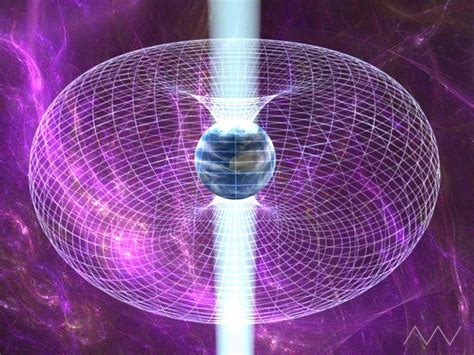
- 지구의 자기장은 우주 공간의 방사선으로부터 지구를 보호합니다. 오로라는 극지방에서 들어오는 자속이 대기 상층의 입자와 상호 작용하여 만들어집니다.
- 이 자기장은 지구 대기의 물리적 크기(슈만 주파수)로 인해 발생하는 공명 주파수를 가지고 있습니다.
원자 수준에서:
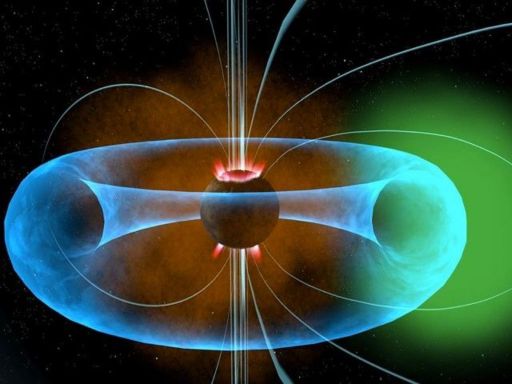
- 원자력장은 원자 크기의 토러스를 만듭니다. 개인적인 의견: 이 원환에는 원자가 정수 값만 취할 수 있는 원자 층에 해당하는 여러 고조파("원자 층")가 있을 가능성이 높습니다(즉, "양자화", 따라서 "양자 물리학"이라는 용어).
그 사이에는 인체의 규모가 있습니다:

- 지구의 경우
- 외부 방사선에 대한 보호. 지구와 마찬가지로 이 방사선은 위쪽(7차크라)과 아래쪽(1차크라)으로 순환할 수 있어야 합니다. 그러나 그들은 바깥쪽 가장자리와 수직 내부 순환(아이다와 핑갈라, 차크라 링크)에만 국한되어 있을 것입니다.
- 이 필드의 물리적 차원에 특정한 공명 값(개인적 "슈만 주파수").
- 원자처럼,
- 서로 다른 층은 시스템의 서로 다른 고조파에 해당합니다. 이러한 층은 손으로 쉽게 느낄 수 있습니다.
- 그러나 복잡한 생명체와 마찬가지로 이러한 값은 말 그대로 에너지, 신체 및 정신 사이의 전자기 활동의 헤아릴 수 없는 수의 상호 작용의 결과입니다. 따라서 이러한 값은 시시각각 변할 수 있습니다. 최소한의 훈련만 받으면 생각, 환경 또는 변화하는 조건에 따라 이러한 층의 수축 또는 확장을 직접 경험할 수 있습니다.

스케일 링크
- 지구 음계: 슈만 공명에는 199, 200, 201의 엘피 값이 있습니다. 지구의 둘레는 201 엘피입니다. 빛의 속도는 207의 엘피 값을 가집니다.
- 인간 규모에서: 세포의 공명 값은 171, 180, 182, 187 엘피입니다.
- 원자 규모: 액정 형태의 물(세포 내)은 135와 140 엘피의 공명 주파수를 가집니다. 미세소관, 130 및 132 엘피. DNA, 122 및 126 엘피. 원자 수준에서는 수소의 경우 116 엘피까지 내려갑니다.
물리학의 원환:

바이오코히어런스와 퍼스널 가이드: 개인 보호막 구축하기
백색 소음: 개인 보호막
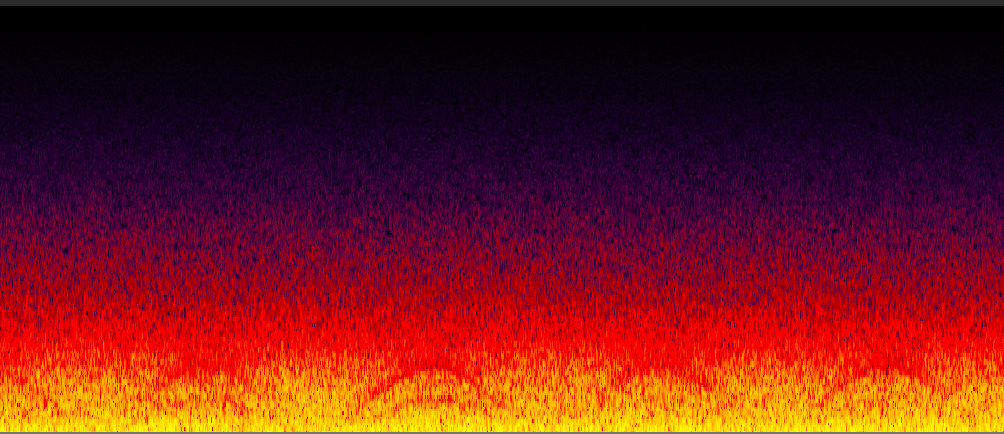
- 이러한 값은 위의 이미지 B와 유사한 복잡한 3차원 회전을 생성합니다. 명상하는 동안 자신만의 보호 고치를 만들기 위해 필드는 주변 1미터로 설정되어 있습니다.
- 백색 소음은 의도적으로 목소리보다 더 크게 설정했습니다. 목소리는 마음에 말을 걸어야 하지만 명상은 무엇보다도 무의식이 정상적인 의식 상태보다 훨씬 더 중요한 역할을 해야 하는 자기 최면 기법입니다. 따라서 목소리는 청각의 한계에서 거의 구별할 수 없을 정도로 작아야 잠재의식의 안내를 받고 무의식이 지배적인 위치를 차지할 수 있습니다.
- 추가된 오디오 주파수는 생체 활성이며 공명에 의해 작용하기 때문에 의도적으로 볼륨을 낮춥니다(시스템과 공명하는 한 매우 약한 자극만으로도 효과를 낼 수 있음).
개인 가이드의 주파수 및 코드
개인 음악 화음과 호흡
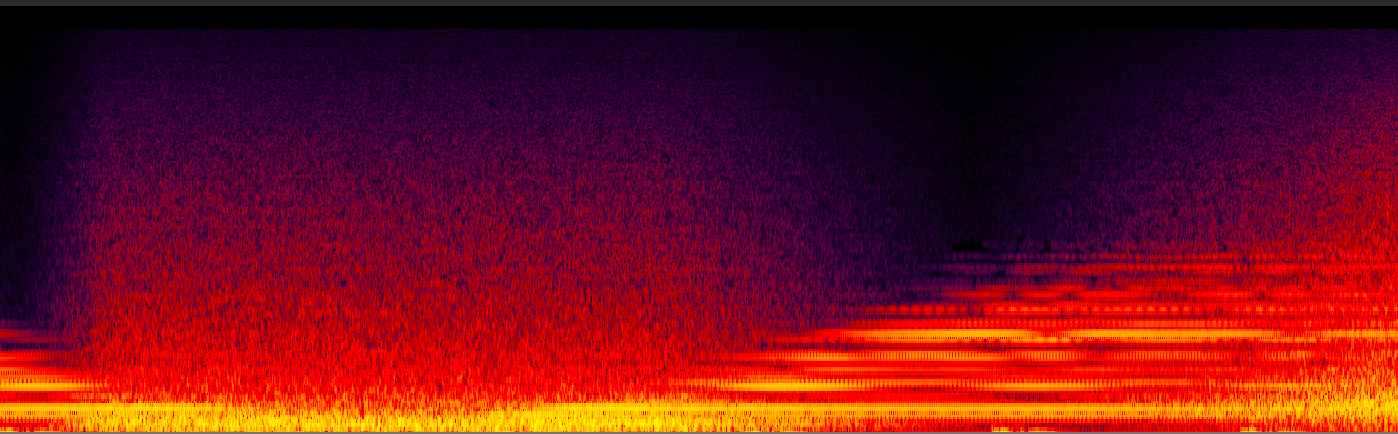
- 호흡, 시끄러운 백색 소음
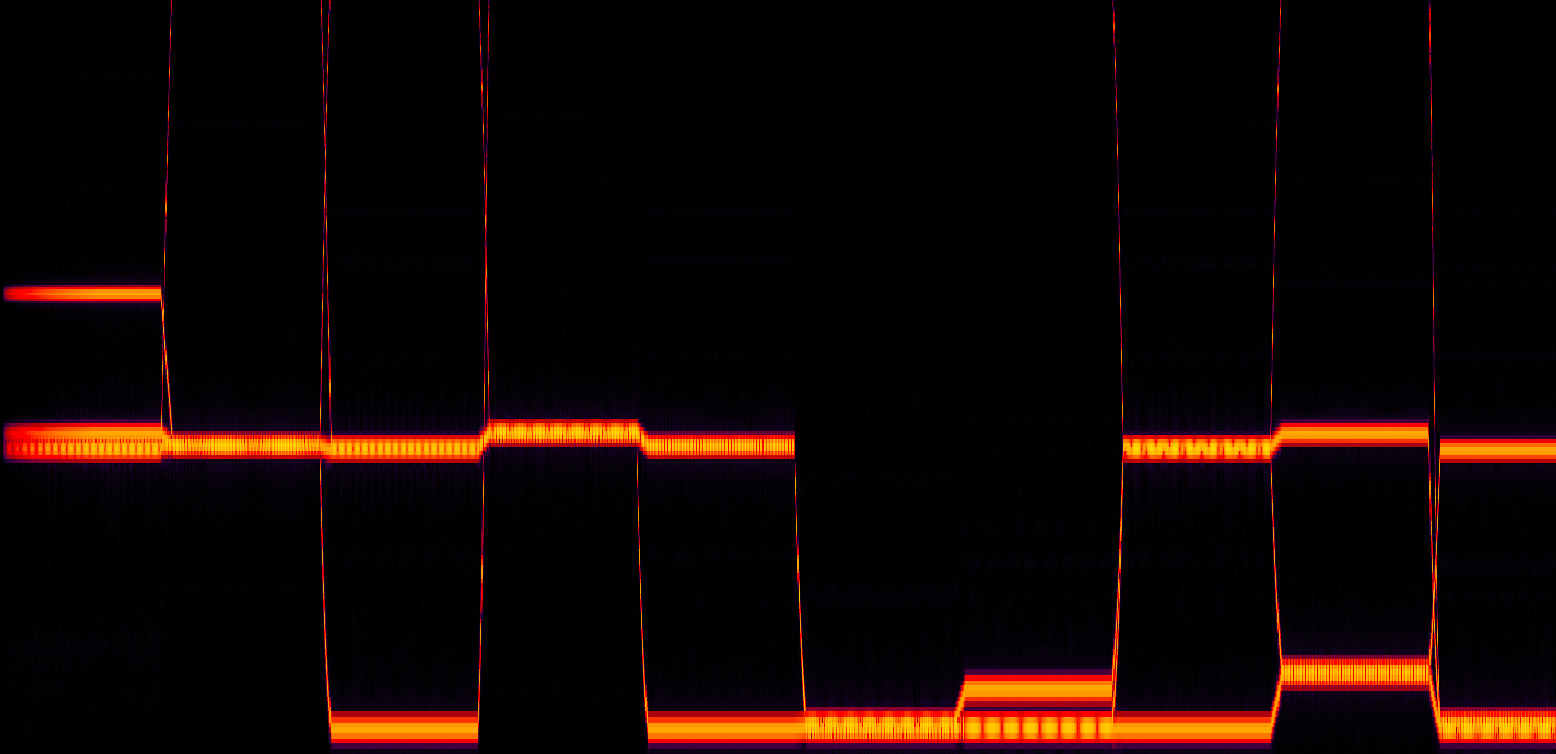
- 화음의 수평적 층이 화음의 음악적 고조파로 구성된 개인 화음(BioCoherence는 432개의 서로 다른 개인 화음을 감지합니다).
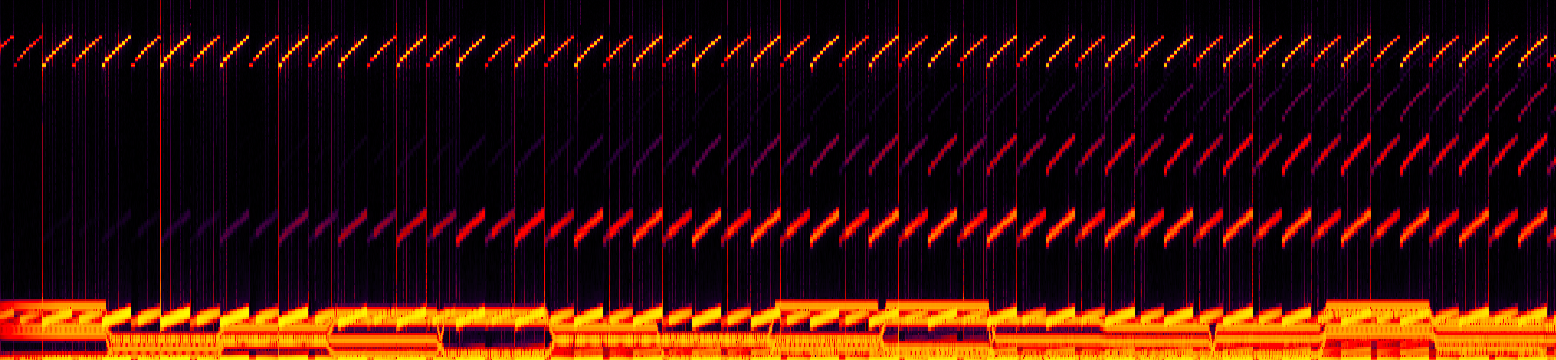
생체 활성 주파수(하모닉 부스트)
침술 경락
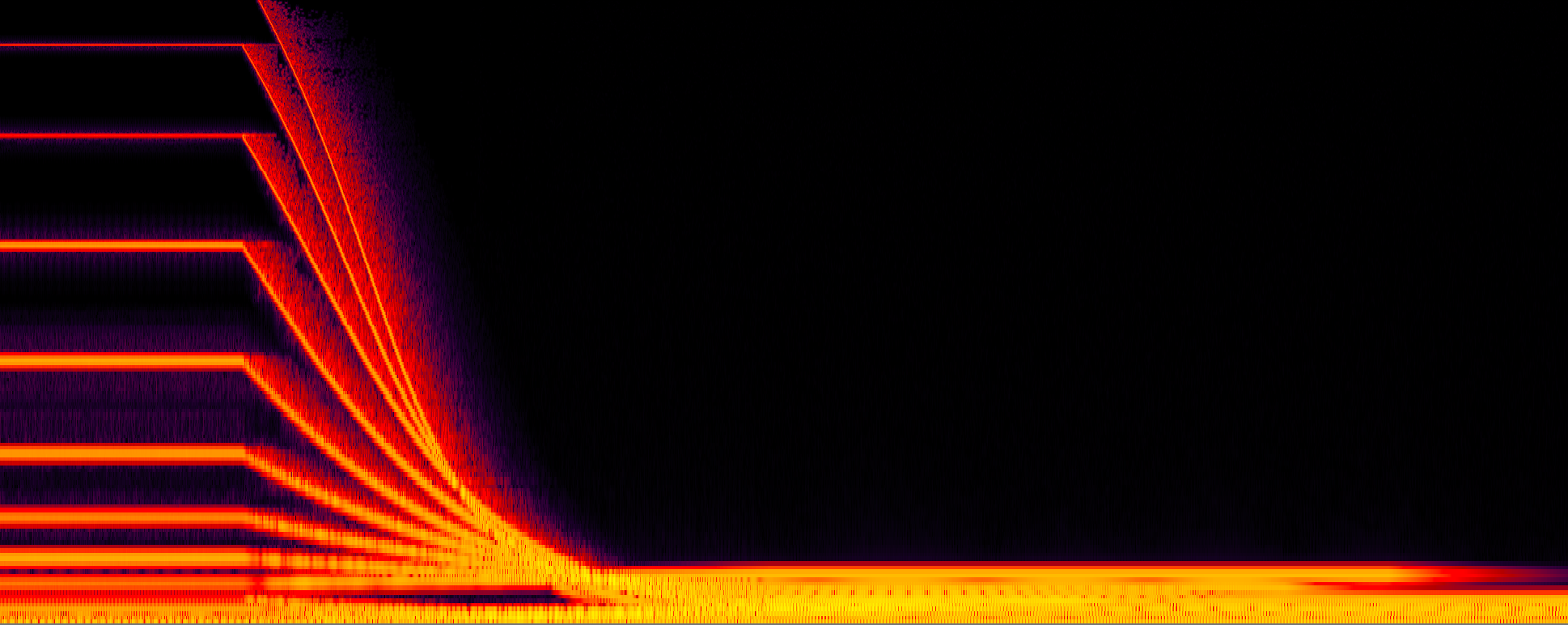
Intro
BioCoherence 1.19
명상 플레이어가 모든 기기에서 원활하게 재생되도록 완전히 재설계되었습니다. 향상된 검색 및 사용자 지정 도구를 갖춘 '세트'로 이름이 바뀐 밸런스 라이브러리를 살펴보세요. 새로운 '커브' 화면을 살펴보세요. 또한 더 빨라진 동기화, 개선된 MP3 생성 기능 등을 즐겨보세요. Read the newsBioCoherence 1.18
우선순위 화면이 정교한 자동 알고리즘으로 대폭 업그레이드되어 정확한 우선순위를 지정할 수 있습니다. 새로운 "우선순위 선택" 도구를 사용하면 모든 바이오마커, 한의학 레시피, 명상 항목을 탐색할 수 있습니다. 밸런스 라이브러리 도입: 스캔 없이 액세스할 수 있는 사전 설정된 가이드 명상을 포함해 개인 또는 공개용으로 우선순위 목록을 저장, 공유, 불러올 수 있습니다. 개선된 차크라 시각화, 능동적인 블루투스 연결, 향상된 음성(이제 영어와 프랑스어로 제공)이 이번 업데이트를 마무리합니다. Read the news21일 밸런싱 프로그램
21일 밸런싱 프로그램은 의사와 고객 모두가 몸과 마음, 에너지의 일관성을 유지하도록 돕기 위해 고안된 혁신적인 도구입니다. 이 프레젠테이션에서는 노련한 전문가든 호기심 많은 초보자든 이 프로그램과 그 기능, 잠재적 활용에 대한 포괄적인 개요를 제공합니다.21일 밸런싱 프로그램이란 무엇인가요?
21일 밸런싱 프로그램은 개인화된 주파수 프로그램, 안내 명상, 바이오마커 분석을 결합하여 전체적인 웰빙을 촉진하는 BioCoherence 소프트웨어 내의 구조화되고 맞춤화된 프로토콜입니다. 전문가와 최종 사용자 모두를 위해 설계된 이 프로그램은 개인의 고유한 요구에 맞춘 매일의 명상 요법과 주파수 기반 개입을 제공하며, 몸과 마음, 에너지 시스템 간의 조화를 이루는 일관성의 원칙을 바탕으로 만들어졌습니다. 이 소프트웨어는 고급 알고리즘을 활용하여 사용자의 바이오마커 분석을 기반으로 개인 맞춤형 계획을 생성하며, 이는 BioCoherence 센서를 사용하여 수행됩니다.어떻게 작동하나요?
- 초기 스캔 및 분석: 이 과정은 BioCoherence 센서를 사용한 스캔으로 시작됩니다. 이 장치는 에너지 흐름, 장기 기능, 감정 상태 등 다양한 바이오마커를 측정합니다. 그런 다음 데이터를 분석하여 우선순위(즉각적인 주의가 필요한 부분)와 자원(치유에 활용할 수 있는 강점)을 파악합니다.
- 개인 맞춤형 프로그램 생성: 분석 결과를 바탕으로 소프트웨어가 다음을 포함하는 21일 프로그램을 생성합니다: - 주파수 프로그램: 특정 바이오마커를 해결하도록 설계된 순수 정현파 주파수. - 안내 명상: 바 이노럴 비트 및 기타 사운드 테라피를 통합하여 사용자의 필요에 맞춘 음성 명상. - 침술 포인트 및 레시피: 프로그램의 효과를 높이기 위한 한의학(TCM) 혈자리와 레시피를 추천합니다.
- 매일 참여: 사용자는 매일 프로그램에 참여하여 3040분 동안 안내 명상과 주파수 프로그램에 집중합니다. 소프트웨어는 진행 상황을 추적하여 주기적인 재평가를 통해 프로그램을 개선할 수 있도록 합니다.
- 재평가 및 업데이트. 실무자는 며칠마다 재평가를 실시하여 사용자의 진행 상황에 따라 프로그램을 업데이트할 수 있습니다. 이를 통해 개입이 개인의 변화하는 요구사항에 맞춰 계속 유지되도록 할 수 있습니다.
21일 프로그램의 주요 특징
1. 가이드 명상
가이드 명상은 프로그램의 초석으로, 음성 안내와 바 이노럴 비트와 같은 사운드 요법을 결합한 것입니다. 이러한 명상은 정서적 균형, 에너지 흐름 또는 장기 기능 등 초기 스캔 중에 확인된 특정 영역을 대상으로 설계되었습니다.- 사용자 지정 가능한 길이: 사용자는 자신의 일정과 필요에 따라 19분에서 90분까지 명상 시간을 조정할 수 있습니다.
- 음소거 옵션: 조용한 명상을 선호하는 분들을 위해 음성 안내를 음소거할 수 있으며, 주파수와 사운드스케이프의 이점을 그대로 누릴 수 있습니다.
- 매일 로테이션: 매일 명상이 바뀌기 때문에 역동적이고 매력적인 경험을 보장합니다.
2. 주파수 프로그램
주파수 프로그램은 또 다른 중요한 구성 요소로, 순수한 정현파 주파수를 신체에 전달합니다. 이러한 주파수는 헤드폰, 스피커 또는 플라즈마 파이어볼과 같은 특수 장치를 통해 재생할 수 있습니다.- 트랜스듀서 기술: 사용자는 헤드폰이나 기타 트랜스듀서를 신체의 특정 부위에 배치하여 국소적인 문제를 타겟팅할 수 있습니다.
- 하위 집합 선택: 이 소프트웨어를 사용하면 마음, 신체 또는 에너지와 같은 카테고리별로 주파수를 필터링하여 집중적인 개입을 할 수 있습니다.
- 내보내기 옵션: 실무자는 주파수 프로그램을 MP3 파일로 내보내 고객이 하루 종일 반복해서 재생할 수 있도록 할 수 있습니다.
3. 바이오마커 통합
이 프로그램은 바이오마커 데이터를 통합하여 진정으로 개인화된 경험을 제공합니다. 주요 바이오마커는 다음과 같습니다:- 에너지 흐름: 신체 에너지 시스템의 막힘이나 불균형을 파악합니다.
- 장기 기능: 주의가 필요한 신체 건강 영역을 강조 표시합니다.
- 감정 상태: 심리적, 정서적 웰빙 문제 해결.
4. 침술과 한의학 통합
이 소프트웨어는 한의학 원리를 통합하여 사용자의 분석에 따라 특정 침술 포인트와 레시피를 추천합니다. 이러한 혈자리는 주파수 및 명상 프로그램에 원활하게 통합됩니다.5. 클라우드 기반 공유 및 모니터링
침구사는 클라우드를 통해 고객과 프로그램을 공유하여 원격 모니터링 및 업데이트를 할 수 있습니다. 고객은 BioCoherence 앱을 통해 보고서, 빈도 및 명상에 액세스할 수 있으므로 멀리 떨어져 있어도 치료의 연속성을 보장할 수 있습니다.실제 적용 사례
개업의용
21일 밸런싱 프로그램은 의사를 위한 강력한 도구로 다음과 같은 이점을 제공합니다:- 고객 유지: 이 프로그램은 고객이 주기적인 재평가를 위해 다시 방문하도록 유도하여 장기적인 관계를 구축합니다.
- 원격 모니터링: 실무자가 원격으로 고객의 진행 상황을 추적할 수 있어 여러 고객을 더 쉽게 관리할 수 있습니다.
- 맞춤형 개입: 맞춤형 명상 또는 빈도 프로토콜을 추가할 수 있어 고도로 개인화된 치료가 가능합니다.
고객용
고객 혜택- 편리함: 이 프로그램은 집에서 액세스할 수 있어 거동이 불편하거나 바쁜 일정이 있는 분들에게 이상적입니다.
- 역량 강화: 매일 프로그램에 참여함으로써 고객은 자신의 치유 여정에 적극적으로 참여할 수 있습니다.
- 전인적 치료: 신체적, 정서적, 에너지적 개입을 통합하여 웰빙에 대한 포괄적인 접근 방식을 보장합니다.
다가오는 혁신
바이오코히어런스 팀은 21일 밸런싱 프로그램을 지속적으로 개선하고 있습니다. 예정된 기능은 다음과 같습니다:- 맞춤형 명상: 개업의는 곧 맞춤형 스크립트와 오디오로 개별 고객을 위한 맞춤형 명상을 만들 수 있게 될 것입니다.
- 언어 확장: 이 소프트웨어는 현재 여러 언어를 지원하며, 중국어 등 더 많은 언어를 추가할 계획입니다.
- 사전 로드된 MP3 플레이어: 주파수 프로그램이 사전 로드된 브랜드 MP3 플레이어가 곧 출시되어 고객이 하루 종일 힐링 주파수를 휴대할 수 있게 될 것입니다.
BioCoherence 1.17
이제 안드로이드 버전을 테스트할 수 있습니다! 4개 언어로 재계산된 16,000개의 오디오 가이드, 사용성이 개선된 이벤트 편집, 개선된 바이오마커 꽃 표시 등의 주요 기능을 살펴보세요. 이제 주파수 기능에 고급 필터링 옵션, 앨범 메타데이터가 포함된 MP3 내보내기, 홈 화면에서 직접 마지막으로 사용한 주파수 또는 명상을 원활하게 재생할 수 있는 기능이 추가되었습니다. 그래프 영역을 확대하고, 개선된 댓글을 즐기고, 직관적인 우선순위 및 보고서 기능에 액세스하세요. 주파수 MP3 공유에 대해 자세히 알아보고 BioCoherence의 다양한 이점을 살펴보세요! Read the newsBioCoherence 1.16
Android 앱은 테스트할 준비가 되었습니다(Play 스토어에서 v1.15). 계산을 위해서는 강력한 기기를 권장하지만, 대부분의 괜찮은 기기에서도 명상과 주파수를 원활하게 실행할 수 있습니다. 주요 특징: • 언어: 폴란드어, 스페인어, 독일어 추가(음성 안내 번역은 곧 제공 예정). • 유병률 필터: 유병률 화면에서 시스템별로 바이오마커를 필터링합니다. • 주파수 내보내기: 10분 오디오 제한으로 더 빠르게 내보내기. • 21일 명상: 홈 화면에서 바로 액세스할 수 있습니다. • 알고리즘 개선: U201클라우 리소스 점수" 레시피에 대한 평가가 업데이트되어 우선순위 및 리소스 감지가 개선되었습니다. u2022 명상 목록: 클릭 한 번으로 각 항목에 대한 전체 설명을 볼 수 있습니다. Read the newsBioCoherence 1.15
Apple Watch 가져오기 및 명상 최적화! 처음 사용하는 사용자를 위한 새로운 홈 화면에서 Apple Watch 바로 가져오기 및 단계별 안내를 살펴보세요. U201C이해" 또는 "Analyze" 화면에서 필요할 때까지 무거운 계산을 지연시켜 파일에 더 빠르게 액세스할 수 있습니다. 개선 사항: • 잔액: 오프라인에서 사용 가능한 일일 안내, 개선된 잔액 화면, 21일간의 여정 미리보기, 일일 진행률 표시줄이 추가되었습니다: 정확한 우선순위 감지를 위한 향상된 알고리즘과 버그 수정, 리소스로서의 네거티브 드라이브 제외. 이번 업데이트에서 간소화된 기능과 최적화된 워크플로를 경험하세요! Read the newsBioCoherence 1.14
사용자 웨비나 시리즈는 계속됩니다
업데이트 하이라이트: 원격 테스트, 절전 모드, 진행 곡선...
- 보고서의 홈 화면에서 '재생' (깔끔한 메뉴)과 '이해' (전체 메뉴) 사이를 전환하는 새로운 옵션이 추가되었습니다.
- 프로 초대를 받은 사용자를 위한 새로운 깔끔한 홈 화면. 홈 화면에는 해당 사용자의 보고서가 표시되며, 열린 보고서에는 이제 기본적으로 '재생'이 제안됩니다: PDF, 주파수, 명상; 그리고 필요한 경우 테스트를 녹화할 수 있습니다.
- pro에서 사용자로의 공유 흐름 개선: 현재 보고서는 즉시 클라우드로 전송되며, 수정 사항이 있는 경우 클라우드로 다시 전송해야 하는 업데이트는 이제 화면 상단에 표시됩니다. 이제 상대방이 보고서를 업데이트하면 양쪽 모두에 알림이 표시되어 클라우드와 동기화하라는 메시지가 표시됩니다.
- 이제 스캔이 있는 경우 목록 사전 평가가 즉시 표시됩니다.
- 테스트 요청이 이제 활성화됩니다. Pro는 원격 사용자에게 선택한 항목을 로컬로 테스트하도록 요청할 수 있습니다. 사용자가 앱을 열면 전 세계 어디에서나 실제 로컬 ECG 측정을 사용하여 센서로 테스트 요소를 테스트할 준비가 완료됩니다. 결과는 클라우드를 통해 Pro로 다시 전송됩니다. (다음 단계: 사용자에게 알림이 전송되어 보고서를 업데이트하고 클릭 시 보고서를 엽니다. 알림이 없으면 Pro가 사용자에게 초대를 보내야 하며, 사용자는 클라우드에서 업데이트하라는 메시지가 표시되는 보고서를 열게 됩니다.)
균형
- 명상에 프로토콜 주파수를 더 잘 삽입합니다.
- 하단에 버튼이 있고 화면에 새로운 옵션이 있는 새로운 화면.
- 매일 명상이 바뀌는새로운 일일 진행 상황.
- 밸런스의 새로운 그래픽, 각 우선순위의 진행 상황을 멋진 곡선으로 표시합니다. 오늘의 곡선 또는 모든 우선순위 곡선 표시.
- 새로운 종료 선택: "수면" 또는 "깨어 있음". "수면"의 경우, 긴 페이드아웃과 다양한 우선순위 평가가 포함된 132개의 새로운 오디오 안내 엔딩이 추가되었습니다.
주파수
- 주파수의 새로운 루프 플레이어: 단일 블록에서 루프(하나의 생리학 프로그램과 관련 프로토콜을 멈출 때까지 반복 재생하여 특정 의도된 효과를 강력하게 밀어붙임). 프로토콜이 생리학 프로그램에 추가된 경우에만 사용할 수 있습니다.
Pro와 사용자 간의 보고서 흐름
- 일반적으로 보고서는 프로의 센서에서 스캔 또는 테스트로 시작되며, 프로가 리소스, 우선순위, 빈도, 프로토콜, 의견 등의 결정을 내립니다.
- 그런 다음 프로가 사용자와 공유합니다. '사용자와 공유'를 클릭하면 보고서가 즉시 보안 클라우드로 전송되어 사용자가 즉시 사용할 수 있습니다.
- 신규 사용자라면 프로가 해당 사용자에게 초대를 보냅니다. 그렇지 않은 경우 사용자는 앱을 시작하기만 하면 됩니다. 두 경우 모두 사용자가 자신의 이메일(프로가 자신의 계정에 입력한 이메일)로 로그인하면 즉시 보고서를 볼 수 있으며, 보고서를 가져와서 열 수 있습니다.
- 프로가 보고서를 수정하는 경우 수정이 끝나면 클라우드와 동기화할지 묻는 메시지가 표시됩니다. 이렇게 하면 클라우드에서 보고서가 업데이트되고 로컬에 저장된 보고서를 클라우드와 동기화하라는 힌트가 사용자에게 표시됩니다.
- 사용자가 보고서를 수정하는 경우(일반적으로 재평가를 기록하거나 프로가 준비한 테스트를 수행하여), 프로도 마찬가지로 다음에 보고서를 열려고 할 때 클라우드와 동기화하라는 메시지가 표시됩니다.
사용자가 시작한 보고서
- 경우에 따라 사용자가 새 녹화를 수행하여 보고서를 시작할 수 있습니다. 이 경우 사용자는 자신의 프로와 공유할 수 있습니다(프로가 없는 경우 프로 디렉토리에서 프로를 먼저 선택할 수 있음). Pro는 연락처 목록에서 사용자를 수신하고 클라우드에서 보고서를 가져와서 작업을 시작할 수 있습니다. 프로가 작업을 완료하면 '클라우드와 동기화'를 클릭하기만 하면 사용자 측에서 동기화하라는 메시지와 함께 보고서가 클라우드로 다시 전송됩니다.
바이오코히어런스 1.13... 그리고 책 한 권!
사용자 웨비나 시리즈는 계속됩니다
여러분의 피드백이 필요합니다: 바이오코히어런스를 완성하고 선물도 받아가세요!
이제 바이오코히어런스에 관한 책이 나왔습니다
몸의 전기 노래
우리 몸의 전기를 이해할 수 있을까요?
바이오코히어런스의 획기적인 통찰력을 통해 몸과 에너지, 마음을 재발견하고 건강을 강화하세요: 모든 세포, 기관, 감정이 신체의 전기 매트릭스 내에서 어떻게 공명하는지 알아보고 건강과 개인적인 발전을 통제하세요!
아마존에서 구매하기(킨들 전자책 또는 페이퍼백, 영어 및 프랑스어판)
- 미국 - 영어 https://www.amazon.com/dp/B0DJNG7FH2
- 프랑스 - 영어 https://www.amazon.fr/dp/B0DJNG7FH2, 프랑스어 https://www.amazon.fr/dp/B0DJNJ9P1C
- 영국, 독일, 스페인, 이탈리아, 네덜란드, 폴란드, 스웨덴, 일본, 캐나다, 호주, 인도, 멕시코, 브라질... biocoherence.net/book 또는 아마존 앱을 참조하세요.
이제 이번 주 업데이트로 돌아가겠습니다.
업데이트 주요 내용
- 바이오마커 세션 진화 화면 상단에 더 이상 확대/축소가 없습니다. 이제 재생/일시정지 스위치로 이 그래프와 주파수, 하모니 및 아래의 새로운 그래프의 확대/축소를 제어할 수 있습니다. '중지' 모드에서는 모든 그래프에 각 바이오마커의 평균값과 전체 기록이 표시됩니다. '재생' 모드에서는 재생 헤드 위치 시점의 값이 표시되고 그래프가 50비트까지 확대됩니다. 재생 헤드 위치를 움직여 스크롤하면 됩니다. 여러 파트가 있는 '정지' 모드에서는 줌도 현재 파트에 맞게 자동으로 조정됩니다.
- 스펙트럼의 새로운 그래프:"거짓말 탐지기". 이 화면은 주로 학술적 바이오마커를 사용합니다. 예를 들어 VHF, HF, LF 및 VHF 비율과 최대 7개의 중요한 곡선으로 이루어진 선형 그래프를 한 눈에 볼 수 있는 편리한 방법입니다. 이 기능은 녹화 중에도 모든 화면에서 실시간으로 사용할 수 있습니다(녹화 중 화면 전환만 하면 됩니다). 이 모든 마커는 심전도에 대한 학술 연구에서 나온 것입니다.
원하는 밴드를 최대 7개까지 병렬로 또는 같은 선의 중앙에 표시할 수 있습니다. - "밴드" 모드에서 7개의 라인은 다음과 같습니다: Bpm, HRV, 메이어파, VHF, HF, LF 및 VLF입니다.
- "비율" 모드에서 7개의 라인은 다음과 같습니다: SDNN(총 전력), SI(스트레스 지수), IC(중앙 집중 지수), LF/HF(전력, 바고-동조성 상호 작용), LF/VLF(휴식), VLF/HF(스트레스) 및 VLF HF(글로벌 활동).
- "시스템" 모드에서: CNS, 정형외과, 심박, 장애인, IRSA, 면역, HRV.
- "뇌파" 모드에서: 델타, 세타, 알파, 베타, 베타1, 베타2, 감마.
- 이 그래프로 연구를 진행하면 새로운 인사이트나 새로운 바이오마커의 기초가 될 수 있습니다. 또한, 바이오마커 세션 진화 화면에서 타임라인과 이벤트를 통해 모든 바이오마커를 분석할 수 있습니다.
- 사진 가져오기 버그가 수정되었습니다. 실제로 사진을 가져오려면 사진을 확인해야 한다는 점을 기억하세요.
- 명상 시간은 이제 사용자의 선택에 따라 동적으로 설정됩니다.
- 이제 명상 시간이 매일 동적으로 변경됩니다. 원하는 만큼 우선순위를 설정할 수 있으며, 필요에 따라 일일 명상에 차례대로 포함될 것입니다. 기본 일일 명상 시간은 약 30분이며, 사용자가 변경할 수 있습니다.
- 이제 네 번째 알고리즘에 대한 업데이트를 사용할 수 있습니다: "리소스 점수 낮음".
- 프로토콜이 생리학 프로그램에 추가될 때 설정되는 생리학 프로그램 기간입니다.
BioCoherence 1.12
- 기밀 모드: 화면의 모든 이름과 사진을 흐리게 처리하는 기능.
- 구형 기기의 일반적인 속도 향상. 기적을 기대하지 마세요. 앱은 여전히 전력을 많이 소모합니다. 일반적으로 탐색에 지연이 없어야 하며, 지연이 있는 경우 더 좋은 컴퓨터를 사용하시기 바랍니다.
- 녹음이 짧은 경우 더 이상 자동으로 저장되지 않습니다.
- 경락/경혈 설명, MTC 레시피 등 이전에 하드코딩된 텍스트를 포함한 모든 텍스트를 이제 번역할 수 있습니다. 또한 제목이 잘리는 한국어 버그도 수정되었습니다.
- 지원 요청, 티켓 답변 정보 및 관리를 앱에서 바로 확인할 수 있습니다.
- 블루투스 요청이 첫 번째 앱 실행이 아닌 첫 번째 유효 사용까지 지연됩니다. 이는 앱이 사용자의 승인을 한 번만 요청할 수 있기 때문입니다. 거부하면 앱이 블루투스를 다시 요청하도록 허용할 방법이 없으므로 시스템 환경 설정으로 이동하여 수락을 확인하는 방법을 찾거나 앱을 다시 설치해야 합니다. 이러한 이유로 실수로 초기 요청이 거부된 경우 Bluetooth 패널에 새 메시지가 표시됩니다.
- 이제 브라우저에서 "설명서 읽기"가 열립니다. 여기에서 PDF 설명서를 다운로드할 수도 있습니다.
- 꽃잎 상태별로 모든 바이오마커를 나열하는 새로운'유병률' 화면이 추가되었습니다. 이를 통해 패턴을 식별하고 스캔의 일반적인 이미지를 더 잘 이해할 수 있습니다.
- 이제 홈 페이지에서 자신의 데이터를 편집하면 '내 계정'으로 연결됩니다.
- 생년월일과 메모는 이제 기본적으로 숨겨집니다. 표시하려면 '추가 정보'를 클릭하세요. 이 정보는 현재로서는 사용되지 않으며 참고용으로만 제공됩니다. 향후 나이, 키, 체중 관련 바이오마커를 위해 키, 몸무게 및 기타 건강 데이터도 추가할 예정입니다.
- 이제지속 시간이 엘피 값으로 표시됩니다.
- 오디오 파일이 너무 길면 앱이 다운될 수 있으므로 매우 긴 프로그램의 경우 .wav 또는 .mp3로 내보내는총 길이가 자동으로 조정됩니다. 내보내기는 약 30분으로 제한되며, 모든 프로그램은 사용 가능한 길이에 맞게 자동으로 조정됩니다.
- 내보내기는기본적으로 한 번의 클릭으로mp3로 내보냅니다. "인코딩 중지"를 클릭하여 mp3 부분을 취소하면 대신 .wav로 내보내도록 제안합니다. 전체 프로세스는 백그라운드에서 수행되며 그 동안 앱을 사용할 수 있지만 내보내는 동안 앱을 축소하거나 숨기면 앱의 컴퓨팅 리소스가 손실되고 내보내는 데 시간이 오래 걸릴 수 있으므로 주의하세요.
- 보고서 도구에 클릭 한 번으로 PDF를 고객에게 우편으로 보낼 수 있는 새로운 버튼이 추가되었습니다. PDF는 클라우드에 업로드되고 메일은 서버에서 전송되므로 발신자는 사용자가 아닌 reports@biocoherence.net 입니다. 발신자가 되려면 '공유' 기능을 사용하거나 저장한 후 일반 이메일 앱에 첨부해야 합니다.
- PDF 내보내기 및 저장 기능은 이제 Windows, Mac, Linux에서 작동합니다. 또한 편집을 원할 경우 수정 가능한 형식인 .htm으로 내보낼 수도 있습니다.
- 이제 프랑스어 음성을 완전히 사용할 수 있습니다. (영어 음성은 작은 결함을 수정하기 위해 이번 달 말에 정리될 예정입니다.)
- "명상" 유형의 목록: 동일한 명상 목록에서 여러 항목을 선택하면 하루에 하나씩 순차적으로 재생됩니다. 이는 보고서와 명상 텍스트에 표시됩니다. 이런 식으로 명상도 매일 진행 상황에 따라 진화합니다.
- 이제 네 번째 알고리즘을 사용할 수 있습니다: "리소스 점수 낮음". 우선순위를 탐색할 때 "동기화", "흥미로운 에너지", "흥미로운 동요"보다 먼저 표시되며, 자원 점수가 가장 낮은 요소(말하자면 자원 패널과 반대되는 요소)가 표시됩니다.
- 이 중요한 화면의 일부 기능이 개선되었습니다:
- 성격: 이제 스캔의 4축과 위치, 그리고 이 위치의 안정성 또는 유연성을 설명하는정보 텍스트가 표시됩니다.
- 운동량: 이제 구속이 지리학 및 생물학의 두 가지로 나뉩니다.
- 드라이브: 이제 각 감정의 긍정적인 부분과 부정적인 부분 사이의 평균이 명확하게 표시됩니다. 이제 각 막대의 긍정적인 부분과 부정적인 부분 사이의 기준선을 명확하게 확인할 수 있습니다. 이 화면은 사용자가 가장 많은 시간을 보내는 화면 중 하나이기 때문에 앞으로 더 많은 개선이 이루어질 예정입니다.
- 매뉴얼은 사용자 웹 세미나의 내용으로 업데이트될 예정입니다. 이는 매주 사용자 세미나가 끝난 후 이루어집니다...
사용자 웨비나 시리즈 시작: 내일부터 매주 목요일 16:00(유럽 시간)에 시작됩니다
바이오코히어런스 사용자 여러분,BioCoherence 1.11
- 인터페이스, 클라우드 로딩 및 소프트웨어 개선. 영어는 완료되었고, 프랑스어는 거의 완료되었으며 약 1주일 후에 출시될 예정입니다.
- 아직 미리보기 버전이며 일부 텍스트에 사소한 결함이 있다는 점에 유의해 주세요. 아직 모든 텍스트를 미세 조정하고 다듬는 작업이 진행 중입니다.
- 경락 및 차크라(이제 특정 소리 포함), 코드와 같은 특정 부분의 개선 사항 ...
- 주파수 프로그램 페이지에서 직접 프로토콜 추가: 프로토콜 선택이 개선되었습니다.
- 주파수 프로그램을.wav 또는 .mp3로 내보내기. 이제 기본 형식은 mp3입니다. 더 잘 작동하고 특정 상황에서 더 이상 충돌이 발생하지 않아 훨씬 더 좋아졌습니다. 또한 내보내기 기능(다른 이름으로 저장)이 이제 Windows, Mac 및 Linux 버전에서 작동합니다.
- 바이오마커와 프로토콜의 테스트 및 조율 과정에서 다른 주파수가 추가되어 재생됩니다.
- 이제 인쇄 및 저장 기능이 Windows, Mac 및 Linux 버전에서 작동합니다. (현재는 .pdf가 아닌 .htm 형식으로 저장).
- 클라우드에서 목록 관리(이미지, 동적 로딩, 비공개 목록의 초대 코드 등)에 대한 수많은 비하인드 스토리 개선이 이루어졌습니다. 이제 개별 목록을 테스트할 때 이미지가 더 큰 형식으로 표시됩니다.
- 대형 화면(컴퓨터)에서는 리스트가 새로운 다중 열 보기로 표시됩니다.
- 이제 이미지가 전면에 크게 표시됩니다. 허브, 에센셜 오일 또는 아로마 목록을 사용해 보세요!
- 녹음 시 다양한 블루투스 문제를 해결해왔으며, 이제 훨씬 더 안정적으로 녹음할 수 있습니다. 심지어 이제 Linux에서도 블루투스가 작동하는 것 같습니다. 하지만 여기서 리눅스를 실행하는 사람은 앙투안 외에 누가 있을까요? :)
- 빠른 열기 파일이 이전 버전인 경우 새로운 알고리즘과 바이오마커를 고려하여 완전히 다시 계산됩니다.
- 윈도우, 맥, 리눅스 버전에서 훨씬 빨라진 인터페이스.
- 다양한 수정 및 개선(특히 블루투스 및 녹음 섹션에서).
- 다양한 충돌 및 크래시 수정.
BioCoherence 1.10
- 안내 명상 미리보기: 실제 오디오 안내(현재는 영어로만 제공). 각 언어로 된 약 4000개의 맞춤형 오디오 안내 명상 파트.
- 참고: 아직 미리보기 버전이며 많은 텍스트에 작은 결함이 있습니다. 저희는 여전히 모든 텍스트를 다듬고 다듬고 있으며, 실제 정확한 안내는 이달 말에 제공될 예정입니다.
- 모든 특정 사운드, 바 이노럴 비트 및 주파수, 호흡 작업이 포함된 코드(코드 감지기에 450개 이상의 코드가 있으며 고객의 에너지에서 측정된 코드를 연주합니다), 경락, 차크라 등과 연결된 일부 특정 사운드(인트로, 오르간, 차크라, 경락, 드라이브, 감정 등 파트마다 다른 앰비언스를 갖는 것이 제 목표입니다) 포함
- 원하는 명상 시간을 설정할 수 있습니다.
- 주파수 프로그램 페이지에서 직접 프로토콜을 추가합니다.
- 주파수 프로그램을 .wav 또는 .mp3로 내보냅니다. 그런 다음 이 오디오 파일을 사용하여 오디오 플레이어나 클라이언트의 스마트폰을 통해 주파수의 균형을 맞추거나 모든 종류의 트랜스듀서를 사용하여 오디오 잭 출력에서 전기적 또는 자기적으로 로컬로 주파수를 적용할 수 있습니다.
- 어떤 경우든 전체 주파수 프로그램은 오디오 명상에 바 이노럴 비트 또는 주파수로 삽입됩니다.
- 이제 진행률 페이지에서 필요한 만큼 '즐겨찾기' 바이오마커를 추가하여 모든 바이오마커를 볼 수 있습니다.
- 새로운 목록 유형: 제품. AI 지원 제품 목록 구축: 제품 콘텐츠 자동 검색, AI 클라우드를 통한 자동 장기 효과 평가. 또한 추천 이미지의 자동 사전 선택 기능도 제공합니다. 그런 다음 이 모든 제품 카탈로그에서 클라이언트의 스캔으로 사전 평가하고 개별 테스트를 통해 확인할 수 있습니다.
- 새로운 목록 유형: 명상, AI가 강화된 글쓰기 및 오디오 파일 요청(명상이 승인되면 다른 명상들과 동일한 음성으로 제공됨). 이 특정 명상을 통해 어떤 장기가 균형을 이룰 수 있는지 알아내려고 시도합니다. 그런 다음 사전 평가를 하고 필요한 경우 개별 테스트를 통해 확인한 후 클릭 한 번으로 고객의 명상에 추가할 수 있습니다.
- 이제 앱이 한국어 미리보기로 제공됩니다(수정 대기 중). 인터페이스에 추가할 새로운 언어에 대한 제안이 있으시면 언제든지 알려주세요!
- 다양한 수정 및 개선 사항(특히 블루투스 및 녹음 섹션)이 있습니다.
BioCoherence 1.9.23
- An infinity of custom-made audio guided meditations with more than 3800 combined parts per language and per guide
- preview of the full meditation text in the balance module
- full personalised 30-min to 1-hour meditation based on resources and priorities, with spoken words guidance, specific frequencies and personal musical elements and rhythms, as measured in the pulse. (available in 2.0)
- Physiology, emotions and energy biomarker balance: more than 10000 specific frequencies for more than 1000 different programs
- Therapeutic, pathologic and improvement protocols: more than 7000 balance-oriented therapeutic and improvement frequencies and binaural beats in 2500 specific protocols
- test of any individual balance program or protocol with immediate biofeedback answer
- remote test through our cloud (available in 2.0)
- audio frequencies player on each biomarker for immediate balancing and protocols choice with pre-evaluation
- construction of a specific frequency program with biomarkers balance and protocols attached to specific biomarkers (a protocol is played encoded on a specific biomarker balance program to direct its resonance to the part needed); play and export of frequency program (export available in 2.0)
- now includes more than 6500 new interpretation texts (description, action, emotional interpretation, biomarker quality)
- now includes the full meditation text
- new "explore" button to refine priorities
- 420 TCM points now computed with links, resources and priorities
- drives and momentum now computed as priorities and resources
- subdoshas now computed as priorities and resources
- reworked resources panel
- refined algorithm
- new filetype choice: quick open or small (defaults now to quick open, with no compute necessary on open)
- various interface improvements
BioCoherence 1.9.9 and launch promotion
- various graphic fixes
- record animation stops if measure stops
- new measure quality indicator during recording
- new recording features: auto-stop when sufficent data
- recording and live biomarkers compute optimizations
- bigger client image on home screen, now static
- technical log now sent with support ticket
- 'reports' are now 'recordings' to avoid confusion with the PDF report
- new PDF report editing tools (comments, hide sections...)
- new PDF report feature: preview from recording lists
- promo: the chakras screen is free access for all
Launch promotion
What are your questions for our upcoming BioCoherence webinar?
Submit Your Questions for the BioCoherence Q&A Webinar!
BioCoherence 1.8.8
- Reports: - much quicker processing- some biomarkers were not clickable. Now you can click on all biomarkers, including recipes, to get more info (it opens the bottom biomarker panel, that also includes direct links to the relevant scan pages)- new top menu for quick access to report sections.- possibility to share/make pdf/print only the active section as selected in the top menu. To print the whole report, just click "Whole" (the first element in the top sections list) before printing.- new report subtitles
Wow! but how?
BioCoherence 기술이 작동하는 방식
와우! 하지만 어떻게? 이것은 새로운 사용자들이 첫 번째 스캔 후에 묻는 주요 질문입니다.
간단한 용어로 설명하겠습니다. 더 깊이 있는 설명을 원하신다면, 이 뒤에 더 상세한 설명이 있습니다.
간단한 설명
원시 기록에서 통찰력으로
BioCoherence는 의료 인증 센서를 사용하여 ECG(심전도) 기록으로 시작합니다. 심장의 전기적 활동을 주로 기록하는 동안, 이 센서는 왼쪽 손가락에서 오른쪽 손가락까지 전신의 전기적 활동도 포착합니다. 이 포괄적인 데이터는 심장의 리듬에 의해 지배되지만, 다른 미세한 전기적 활동도 보여주는 주요 ECG 기록으로 나타납니다.
데이터 처리 및 분석
원시 데이터에서 특징으로: 초기 ECG 기록에는 주요 심장 리듬과 다른 전기 주파수가 포함됩니다. 자동 필터링은 문제 있는 비트(예: 움직임으로 인한)를 제외하여 정확한 분석이 가능하게 합니다.
다단계 분석:
- 1차 분석:
- 특정 주파수(VLF, LF, HF) 및 시간 기반 간격(HRV)과 같은 ECG에서 기본 데이터를 추출합니다.
- 광범위한 공개 연구를 사용하여 학문적 바이오마커를 도출합니다.
- 2차 분석:
- 1차 데이터를 분석하여 고조파 및 엔트로피와 같은 새로운 속성을 밝혀냅니다.
- 주의력 및 의도와 같은 특성을 포함한 추가 바이오마커 정보를 계산합니다.
- 3차 분석:
- 요소 간의 연결 및 공명을 식별하여 에너지 관계를 보여줍니다(예: 장기 간의 관계).
- 복잡한 알고리즘을 사용하여 TCM 레시피 및 연결된 요소를 계산합니다.
- 4차 분석:
- 자원 및 우선 순위를 계산하여 어떤 바이오마커가 가장 중요한지를 나타냅니다.
- 사용자의 건강에 대한 일관된 개요로 연구 결과를 통합합니다.
사용자 혜택:
- 스캔 모듈: 상세한 바이오마커 분석, 신체 지도 및 그래프를 제공합니다.
- 테스트 모듈: 실시간 생체 피드백 및 개방형 창작 시스템을 제공합니다.
- 균형 모듈: 맞춤형 명상 및 보고서를 생성합니다.
일상적인 가치: 사용자가 가장 실용적인 통찰력을 제공하는 고차원 정보(자원, 우선 순위)에 중점을 두면서도 모든 세부 데이터에 대한 접근을 허용합니다.
결론적으로, BioCoherence는 고급 수학 알고리즘을 사용하여 원시 ECG 데이터를 유용한 건강 통찰력으로 변환하며, 신체의 전기적 활동에 대한 포괄적인 정보를 드러내는 다단계 분석을 제공합니다. 이 혁신적인 접근 방식은 사용자가 자신의 웰빙을 향상시키기 위한 실행 가능한 데이터를 제공합니다.
심층 설명
심층적으로 파고들어 보겠습니다... 기술적인 영역에 들어가지 않고 가능한 한 깊이 답변하려고 합니다...
처음에는 원시 기록이 있었습니다
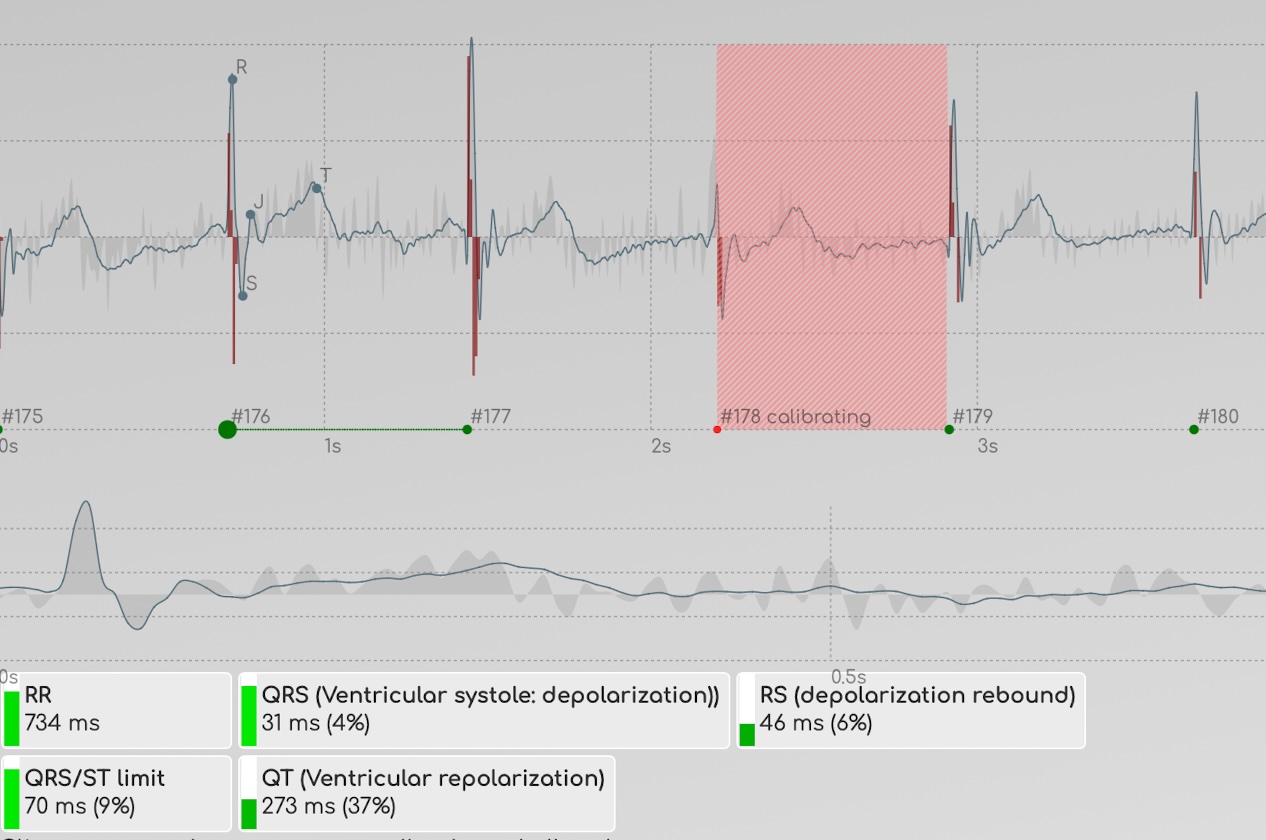 BioCoherence는 ECG 기록으로 시작합니다. ECG는 « 심전도 »를 의미하며, 이는 우리가 심장의 전기 활동을 기록하기 위해 주로 사용되는 의료 인증 장치(우리의 센서)를 사용한다는 것을 의미합니다. 하지만, 하나의 단점이 있습니다: 심장은 가장 강력하지만, 전기 활동을 가진 유일한 장기가 아닙니다. 우리는 뇌도 전기 활동을 한다는 것을 알고 있습니다(EEG, 뇌파 측정을 통해 나타납니다), 하지만 사실 모든 장기, 모든 원자, 모든 시스템은 자기 및 전기 활동을 가지고 있습니다. 왼쪽 손가락에서 오른쪽 손가락까지 측정함에 따라 센서는 심장의 박동 속도 신호 이상으로 많은 것을 기록합니다: 그것은 온몸의 자기 및 전기 활동을 기록합니다.
그래서 우리가 처음으로 가진 것은 많은 전기 정보입니다. 이것은 주요 ECG 기록으로 표시됩니다. 이는 분명히 심장 박동의 주요 리듬에 의해 지배되지만, 이 주요 활동 아래에는 많은 것이 있습니다. BioCoherence에서는 주요 파동 주변에서 진동하는 회색 선으로 표시됩니다. 여기에서 우리는 수천 개의 바이오마커의 활동을 재구성할 데이터를 찾을 수 있습니다.
주파수 페이지에서 이것을 볼 수 있습니다: 주파수 그래프의 하단 근처에는 항상 가장 중요한 주파수(박동 속도)를 나타내는 어두운 선이 있지만, 기록에 존재하는 다른 많은 주파수도 볼 수 있습니다. 이 주파수 그래프는 시간 기반 정보를 주파수 기반 그래프로 변환하여 기록된 파형을 보는 또 다른 방법입니다; 그러나 여전히 같은 원시 정보입니다.
우리는 몇 초 동안 사용자가 움직였고 전기 신호가 차트를 벗어났기 때문에 문제가 있는 박동을 제외하기 위해 자동 필터링을 추가했으며, 이 시점에서 우리는 이 기록을 분석하여 특징을 추출할 수 있습니다.
emergent properties
시스템 이론에서 " emergent properties "라는 중요한 개념이 있습니다. 간단히 말하면, 각 새로운 복잡성 수준에서 하위 수준의 속성에서 직접 파생되지 않는 새로운 속성이 나타난다는 것을 의미합니다. 예를 들어, 두 가지 매우 인화성 가스(산소와 수소)를 혼합하면 이러한 가스에서 추측할 수 없는 특성을 가진 안정적인 액체(물)를 얻을 수 있습니다. 이것이 우리가 다단계 분석을 수행하는 이유이며, 각 수준은 이전 수준의 속성을 사용하고 각 수준은 이전 수준에서는 존재할 수 없는 새로운 관계를 드러냅니다.
이 모든 것은 순수하게 수학으로 이루어집니다. 대부분의 다른 " 에너지 평가 장치 "가 주로 난수 생성기에 기반하고 있는 것과 달리, BioCoherence의 알고리즘은 순수하게 수학에 기반하므로 결과는 녹음이 동일할 때마다 항상 정확히 동일합니다. 사실, 녹음을 열 때마다 전체 계산이 다시 이루어집니다.
그 다음은 1차 분석이 진행됩니다
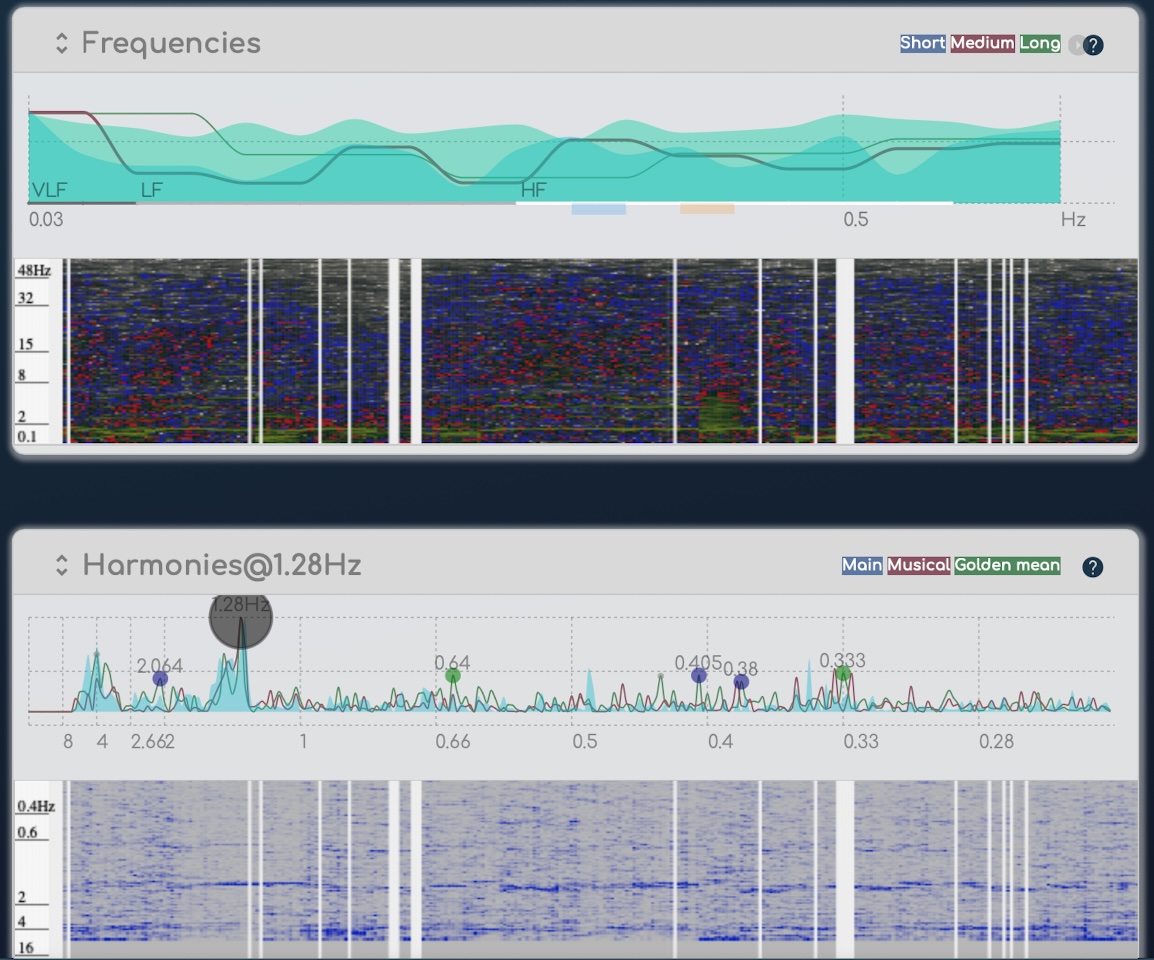 이제 우리의 알고리즘은 이 원시 데이터에 대해 1차 분석을 수행하여 1차 정보를 추출합니다. 이는 특정 주파수 또는 주파수 범위(예: VLF, LF 또는 HF) 또는 시간 기반 간격 분석(예: HRV)에서 올 수 있습니다.
우리는 일반적으로 함께 이야기하지 않는 매우 다양한 ECG 연구자들이 발표한 많은 연구를 활용하여 이 수준에서 추출한 정보의 폭넓은 목록을 작성했습니다.
이 1차 분석은 주로 학문적 바이오마커를 제공합니다. 이는 일반적으로 공식 연구가 멈추는 곳이기 때문입니다. 신호 처리 기술은 의료 연구에서 상당히 제한적이기 때문입니다*, 반면 나는 음악 신호 처리 기술을 적용하여 훨씬 더 발전된 방식으로 작업했습니다. 90년대 이후 DSP(디지털 신호 처리기)가 음악의 아날로그 처리 방식을 대체하면서 디지털 녹음을 이해하고 모방하며 처리하기 위한 엄청난 양의 연구가 이루어졌습니다. 여기에는 음향 효과나 다양한 도구를 사용하여 디지털 음악 콘텐츠를 실시간으로 조정하는 것이 포함됩니다. 이는 BioCoherence에서 사용하는 기본 알고리즘과 같습니다: 음악 처리에서 음향 엔지니어들이 알고 있는 고급 수학이지만 의료 애플리케이션에서는 아무도 사용하지 않는 것입니다.
*: 부가적으로, 모든 사람들이 농담하는 것은 1994년에 전기심전도의 곡선 아래 면적을 계산하는 매우 새로운 방법을 설명하는 동료 검토 논문이 발표되었다는 것입니다(거창하게 AUC라고 불림). 이는 동료 검토 저널에 발표될 만큼 충분히 흥미로운 것으로 간주되었습니다. 그러나 약간의 수학 교육을 받은 사람이라면 누구나 아는 바와 같이, 이는 « 적분 »이라고 불리며, 대학에서 배우고 수세기 전에 발견된 것입니다. 그럼에도 불구하고 대부분의 공식 연구는 이 수준의 수학에 있습니다.2차 분석에서 흥미로운 것들이 시작됩니다
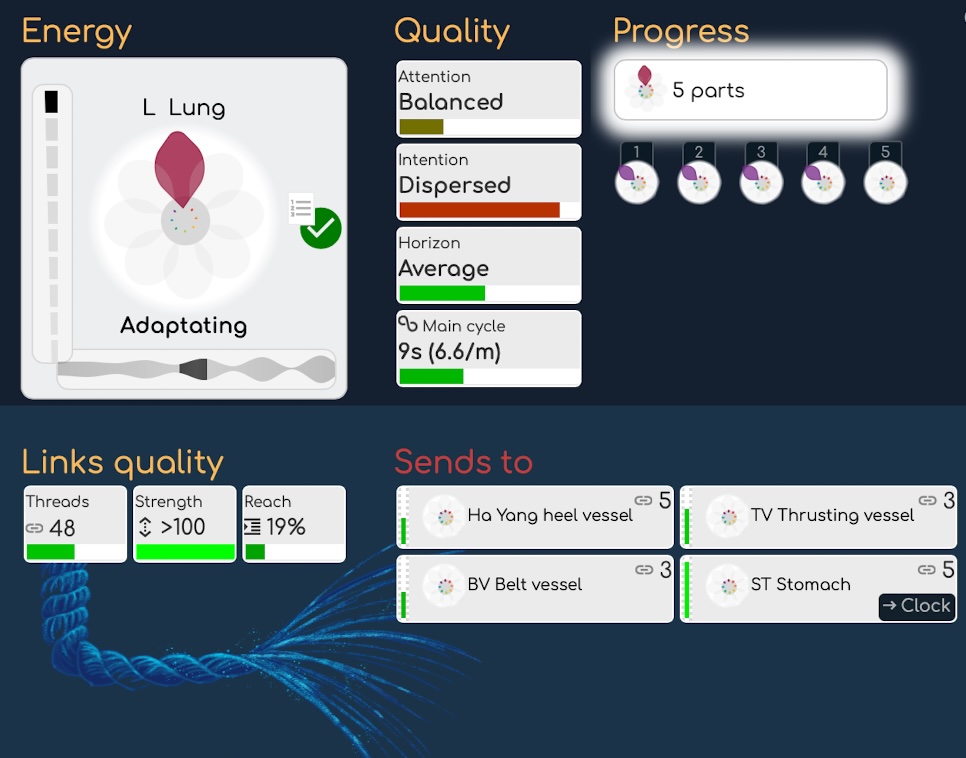 첫 번째 데이터가 확보되면 새로운 속성이 생성되고 이러한 새로운 속성에 대해 여러 가지 2차 분석을 수행할 수 있습니다. 예를 들어, 1차 분석으로 스펙트럼을 계산했습니다: FFT(고속 푸리에 변환)라는 수학 알고리즘 덕분에 우리는 원시 기록을 파형이 아닌 주파수로 표시할 수 있습니다. 이제, 2차 분석에서는 주파수가 아닌 신호의 고조파를 추출할 수 있는 켑스트럼(2차 FFT)을 계산합니다: 즉, 서로 조화롭게 공명하는 주파수를 추출합니다. 이러한 결과를 사용하여 우리는 새로운 바이오마커를 얻을 것입니다.
- 다른 2차 분석의 예로는 각 바이오마커의 엔트로피(또는 « 동요 ») 계산이 있습니다. 간단히 말해, 특정 바이오마커가 정적이거나 동요하는 정도를 보여줍니다.
- 2차 분석의 또 다른 예로는 바이오마커의 오른쪽에 나타나는 주의, 의도 및 수평(그들의 음악적 특성에서 추출된 속성)과 주요 주기가 있습니다.
신호에 대해 수행된 많은 2차 분석이 있으며, 따라서 우리는 많은 새로운 바이오마커 정보를 얻습니다. 그러나 우리는 여기서 멈추지 않을 것이며, 이 새로운 수준은 이전에는 존재하지 않았던 흥미로운 새로운 속성을 드러냅니다.
다시 말해, 우리는 이제 ECG 데이터가 아닌 아유르베다, TCM, 에너지 평가 또는 현대 의학과 같은 치료 특정 데이터에 대해 매우 다양한 연구자들이 발표한 많은 연구를 사용했습니다.
세 번째 차수 분석: 링크와 공명
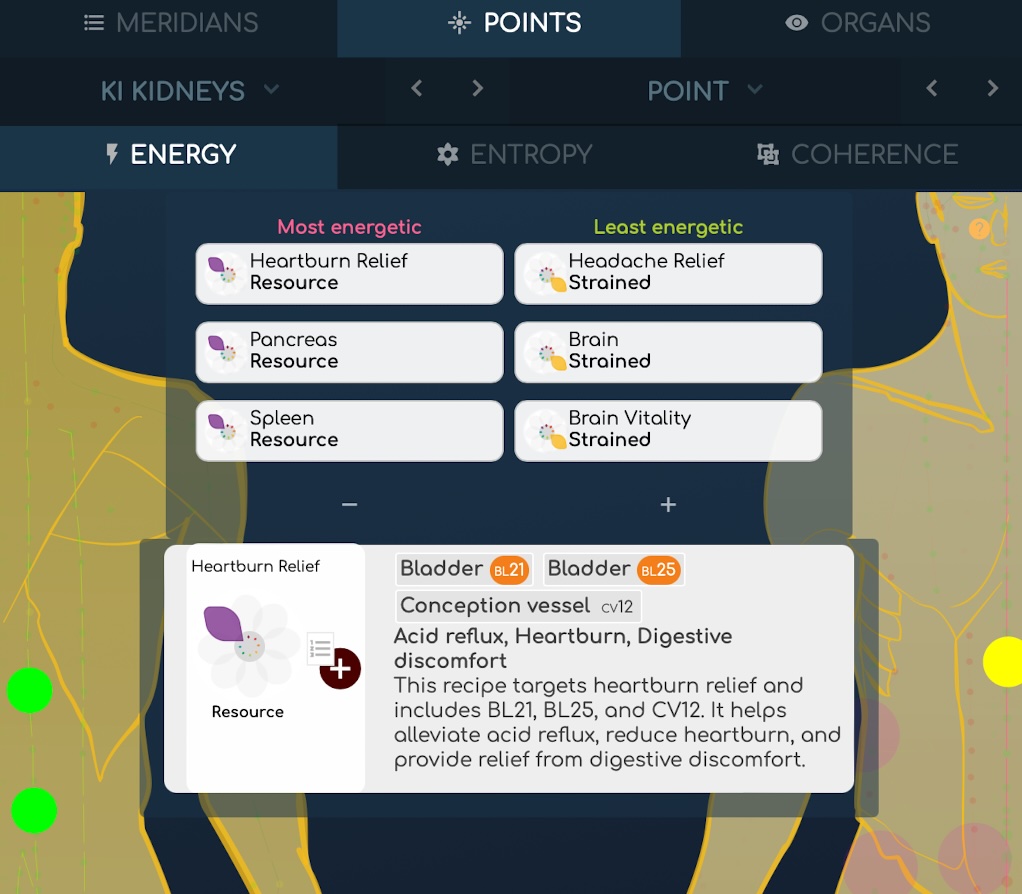 이제 새로운 경이로움으로 복잡성이 또 다른 수준에 도달했습니다. 우리가 가진 모든 2차 새로운 데이터를 사용하여, 예를 들어 요소 간의 링크와 같은 새로운 속성을 계산할 수 있습니다. 이러한 링크는 앱의 그래프나 신체 지도와 같이 곳곳에 표시되어 있으며, 장기 간의 주요 에너지원 관계를 이해하는 데 도움을 줍니다: 장기가 다른 장기와 연결되어 있다면, 이는 에너지 전달이 이루어지고 있음을 나타낼 수 있으며, 하나가 다른 하나를 돕거나 도움을 받을 수 있습니다.
이러한 링크는 요소 간의 공통 공명을 추출하기 위해 고급 벡터 수학을 사용하는 상당히 복잡한 다차원 알고리즘으로 계산됩니다. 그러나 우리는 이 복잡성을 숨기고 요소 간의 명확한 링크인 결과만을 제공하려고 했습니다.
- 프로세스의 일환으로 우리는 방대한 데이터를 계산했으며, 이는 각 바이오마커에 대한 « 링크 품질 » 및 연결된 요소로 나타납니다.
- 또 다른 3차 예시로는 TCM 레시피의 계산이 있습니다. 우리는 특정 증상을 치료하기 위해 여러 침 acupuncture 포인트를 사용하는 TCM 레시피의 논리를 역설계했습니다. 이를 역으로 적용함으로써, 이러한 포인트가 이러한 3차 속성으로 연결되어 있다면, 그 그룹의 관련 증상을 나타낼 수 있다고 말합니다.
다시 말해, 우리는 치료 특정 데이터에 대한 발표된 연구를 사용했습니다. TCM 레시피 외에도, 링크 논리는 우리가 함께 작업한 많은 전문가들의 작업에서 나오며, 그들은 근본 원인을 찾기 위해 인과 관계를 거슬러 올라가려고 합니다.
더 나아가 보시는 건 어떠세요?
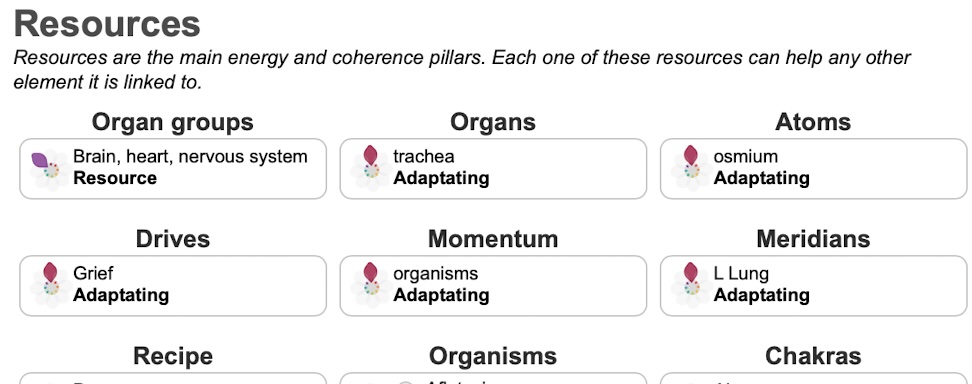 좋습니다, 이 기회를 통해 새로운 emergent properties에 대해 계속 이야기해봅시다. 4단계 분석을 진행하겠습니다. 이 모든 새로운 데이터 포인트를 바탕으로 이제 자원과 우선순위를 계산할 수 있습니다. 자원은 4단계 알고리즘에 의해 계산되며, 아래 모든 단계의 정보를 사용하여 단일 « 자원 가치 »를 산출합니다. 이는 자원 페이지에서 보여지며 (필요시 자원을 변경하기 위해 클릭할 때) 특정 가족의 바이오마커가 « 관대함 사슬의 정점에 있다 »는 것을 나타냅니다. 자원 이론은 Christine Degoy의 연구에서 유래되었으며 그녀의 곧 출간될 책에서 훨씬 더 자세히 설명될 것입니다.
한편, 우선순위는 다소 약자이며 « 먹이사슬의 바닥 » 부분입니다. 이는 주어진 바이오마커 가족에서 에너지, 동요 또는 일관성에 따라 3차 정보 및 그 이하에서 추출됩니다. 우리는 에너지, 동요 및 일관성을 계산했으므로 이제 너무 낮은 에너지, 너무 높은 에너지, 너무 정적인 요소 및 너무 동요하는 요소, 그리고 뭔가 일이 진행되고 있음을 나타낼 수 있는 일관된 시스템을 우선순위로 둘 수 있습니다.
이제, 거꾸로 춤을 춥시다
우리의 H2O 물 예제로 돌아가 봅시다. 물을 처음 볼 때, 우리는 그것을 기체 성분으로 분석하지 않습니다. 우리는 단지 최상위 순서의 속성만 봅니다: 마실 수 있다; 수영할 수 있다; 다른 요소와 혼합할 수 있다 등. 일반적으로 복잡한 시스템을 볼 때, 우리는 외부에서 그것을 보고 최상위 순서의 속성만을 봅니다. 그리고 매번 추가적인 순서의 레벨을 드러낼 때마다, 우리는 그것이 일상 사용자에게 얼마나 유용한지를 깨닫습니다. 그래서 BioCoherence에서는 정보의 중요성을 역전시키고 자원(4차 정보), 우선순위(3차 정보), 바이오마커 꽃(2nd 차 정보) 및 바이오마커 특성(3차 정보)으로 시작하는 경향이 있습니다. 1차 순서 정보(파동 및 스펙트럼)로 내려가는 것도 여전히 가능하지만, 일상에서 가장 많은 가치를 가져다주는 것은 상위 레벨입니다.
 복잡성 순서는 홈 화면의 오른쪽 상단 화살표를 통해 표시됩니다(각 레벨에서 수학을 다시 수행하려면 클릭할 수 있습니다), 하지만 메뉴 논리(및 보고서 순서)는 역전되어 있습니다: 상위 레벨(균형: 자원, 우선순위 및 보고서)부터 시작하는데, 이는 일반적으로 시작하기에 가장 중요한 정보입니다.
그리고 스캔 부분은 여기까지입니다.
BioCoherence 1.8.2
- Tests on home page (you can now start by a test). For instance, you can start with any test and then directly go to the Scan pages when the test is done, as the scan will be calculated anyway at the end of the recording. When you start with a test, there is no pre-evaluation as there is no recording, but there will be a post-evaluation based on the recording, once finished.
- Balance page improvements. That is only layout for now, the meditation/frequencies part is still under development.
- File duration added in list.
- Blank menu bug fixed, parts calculations for comparison fixed, and some minor bugs.
- Added 2 or 4 family accounts for Me Essential and Me. Based on a user suggestion, it seems fair to allow family members to have a distinct account even in the Me subscription. Besides, it allows Me users to test the Client management system.
- New menu entry: Open manual.
- Tutorial videos in English are all online. You can access the videos directly in-app or on ./tutorials
- Share: new "save on cloud" menu element. For now, all recordings are kept private on your device, unless you click "save on cloud"; the recordings are then sent to our own secure server and become available for your other devices or to share with a client or a Pro.
- Better test measurement visualisation. There is now a text while calibration, a countdown of test items, and some layout improvements. The record part is also now always on the bottom part of the screen.
- Better Bluetooth connect panel. Still some improvements to come.
- Better biomarker lists and links on chakras. We added some information on chakras - there are still plenty of ideas and data for future improvements.
BioCoherence 1.7
참고 문헌
부록 3.
참고 문헌
- "프롤로그: 인생 프로젝트 완수하기 - 1권: 질병, 치유, 변화: 자원의 길" (Christine Degoy 저)
체계적인 접근 방식을 통해 건강과 웰빙을 재조명하여 자신의 존재를 재정의하고 인생 프로젝트에 대한 더 깊은 이해를 돕는 혁신적인 가이드입니다. 이 책은 내면의 소통을 키우고 현실에 대한 인식을 변화시키며 자신의 존재 이유를 완전히 구현하는 데 필요한 도구를 제공합니다. - "프롤로그: 삶의 의미 재발견 - 2권: 몸의 인생 프로젝트: 이해, 잠금 해제, 변혁" (Christine Degoy 저)
프롤로그 장기 해독을 통해 신체의 각 부분이 우리 존재의 더 깊은 차원을 어떻게 반영하는지 알아보세요. 이 책은 삶의 경험과 신체 건강 사이의 연관성을 탐구하여 에너지 막힘을 이해하고, 막힘을 풀고, 변화시키는 열쇠를 제공합니다. 이 책은 내면의 자원과 숨겨진 잠재력에 집중함으로써 전체적인 비전을 통해 인생 프로젝트를 포용하고 몸과 마음을 조화롭게 하여 완전히 충만한 삶을 살 수 있도록 초대합니다.에너지와 전기 의학
- "신체 전기: 전자기학과 생명의 기초" 로버트 베커와 게리 셀든 지음
이 획기적인 책은 인체의 전자기장과 그것이 치유, 에너지 흐름, 건강에 미치는 심오한 영향을 탐구합니다. 생체 전기에 대한 베커의 연구는 인체의 에너지 시스템 뒤에 숨겨진 과학을 이해하는 데 필수적인 통찰력을 제공합니다. - "기계 속의 불꽃: 침술의 과학이 서양 의학의 신비를 설명하는 방법", 다니엘 키운(Daniel Keown) 박사
다니엘 키운 박사는 서양의학과 고대 침술 관행 사이의 간극을 메우고, 에너지가 신체를 통해 어떻게 흐르고 어떻게 치유에 활용될 수 있는지에 대한 포괄적인 설명을 제공합니다. - "에너지 의학: 제임스 L. 오슈먼의 "에너지 의학: 과학적 근거
이 책은 전자기장, 경락 및 기타 에너지 시스템이 건강에 미치는 영향에 대한 증거를 제시하면서 에너지 의학의 과학적 근거에 대한 철저한 탐구를 제공합니다. 오슈만은 물리학 및 생물학을 바탕으로 기존 치료법과 대체 치료법을 모두 보완하는 방식으로 신체의 에너지 시스템을 설명합니다. - "진동 의학: 미묘한 에너지 치료의 #1 핸드북" (Richard Gerber 저)
거버의 고전적인 텍스트는 미묘한 에너지 의학 분야를 이해하는 데 필수적인 자료입니다. 이 책은 에너지 장, 차크라, 진동 요법이 몸과 마음을 치유하는 방법에 대한 자세한 개요를 제공합니다. - "교차 전류: 전기 오염의 위험, 전자 의학의 약속" 로버트 O. 베커의 글
베커의 The Body Electric 후속작인 이 책은 현대 전기 기술이 건강에 미치는 영향을 조사하는 동시에 전자기 치료가 치유에 어떻게 도움이 될 수 있는지 탐구합니다. - "믿음의 생물학: 의식, 물질, 기적의 힘을 발휘하라" 브루스 립튼(Bruce H. Lipton) 저서
이 책은 생물학과 믿음의 교차점을 탐구하여 마음이 세포 수준에서 신체에 어떤 영향을 미치는지 보여줍니다. 립튼은 에너지장과 의식이 생물학적 과정에 어떻게 영향을 미치는지 설명합니다. - "필드: 우주의 비밀스러운 힘에 대한 탐구" 린 맥타가트의 글
맥타가트는 모든 물질을 연결하는 우주적 에너지 장인 영점장에 대한 최첨단 과학을 탐구합니다. 이 책은 생명의 에너지적 본질과 이 에너지를 치유에 어떻게 활용할 수 있는지에 대한 통찰력을 제공합니다. - "치유는 전압이다: 핸드북", 제리 테넌트 저
테넌트 박사는 신체의 전압, 특히 세포 수준에서 전압이 건강에 얼마나 중요한지 설명합니다. 그는 적절한 전위를 유지하는 것이 어떻게 치유와 웰빙의 기본이 되는지에 대한 포괄적인 관점을 제공합니다.현대 영성
토마스 캠벨의 "나의 큰 발가락(모든 것의 이론)"
현실과 의식의 본질, 물리적인 것과 형이상학적인 것의 연관성을 탐구하는 종합적인 3부작입니다. 물리학자이자 의식 연구자인 캠벨은 과학과 영성을 결합하여 명상, 의식의 변화된 상태, 우주의 에너지에 대한 이해를 뒷받침하는 존재 모델을 제시합니다."조명된 마음: 더 큰 마음챙김을 위한 불교의 지혜와 뇌 과학을 통합한 완벽한 명상 가이드" (John Yates(Culadasa) 저)
쿨라다사의 가이드는 고대 불교의 가르침과 현대 신경과학에 뿌리를 둔 명상 수행에 대한 철저한 단계별 설명입니다. 전통적인 명상 기법과 뇌에 대한 현대 과학적 이해 사이의 간극을 메워줍니다."변화된 특성: 명상이 마음과 뇌, 신체를 어떻게 변화시키는지 과학이 밝혀낸 진실" 다니엘 골먼과 리처드 J. 데이비슨의 저서
이 책은 명상을 둘러싼 과학적 연구를 심층적으로 분석하여 명상이 뇌와 신체에 미치는 심오한 영향을 탐구합니다. 골먼과 데이비슨은 수십 년에 걸친 연구를 바탕으로 명상이 어떻게 지속적인 심리적, 생리적 변화를 가져오는지 설명합니다."깨어남: 종교 없는 영성을 위한 가이드", 샘 해리스의 글
신경과학자이자 철학자인 샘 해리스는 과학과 개인적인 경험을 바탕으로 영성과 명상에 대한 이성적인 접근법을 제시합니다. 그의 책은 특히 명상이 어떻게 종교적 틀 없이도 의식에 대한 인식과 이해에 심오한 변화를 가져올 수 있는지에 초점을 맞추고 있습니다."지금의 힘: 영적 깨달음을 위한 안내서", 에크하르트 톨레 저
널리 읽히는 톨레의 책은 마음챙김과 현재에 머무르는 것의 중요성을 강조합니다. 그의 가르침은 더 온전하고 마음챙김으로 사는 방법에 대한 실용적인 통찰을 제공하며, 이는 싱 더 바디 일렉트릭에서 논의한 웰빙의 에너지적, 정신적 측면과도 일치합니다.딘 라딘의 "진짜 마법: 고대의 지혜, 현대 과학, 그리고 우주의 비밀스러운 힘에 대한 안내"
초심리학 분야의 선도적인 연구자인 Radin은 텔레파시, 예지력, 정신 운동과 같은 현상에 대한 과학적 증거를 탐구하며 의식, 에너지, 현실의 더 넓은 구조 사이의 연관성을 이끌어냅니다. 이 책은 물리적인 것 너머의 다른 현실을 이해하기 위한 기초를 제공합니다."의식의 물리학: 양자 마음과 삶의 의미", 에반 해리스 워커 저
이 책은 양자 물리학 및 의식과의 관계를 탐구합니다. 워커는 양자역학에서 관찰자의 역할을 탐구하고 의식이 우주의 근본이라는 이론을 제시하여 에너지와 존재에 대한 폭넓은 이해에 기여합니다.- h.P. 블라바츠키의 "비밀 교리"
이 신지학의 기본 텍스트는 우주의 본질, 의식, 영적 진화에 대해 탐구합니다. 올더스 헉슬리의 " 올더스 헉슬리의 다년생 철학"
올더스 헉슬리는 보편적인 진리를 강조하면서 다양한 종교에 걸쳐 영성의 공통점을 살펴봅니다.피에르 르콩트 뒤 누이의 "인간의 운명"
이 책은 과학, 철학, 종교의 교차점을 탐구하며 인간의 진화가 신성한 목적에 의해 이끌린다는 생각을 주장합니다. 인류의 영적 잠재력과 인간의 의식에 수반되는 도덕적 책임에 대해 논의합니다.피에르 르콩트 뒤 누이의 "이성의 길"
이 철학적 작품에서 르콩트 뒤 누이는 우주를 이해하는 데 있어 이성과 과학적 사고의 중요성에 대해 이야기합니다. 또한 과학적 진보가 도덕적, 영적 발전과 어떻게 통합되어야 하는지에 대해서도 탐구합니다.리처드 G. 라이온스의 "디지털 신호 처리의 이해"
이 책은 디지털 신호 처리(DSP)에 대한 명확하고 접근하기 쉬운 입문서로, 초보자도 복잡한 개념을 이해할 수 있도록 도와줍니다. 필터링, 푸리에 분석, 샘플링 이론과 같은 주제를 실용적이고 따라 하기 쉬운 방식으로 다루고 있어 오디오 분석을 위한 신호 처리의 기초에 관심이 있는 분들에게 이상적입니다."디지털 신호 처리를 위한 과학자 및 엔지니어 가이드"( Steven W. Smith 저)
실용적인 예제와 애플리케이션을 통해 DSP 개념을 소개하는 인기 있고 읽기 쉬운 책입니다. 단계별 가이드와 실제 예제를 통해 신호 처리의 작동 방식을 설명하는 무료 온라인 자료로, 초보자, 특히 오디오 및 음악 신호 분석에 관심이 있는 분들도 쉽게 접근할 수 있습니다.우도 졸저의 "디지털 오디오 신호 처리"
이 책은 디지털 필터, 오디오 효과, 시간-주파수 분석 등의 분야를 중심으로 디지털 오디오 신호 처리의 원리와 응용 분야를 소개합니다. 기술적인 내용이지만 DSP에 대한 기본 지식이 있는 독자들이 쉽게 접근할 수 있는 방식으로 설명되어 있습니다."오디오 콘텐츠 분석 입문: 신호 처리 및 음악 정보학의 응용" 작성자: Alexander Lerch
이 텍스트는 오디오 및 음악 신호 처리에 관심이 있는 분들에게 특히 유용합니다. 이 책은 신호 처리 알고리즘을 사용하여 음악 구조, 리듬, 화성과 같은 오디오 콘텐츠를 분석하는 기술을 소개합니다. 이 책은 학생과 전문가 모두에게 실용적이고 쉽게 접근할 수 있습니다."C로 오디오 효과 플러그인 디자인하기: 디지털 오디오 신호 처리 이론으로"( 윌 피클 저)
이 책은 오디오 신호 처리의 애플리케이션 측면에 대해 자세히 알아보고 싶은 분들을 위해 C 프로그래밍을 사용하여 오디오 효과를 코딩하고 디자인하는 방법을 사용자 친화적으로 소개합니다. 실시간 오디오 효과를 만들기 위해 DSP를 어떻게 적용할 수 있는지 이해하고자 하는 초보자에게 이상적입니다.정과 무의식
- 칼 G. 융의 "기억, 꿈, 반성"
반자전적 작품인 이 책은 집단 무의식, 원형, 그림자와 같은 개념의 발전을 포함하여 융의 삶과 주요 사상을 다룹니다. 그의 심리학 이론에 대한 개인적인 통찰을 제공합니다. - 칼 G. 융의 "원형과 집단 무의식"
이 책은 융 심리학의 핵심 텍스트로, 무의식, 특히 집단 무의식과 그 원형적 이미지에 대한 그의 이론을 개괄적으로 설명합니다. 성격과 정신에 대한 융의 사상을 이해하기 위한 기초적인 독서입니다. - 칼 G. 융의 "심리적 유형"
이 작품에서 융은 나중에 마이어스-브릭스 유형 지표(MBTI)의 개발에 영향을 준 자신의 심리 유형 이론을 소개합니다. 그는 내향성과 외향성의 이분법과 성격을 형성하는 다른 심리적 기능에 대해 설명합니다. - 칼 G. 융의 "인간과 그의 상징"
융의 사상을 쉽게 소개하는 이 책은 꿈과 예술에서 무의식적 과정을 표현하는 상징의 사용에 대해 탐구합니다. 더 많은 독자를 위해 디자인되었으며 인간의 정신에 대한 통찰력을 제공합니다. - 칼 G. 융의 "발견되지 않은 자아"
융은 개인의 자기계발 욕구와 현대 사회의 압력 사이의 갈등을 탐구합니다. 이 책은 성격의 무의식과 그림자 측면을 탐색하는 데 있어 자기 인식의 중요성을 강조합니다. - 로버트 A. 존슨의 "자신의 그림자 소유하기: 정신의 어두운 면 이해하기"
그림자에 대한 융의 개념을 이해하기 위한 실용적인 가이드인 이 책은 심리적 균형과 개인적 성장을 위해 그림자 자아를 인식하고 통합하는 방법을 설명합니다. - 머레이 스타인의 "융의 영혼의 지도: 소개"
이 책은 그림자, 무의식, 개별화에 대한 아이디어를 포함하여 융의 성격 이론에 대한 소개를 제공합니다. 융 심리학을 처음 접하는 분들에게 좋은 자료입니다. - "다른 선물: 이사벨 브릭스 마이어스, 피터 B. 마이어스 공저의 "성격 유형 이해
이 책은 융의 심리 유형을 기반으로 한 MBTI 성격 유형 체계에 대해 설명합니다. 다양한 성격 유형이 상호 작용하는 방식과 개인 및 직장 생활에 미치는 영향에 대한 통찰력을 제공합니다.소리로 치유하기
- "소리의 치유력: 소리, 목소리, 음악을 이용한 생명을 위협하는 질병으로부터의 회복" (Mitchell L. Gaynor 저)
이 책은 치유를 위한 사운드 테라피의 활용을 탐구하며, 진동과 주파수가 질병으로부터의 회복을 지원하는 데 어떻게 사용될 수 있는지에 초점을 맞추고 있습니다. 종양학자인 게이너는 의학적 통찰력과 사운드 치유법을 결합합니다. - "인간 바이오필드 튜닝: 진동 사운드 테라피로 치유하기" 작성자: Eileen Day McKusick
맥쿠식은 소리, 주파수, 진동이 인간의 에너지 장에 미치는 영향에 대해 논의하면서 생체장 해부학을 탐구합니다. 이 책에는 소리굽쇠와 기타 소리 도구가 어떻게 치유를 촉진할 수 있는지에 대한 정보가 포함되어 있습니다. - "치유의 소리: 조나단 골드먼의 "치유의 소리: 고조파의 힘
이 책은 소리와 고조파를 사용하여 몸과 마음을 치유하는 개념을 설명합니다. 이 책에는 보컬 토닝 및 배음 작업과 같은 소리 치유를 위한 실용적인 기술이 포함되어 있습니다. - "소리 의학: 고대 소리의 과학을 이용해 몸과 마음을 치유하는 방법" (쿨릿 차우다리 저)
이 책은 고대 아유르베다 의학과 현대의 소리 치료법을 결합한 책입니다. 차우하리는 만트라부터 현대 사운드 기술에 이르기까지 소리 주파수와 진동이 치유와 웰빙에 어떻게 사용될 수 있는지 설명합니다.선구자
- "임포션: 댄 윈터의 '황홀경과 불멸의 비밀 과학'
댄 윈터는 특히 의식, 심장의 전기 활동, 생체 에너지와 관련하여 현실의 프랙탈적 특성을 탐구합니다. 그의 작품은 신성한 기하학, 파열, 행복의 물리학 개념을 하나로 묶습니다. - 댄 윈터의 "프랙탈 시공간과 신성한 기하학"
이 책은 의식의 기하학과 인간 에너지 분야를 탐구하며 생물학, 마음의 일관성, 우주에 대한 더 깊은 이해에서 프랙탈 구조의 함의를 강조합니다. - "인체-장 해독하기: 의학으로서의 새로운 정보 과학", 피터 H. 프레이저의 강연
생체 에너지학의 선구자인 피터 H. 프레이저는 인체의 정보 시스템, 즉 %u201인체장(")이 건강과 치유에 어떤 영향을 미치는지 설명합니다. 그의 연구는 양자 생물학과 현대 의학을 에너지 치유법과 통합합니다. - (저서 없음) 조엘 스턴하이머
스턴하이머의 연구는 음표가 생물학적 과정과 어떻게 일치하는지에 대한 이론을 제시합니다. 그는 특정 주파수가 생명체의 분자 상호작용에 영향을 미칠 수 있다는 "프로틴 음악,"의 개념을 탐구합니다.의식, 에너지, 현실
- "물의 네 번째 단계: 고체, 액체, 증기를 넘어" 의 제럴드 폴락(Gerald Pollack)
폴락은 물의 속성과 생물학 및 에너지 의학에 미치는 영향에 대한 획기적인 연구를 발표합니다. - 크리스토퍼 바슈의 "LSD와 우주의 마음"
Bache는 개인적인 경험과 과학적 통찰을 통해 환각, 의식, 현실의 본질이 교차하는 지점을 탐구합니다. - "삶 너머의 의식: 핌 반 롬멜의 "생명을 넘어선 의식: 임사 체험의 과학
반 롬멜은 임사 체험과 그것이 의식에 미치는 영향, 그리고 육체적 존재를 넘어선 자아의 연속성에 대한 포괄적인 고찰을 제공합니다. - 디디에 반 코웰러트의 "기적을 믿지 않는 남자"
이 소설은 의식과 양자 물리학의 주제를 엮어 현실과 믿음의 본질을 설득력 있는 내러티브를 통해 탐구합니다. - 폴커 마이스너의 "일부러 건강하게: 자기 치유를 위한 충동"
마이스너는 에너지 의학의 근간이 되는 과학적 원리를 조사하여 치료 잠재력과 메커니즘에 대한 통찰력을 제공합니다. - "커넥티드: 글로벌 의식의 출현" 로저 넬슨의 글
넬슨은 인간 의식의 상호 연결성과 집단적 경험 및 글로벌 의식을 이해하는 데 시사하는 바를 살펴봅니다. - 마크 헨리의 "물 - 건강 - 정보 및 의식의 영역"
헨리는 생물학적 시스템에서 물의 중요성과 에너지 전달 및 의식의 매개체로서의 물의 역할에 대해 논의합니다. 레이몬드 무디의 "삶 이후의 삶"
무디의 획기적인 연구는 임사 체험의 개념을 소개하고 그러한 경험을 한 사람들이 보고한 공통적인 요소를 강조하는 수많은 사례 연구를 제시합니다.베티 J. 이디의 "빛에 이끌리다"
이 회고록은 이디가 임사 체험을 통해 얻은 통찰과 여행 중에 마주친 심오한 영적 계시를 공유합니다."천국의 증거: 천국의 증거: 신경외과 의사의 사후 세계로의 여정" 작성자: Eben Alexander
신경외과 의사인 알렉산더는 자신의 임사 체험을 공유하며 의식과 사후 세계에 대한 기존의 과학적 견해에 도전하는 설득력 있는 이야기를 들려줍니다.아니타 무르자니의 "내가 되기 위한 죽음: 암에서 임종, 진정한 치유를 향한 나의 여정"
아니타 무르자니가 암 투병 중 겪은 임사 체험과 그 과정에서 얻은 자기 수용과 치유에 대한 강력한 교훈을 공유합니다.로버트 A. 먼로의 "몸 밖으로의 여행"
이 고전적인 책은 먼로의 유체이탈 여행에 대한 개인적인 경험을 기록하고 육체를 넘어선 인간 의식의 가능성을 탐구합니다. 이 책은 의식 연구의 기초가 되는 텍스트 중 하나로 널리 알려져 있습니다.로버트 A. 먼로의 "먼 여행"
"몸 밖의 여행"의 속편으로, 먼로가 육체를 넘어선 여행을 통해 존재의 다른 차원을 탐구하고 의식에 대한 이해를 확장하는 과정을 심도 있게 탐구합니다.로버트 A. 먼로의 "궁극의 여정"
3부작의 마지막 책에서 먼로는 사후 세계, 존재의 본질, 인간의 목적과 같은 주제에 초점을 맞춰 변화된 의식 상태에서의 경험을 통해 얻은 통찰을 공유합니다.리처드 M. 버크의 "우주 의식"
버크는 우주 의식에 대한 자신의 경험을 설명하고 영적 진화에 대한 우주 의식의 의미를 탐구합니다.카를로스 카스타네다의 "야키 지식의 길"
이 책은 카스타네다가 야키족 샤먼과의 도제 생활을 통해 샤머니즘 관습과 현실의 본질에 대해 탐구합니다.- "생명윤리: 원칙, 쟁점, 사례" 루이스 본의 글
본은 의료 행위의 주요 윤리적 원칙과 쟁점을 제시하고 실제 적용을 위한 사례 연구를 제공합니다. - "의식과 우주: 로저 펜로즈 경과 스튜어트 해메로프 경의 "양자 물리학, 진화, 뇌와 마음
이 에세이 모음은 물리학, 신경과학, 철학의 통찰력을 결합하여 뇌의 양자 프로세스가 어떻게 의식적 경험을 설명할 수 있는지 탐구하면서 의식의 양자적 기원을 탐구합니다. - 다니엘 데넷의 "의식 설명"
데넷은 의식에 대한 포괄적인 이론을 제시하며 전통적인 견해에 반박하고 마음의 작용에 대한 통찰력을 제공합니다. - "깨어남: 종교 없는 영성을 위한 가이드" 샘 해리스의 글
해리스는 의식, 명상, 영성의 본질에 대해 이야기하며 마음을 이해하는 세속적인 접근법을 옹호합니다. - "양자와 연꽃: 과학과 불교가 만나는 경계를 향한 여정", 마티유 리카드와 트린 쑤언 투안 저자
이 책은 양자 물리와 불교 철학의 유사점을 탐구하고 두 분야의 통찰력을 논의합니다. - 마이클 탤벗의 "홀로그램 우주"
Talbot은 우주가 홀로그램처럼 작동한다는 아이디어를 제시하며 양자 물리학의 통찰과 형이상학적 함의를 결합합니다. - 빅토르 E. 프랭클의 "인간의 의미 찾기"
프랭클은 실존 철학과 심리학을 통합하여 가장 끔찍한 상황에서도 목적을 찾는 심리적 여정을 탐구합니다. - 베셀 반 데르 콜크의 "몸은 점수를 유지한다: 트라우마 치유의 뇌, 마음, 몸"
이 책은 트라우마가 몸과 마음에 미치는 영향에 대해 논의하며 치유를 위한 혁신적인 접근법을 강조합니다. 존 C. 피에라코스의 "핵심 에너지학"
이 책은 신체 중심의 치료 방식인 코어 에너제틱스에 대한 피에라코스의 접근 방식을 개괄적으로 설명합니다. 그는 신체의 막힌 에너지를 풀어 정서적, 심리적 치유로 이어지는 방법을 탐구하고 영성과 심리치료를 통합합니다.에바 피에라코스의 "자기 변화의 길잡이"
존 피어라코스의 아내인 에바 피어라코스가 쓴 이 책은 핵심 에너지학의 영적, 에너지적 기초를 이해하는 데 필수적인 책입니다. 이 책은 피어라코스 자신의 치료 작업에 큰 영향을 준 패스워크 가이드의 가르침을 모아 엮은 것입니다."내 목소리가 너와 함께 갈 것이다: 밀턴 H. 에릭슨의 가르침 이야기" 밀턴 H. 에릭슨 지음, 시드니 로젠 편집
이 책은 에릭슨의 치료 이야기와 가르침의 이야기를 모은 책입니다. 깊은 심리적 변화를 촉진하기 위한 에릭슨의 간접 기법과 은유 사용을 강조하며, 에릭슨이 환자를 치유로 미묘하게 인도하는 방식에 대한 통찰력을 제공합니다."흔하지 않은 치료법: 밀턴 H. 에릭슨의 정신과적 기법" 제이 헤일리의 글
헤일리는 에릭슨의 혁신적인 단기 치료 기법에 대해 자세히 설명합니다. 이 책은 단 몇 번의 세션으로 환자를 빠른 치료의 돌파구로 이끄는 에릭슨의 비전통적이고 종종 놀라운 방법을 강조합니다.- "일반 시스템 이론: 루드비히 폰 베르탈란피의 "일반 시스템 이론: 기초, 발전, 응용
시스템 사고의 고전인 베르탈란피의 연구는 일반 시스템 이론의 기초를 소개하며, 이는 과학 전반의 학제 간 연구의 기초가 되었습니다. 그의 아이디어는 생물학에서 사회과학에 이르기까지 모든 분야에 영향을 미쳤습니다. - 그레고리 베이츠슨의 "마음의 생태학으로 가는 단계"
팔로알토 그룹의 핵심 인물인 베이트슨의 에세이집은 커뮤니케이션, 심리학, 생태학 등의 주제를 다루고 있습니다. 그의 연구는 인간 커뮤니케이션과 상호작용에 대한 시스템 사고의 토대를 마련했습니다. - "마음과 자연: 그레고리 베이츠슨의 "마음과 자연: 필요한 통합
마음과 환경이 어떻게 서로 연결되어 있는지를 탐구하는 베이트슨의 또 다른 필수 텍스트입니다. 그의 아이디어는 인간의 상호작용, 학습, 생태학 측면에서 시스템 이론을 이해하는 데 기초가 됩니다. - "현실의 사회적 구성: 지식 사회학 논문( Peter L. Berger, Thomas Luckmann 저)
이 책은 사회 시스템과 현실이 어떻게 구성되고 유지되는지에 대한 탐구를 통해 시스템 사고와 연결됩니다. - "삶의 시스템적 관점: 통합적 비전" 프리조프 카프라, 피에르 루이지 루이시의 저서
시스템 사고의 핵심 인물인 카프라는 생명 시스템에 대한 현대적이고 통합적인 이해를 제시합니다. 이 책은 시스템 이론과 생물학, 생태학, 의식을 연결합니다. - "변화: 변화: 문제 형성과 문제 해결의 원리" 폴 와츨라윅, 존 위클랜드, 리처드 피쉬 저, 팔로알토대학교 출판부
팔로알토 그룹의 또 다른 필수 저작으로, 인간 시스템, 특히 가족과 조직에서 변화가 어떻게 일어나는지 시스템적 렌즈를 통해 탐구합니다. - "지식의 나무: 인간 이해의 생물학적 뿌리" 움베르토 R. 마투라나와 프란시스코 J. 바렐라의 저서
이 책은 생물학, 인지, 시스템 사고를 결합하여 생명 시스템을 이해하는 데 있어 핵심 개념인 자가증식(자가 생성 시스템)에 초점을 맞추고 있습니다. - "사이버네틱스, 또는 동물과 기계의 제어와 커뮤니케이션"( 노버트 위너 저)
이 사이버네틱스의 기초 텍스트는 기계와 생명체 모두에서 통신 및 제어 프로세스가 어떻게 작동하는지를 탐구합니다. - "다섯 번째 분야: 학습 조직의 예술과 실제" 피터 M. 센지의 저서
Senge의 연구는 시스템 사고를 조직 개발에 적용합니다. 복잡한 조직을 학습과 적응력을 위해 어떻게 구조화할 수 있는지에 초점을 맞춘 이 책은 비즈니스와 교육 분야에서 핵심 텍스트로 널리 인정받고 있습니다.
디지털 신호 처리
생명윤리와 의학
의식 연구
양자 물리학 및 형이상학
심리학 및 심리 치료
시스템 이론과 시스템 사고
의학 연구 및 문헌
부록 2.
관련 연구 목록
-
H. M. Langevin and J. A. Yandow, Anat. Rec. (New Anat.) 269, 257 (2002).
DOI
,
Crossref
-
Banes AJ, Tsuzaki M, Yamamoto J, et al. 1995. Mechanoreception at the cellular level: The detection, interpretation and diversity of responses to mechanical signals. Biochem Cell Biol 73:349– 365.
Crossref
PubMed
Web of Science®
-
Bonassar LJ, Stinn JL, Paguio CG, et al. 1996. Activation and inhibition of endogenous matrix metalloproteinases in articular cartilage: Effects on composition and biophysical properties. Arch Biochem Biophys 333: 359– 367.
Crossref
PubMed
Web of Science®
-
Murugan NJ, Cariba S, Abeygunawardena S, Rouleau N, Payne SL. Biophysical control of plasticity and patterning in regeneration and cancer. Cell Mol Life Sci. 2023 Dec 15;81(1):9. doi: 10.1007/s00018-023-05054-6. PMID: 38099951; PMCID: PMC10724343. DOI
-
Brand RA. 1997. What do tissues and cells know of mechanics? Ann Med 29: 267– 269.
Crossref
PubMed
Web of Science®
-
Bossy J. 1984. Morphological data concerning the acupuncture points and channel network. Acupunct Electrother Res 9: 79– 106.
PubMed
Web of Science®
-
Cheng X. 1987. Chinese acupuncture and moxibustion. Beijing: Foreign Language Press.
-
Chicurel ME, Chen CS, Ingber DE. 1998. Cellular control lies in the balance of forces. Curr Opin Cell Biol 10: 232– 239.
Crossref
PubMed
Web of Science®
-
Chiquet M. 1999. Regulation of extracellular matrix gene expression by mechanical stress. Matrix Biol 18: 417– 426.
PubMed
Web of Science®
-
Ciczek LSW, Szopinski J, Skrzypulec V. 1985. Investigations of morphological structures of acupuncture points and meridians. J Trad Chin Med 5: 289– 292.
-
Comunetti A, Laage S, Schiessl N, Kistler A. 1995. Characterization of human skin conductance at acupuncture points. Experientia 51: 328– 331.
Crossref
PubMed
Web of Science®
-
Dung HC. 1984. Anatomical features contributing to the formation of acupuncture points. Am J Acupunct 12: 139– 143.
Web of Science®
-
Giancotti FG, Ruoslahti E. 1999. Integrin signaling. Science 285: 1028– 1032.
Crossref
PubMed
Web of Science®
-
Gunn CC, Ditchburn FG, King MH, Renwick GJ. 1976. Acupuncture loci: A proposal for their classification according to their relationship to known neural structures. Am J Chin Med 4: 183– 195.
Crossref
PubMed
-
Ho MW, Knight DP. 1998. The acupuncture system and the liquid crystalline collagen fibers of the connective tissues. Am J Chin Med 26: 251– 263.
Crossref
PubMed
Web of Science®
-
Huan ZY, Rose K. 2001. A brief history of Qi. Brookline, MA: Paradigm Publications.
-
Kaptchuk TJ. 2000. The web that has no weaver. Understanding Chinese medicine. Chicago: Contemporary Publishing Group, Inc.
-
Lai WM, Mow VC, Sun DD, Atesian GA. 2000. On the electric potentials inside a charged soft hydrated biological tissue: Streaming potential versus diffusion potential. J Biomech Eng 122: 336– 346.
Crossref
PubMed
Web of Science®
-
Langevin HM, Churchill DL, Cipolla MJ. 2001a. Mechanical signaling through connective tissue: A mechanism for the therapeutic effect of acupuncture. FASEB J 15: 2275– 2282.
Wiley Online Library
PubMed
Web of Science®
-
Langevin HM, Churchill DL, Fox JR, Badger GJ, Garra BS, Krag MH. 2001b. Biomechanical response to acupuncture needling in humans. J Appl Physiol 91: 2471– 2478.
Crossref
PubMed
Web of Science®
-
Langevin HM, Churchill DL, Wu J, Badger GJ, Yandow JA, Fox JR, Krag MH. 2002. Evidence of connective tissue involvement in acupuncture. FASEB J 16: 872– 874.
Wiley Online Library
PubMed
Web of Science®
-
Liu KY, Varela M, Oswald R. 1975. The correspondence between some motor points and acupuncture loci. Am J Chin Med 3: 347– 358.
Crossref
PubMed
-
Matsumoto K, Birch S. 1988. Hara diagnosis: Reflections of the sea. Brookline: Paradigm Publications.
-
McCarroll GD, Rowley BA. 1979. An investigation of the existence of electrically located acupuncture points. IEEE Trans Biomed Eng 26: 177– 182.
Crossref
PubMed
Web of Science®
-
Noordegraaf A, Silage D. 1973. Electroacupuncture. IEEE Trans Biomed Eng 20: 364– 366.
Crossref
PubMed
Web of Science®
-
NIH Consensus Statement. 1997. Acupuncture. Bethesda, MD: NIH. 15: 1– 34.
-
O'Connor J, Bensky D. 1981. Acupuncture, a comprehensive text (Shanghai College of Traditional Medicine) Seattle: Eastland Press.
-
Oschman JL. 1993. A biophysical basis for acupuncture. Proceedings of the First Symposium of the Committee for Acupuncture Research.
-
Pomeranz B. 2001. Acupuncture analgesia-basic research. In: G Stux, R Hammerschlag, editors.Clinical acupuncture-scientific basis. Berlin: Springer-Verlag.
-
Rabischong P, Niboyet JEH, Terral C, Senelar R, Casez R. 1975. Bases experimentales de l'analgésie acupuncturale. Nouv Presse Med 4: 2021– 2026.
PubMed
Web of Science®
-
Reishmanis M, Marino AA, Becker RO. 1975. Electrical correlates of acupuncture points. IEEE Trans Biomed Eng 22: 533– 535.
Crossref
PubMed
Web of Science®
-
Senelar R. 1979. Les caractéristiques morphologiques des points chinois. In: JEH Niboyet, editor.Nouveau traité d'acupuncture. Paris: Maisonneuve.
-
Shanghai Medical University, Human Anatomy Department. 1973. A relationship between points of meridians and peripheral nerves: Acupuncture anaesthetic theory study. Shanghai: People's Republic Publishing House.
-
Swartz MA, Tschumperlin DJ, Kamm RD, Drazen JM. 2001. Mechanical stress is communicated between different cell types to elicit matrix remodeling. Proc Natl Acad Sci USA 98: 6180– 6185.
Crossref
PubMed
Web of Science®
-
Ulett GA, Han S, Han JS. 1998. Electroacupuncture: mechanisms and clinical applications. Biol Psych44: 129– 138.
PubMed
Web of Science®
-
Veith I. 1949. The yellow emperor's classic of internal medicine. Berkeley: University of California Press.
-
Yang J. 1601. The golden needle and other odes of traditional acupuncture, 1601. Translated by R Bertschinger. Edinburgh: Churchill Livingstone.
-
Quyen Manh Nguyen, Tuan Hoang Nguyen, Lam Van Tran, Tin Thanh Dang, Anh Dinh, Device to Detect Acupuncture Points in the Feet Soles for Massage Treatment, 8th International Conference on the Development of Biomedical Engineering in Vietnam, 10.1007/978-3-030-75506-5_1, (3-13), (2022).
Crossref
-
Yung-Sheng Yen, Han-Yi Cheng, Hung-Ta Lin, Evaluation of Stress on Acupuncture with Nano-Etched and Diamond-Like Carbon (DLC) Coating Surface Modifications, Journal of Biomaterials and Tissue Engineering, 10.1166/jbt.2022.2928, 12, 3, (489-493), (2022).
Crossref
-
Gregory P. Casey, Anatomical characterization of acupoint large intestine 4, The Anatomical Record, 10.1002/ar.24681, 305, 1, (144-155), (2021).
Wiley Online Library
-
Ajit B. Pai, Lori V. Shuart,, David F. Drake, Integrative Medicine in Rehabilitation, Braddom's Physical Medicine and Rehabilitation, 10.1016/B978-0-323-62539-5.00018-7, (364-373.e3), (2021).
Crossref
-
Tongju Li, Bruce Qing Tang, Wei-Bo Zhang, Minyi Zhao, Qingchuan Hu, Andrew Ahn, In Vivo Visualization of the Pericardium Meridian with Fluorescent Dyes, Evidence-Based Complementary and Alternative Medicine, 10.1155/2021/5581227, 2021, (1-10), (2021).
Crossref
-
Chao Sun, Changchun Ji, Ying Li, Jiujie Kuang, Jiangtao Wu, A comparison study of photothermal effect between moxibustion therapy and laser irradiation on biological tissue, International Journal of Thermal Sciences, 10.1016/j.ijthermalsci.2021.106924, 164, (106924), (2021).
Crossref
-
Nikolay Dimitrov, Nikola Tomov, Dimitrinka Atanasova, Stiliyan Iliev, Tatyana Tomova, Dimitar Sivrev, Zoya Goranova, Visible Meridian Phenomena after Acupuncture: A Series of Case Reports, Journal of Acupuncture and Meridian Studies, 10.51507/j.jams.2021.14.2.50, 14, 2, (50-57), (2021).
Crossref
-
Nasim Bahadorani, Jerry W. Lee, Leslie R. Martin, Implications of Tamarkoz on stress, emotion, spirituality and heart rate, Scientific Reports, 10.1038/s41598-021-93470-8, 11, 1, (2021).
Crossref
-
Maojun Li, Huawen Peng, Binxiu Wei, Qiuxia Deng, Fen Qian, Xin Liu, Jian Wang, Xiaodong Zhu, Effect of acupuncture anesthesia based on nanomaterial sensor on cognitive function after one-lung ventilation thoracotomy, Materials Express, 10.1166/mex.2021.2027, 11, 7, (1051-1056), (2021).
Crossref
-
Jaliya Kumaratilake, Teghan Lucas, Maciej Henneberg, Possible relationship of upper limb arteries, median and brachial to the twelfth meridian of the human upper limb, Journal of Anatomy, 10.1111/joa.13401, 238, 6, (1492-1493), (2021).
Wiley Online Library
-
Yong Ming Li, Three hand yin meridians in ancient Chinese medicine were established initially based on arterial structures, Journal of Anatomy, 10.1111/joa.13400, 238, 6, (1494-1496), (2021).
Wiley Online Library
-
Yi Zhang, Interpretation of acupoint location in traditional Chinese medicine teaching: Implications for acupuncture in research and clinical practice, The Anatomical Record, 10.1002/ar.24618, 304, 11, (2372-2380), (2021).
Wiley Online Library
-
Sanghun Lee, Prospects for the Development of Acupuncture Treatment Led by the Use of Ultrasound Imaging Devices, Journal of Korean Medical Society of Soft Tissue, 10.54461/JKMST.2021.5.1.8, 5, 1, (8-11), (2021).
Crossref
-
Xiao Ye, Yu-lan Ren, Yun-hui Chen, Ji Chen, Xiao-jiao Tang, Zong-ming Zhang, A "4D" systemic view on meridian essence: Substantial, functional, chronological and cultural attributes, Journal of Integrative Medicine, 10.1016/j.joim.2021.11.006, (2021).
Crossref
-
Berna Dincer, Demet İnangil, Gökhan İnangil, Nefise Bahçecik, Elif Yıldırım Ayaz, Ali Arslanoğlu, Miraç Vural Keskinler, Ayşe Kabuk, Gamze Özkan, The effect of acupressure on sleep quality of older people: A systematic review and meta-analysis of randomized controlled trials, EXPLORE, 10.1016/j.explore.2021.11.010, (2021).
Crossref
-
Marianna de Melo Salemi, Vanessa Maria da Silva Alves Gomes, Laylla Marjorye Rebouças Bezerra, Thania Maion de Souza Melo, Geisa Guimarães de Alencar, Iracema Hermes Pires de Mélo Montenegro, Alessandra Paula de Melo Calado, Eduardo José Nepomuceno Montenegro, Gisela Rocha de Siqueira, Effect of Dry Cupping Therapy on Pain and Functional Disability in Persistent Non-Specific Low Back Pain: A Randomized Controlled Clinical Trial, Journal of Acupuncture and Meridian Studies, 10.51507/j.jams.2021.14.6.219, 14, 6, (219-230), (2021).
Crossref
-
Luís Carlos Matos, Jorge Pereira Machado, Fernando Jorge Monteiro, Henry Johannes Greten, Understanding Traditional Chinese Medicine Therapeutics: An Overview of the Basics and Clinical Applications, Healthcare, 10.3390/healthcare9030257, 9, 3, (257), (2021).
Crossref
-
Jingwen Cui, Wanrong Song, Yipeng Jin, Huihao Xu, Kai Fan, Degui Lin, Zhihui Hao, Jiahao Lin, Research Progress on the Mechanism of the Acupuncture Regulating Neuro-Endocrine-Immune Network System, Veterinary Sciences, 10.3390/vetsci8080149, 8, 8, (149), (2021).
Crossref
-
Íñigo Ongay de Felipe, The Universality of Science and Traditional Chinese Medicine, Science & Education, 10.1007/s11191-021-00249-4, (2021).
Crossref
-
Ningcen Li, Yi Guo, Yinan Gong, Yue Zhang, Wen Fan, Kaifang Yao, Zhihan Chen, Baomin Dou, Xiaowei Lin, Bo Chen, Zelin Chen, Zhifang Xu, Zhongxi Lyu, The Anti-Inflammatory Actions and Mechanisms of Acupuncture from Acupoint to Target Organs via Neuro-Immune Regulation, Journal of Inflammation Research, 10.2147/JIR.S341581, Volume 14, (7191-7224), (2021).
Crossref
-
戬云 冯, Bridging Medicine East and West—Pursuit on the Relation between Biomedical Consequence of Stimulating the Acupoints of the Lung Meridian and Somatosensory Reflexes, Aiming to Treat Chronic Obstruction Pulmonary Diseases, Traditional Chinese Medicine, 10.12677/TCM.2020.92022, 09, 02, (145-176), (2020).
Crossref
-
Manon te Dorsthorst, Michael van Balken, John Heesakkers, Tibial nerve stimulation in the treatment of overactive bladder syndrome, Current Opinion in Urology, 10.1097/MOU.0000000000000781, 30, 4, (513-518), (2020).
Crossref
-
Peter I-Kung Wu, Lucy Chen, Integrative Medicine, Spine Pain Care, 10.1007/978-3-030-27447-4, (473-489), (2020).
Crossref
-
I. Giralt Sampedro, G. Carvajal, A. García-Janeras, A. Fabà, M.B. Nishishinya Aquino, A severe case of Ramsay Hunt Syndrome treated with acupuncture and related techniques, Complementary Therapies in Clinical Practice, 10.1016/j.ctcp.2020.101119, (101119), (2020).
Crossref
-
Eric Leskowitz, A Cartography of Energy Medicine: From Subtle Anatomy to Energy Physiology, EXPLORE, 10.1016/j.explore.2020.09.008, (2020).
Crossref
-
Hantong Hu, Yongliang Jiang, Xiaoyu Li, Jiali Lou, Yajun Zhang, Xiaofen He, Junfan Fang, Yuanyuan Wu, Xiaomei Shao, Jianqiao Fang, The microcirculatory characteristics of the heart and lung meridians, Medicine, 10.1097/MD.0000000000019594, 99, 14, (e19594), (2020).
Crossref
-
Sheikh Faruque Elahee Bangladesh, Hui-juan Mao, Ling Zhao, Xue-yong Shen, Meridian system and mechanism of acupuncture action: A scientific evaluation 经络系统与针刺效应机制的科学评价, World Journal of Acupuncture - Moxibustion, 10.1016/j.wjam.2020.05.003, (2020).
Crossref
-
Mário Gonçalves, Luís Carlos Matos, Leonel Duarte, Jorge Machado, Henry Johannes Greten, Giovanna Franconi, PROBLEMS OF SCIENTIFIC METHODOLOGY RELATED TO PLACEBO CONTROL IN QIGONG STUDIES: A SYSTEMATIC REVIEW, Journal of Bodywork and Movement Therapies, 10.1016/j.jbmt.2020.06.035, (2020).
Crossref
-
Hans-Udo Richarz, Uwe Schütz, Werner Klingler, Das fasziale Bindegewebe – ein Medium für die Akupunktur? The fascial connective tissue—a medium for acupuncture?, Deutsche Zeitschrift für Akupunktur, 10.1007/s42212-019-00228-5, (2020).
Crossref
-
Shi Yonghong, Wu Ruizhi, Zhang Yue, Bai Xuebing, Imran Tarique, Liang Chunhua, Yang Ping, Chen Qiusheng, Telocytes in Different Organs of Vertebrates: Potential Essence Cells of the Meridian in Chinese Traditional Medicine, Microscopy and Microanalysis, 10.1017/S1431927620001518, (1-14), (2020).
Crossref
-
Jinglan Mu, Andrea D Furlan, Wai Yee Lam, Marcos Y Hsu, Zhipeng Ning, Lixing Lao, Acupuncture for chronic nonspecific low back pain, Cochrane Database of Systematic Reviews, 10.1002/14651858.CD013814, (2020).
Crossref
-
Kimia Grace Ganjaei, Jeremiah W. Ray, Brandee Waite, Kevin J. Burnham, The Fascial System in Musculoskeletal Function and Myofascial Pain, Current Physical Medicine and Rehabilitation Reports, 10.1007/s40141-020-00302-3, (2020).
Crossref
-
Christina L Ross, Energy Medicine: Current Status and Future Perspectives, Global Advances in Health and Medicine, 10.1177/2164956119831221, 8, (216495611983122), (2019).
Crossref
-
Phil Trabulsy, COMPLEMENTARY AND ALTERNATIVE MEDICINE, Cancer, 10.1002/9781119645214, (499-530), (2019).
Wiley Online Library
-
Younbyoung Chae, Yeonhee Ryu, Won-Mo Jung, An Analysis of Indications of Meridians in DongUiBoGam Using Data Mining, Korean Journal of Acupuncture, 10.14406/acu.2019.034, 36, 4, (292-299), (2019).
Crossref
-
Wei-bo ZHANG, Xiao-jing SONG, Ze WANG, Guang-jun WANG, Shu-yong JIA, Yu-ying TIAN, Hong-yan LI, Longitudinal Directional Movement of Alcian Blue in Gephyrocharax Melanocheir Fish: Revealing Interstitial Flow and Related Structure ☆ 阿尔新蓝在黑裙鱼中的纵向定向运动:组织液流动与相关结构的揭示, World Journal of Acupuncture - Moxibustion, 10.1016/j.wjam.2019.05.008, (2019).
Crossref
-
Nicholas Alexander Wise, Action at a distance: laser acupuncture and the brain, Photobiomodulation in the Brain, 10.1016/B978-0-12-815305-5.00036-1, (489-501), (2019).
Crossref
-
Liangjun Xia, Qingyu Meng, Jin Xi, Qin Han, Jie Cheng, Jie Shen, Youbing Xia, Liyun Shi, The synergistic effect of electroacupuncture and bone mesenchymal stem cell transplantation on repairing thin endometrial injury in rats, Stem Cell Research & Therapy, 10.1186/s13287-019-1326-6, 10, 1, (2019).
Crossref
-
Dha-Hyun Choi, Younbyoung Chae, Minimisation of variations in locating an acupuncture point using a laser-device, Integrative Medicine Research, 10.1016/j.imr.2019.11.005, (2019).
Crossref
-
Doohan Oh, Jong-hyun Kim, Youn-Sub Kim, Song-Yi Kim, Analysis of Tonification and Sedation Methods in the 『Yeongsochimgugyeong』, Korean Journal of Acupuncture, 10.14406/acu.2019.021, 36, 3, (171-180), (2019).
Crossref
-
Aleksandar Zivaljevic, Bin Shi, ElisaM S. Tam, Vahideh Toossi, Treatment of visceral pain associated with irritable bowel syndrome using acupuncture: Mechanism of action, World Journal of Traditional Chinese Medicine, 10.4103/wjtcm.wjtcm_24_19, 5, 4, (181), (2019).
Crossref
-
Suchan Chang, O. Sang Kwon, Se Kyun Bang, Do-Hee Kim, Min Won Baek, Yeonhee Ryu, Jong Han Bae, Yu Fan, Soo Min Lee, Hyung Kyu Kim, Bong Hyo Lee, Chae Ha Yang, Hee Young Kim, Peripheral Sensory Nerve Tissue but Not Connective Tissue Is Involved in the Action of Acupuncture, Frontiers in Neuroscience, 10.3389/fnins.2019.00110, 13, (2019).
Crossref
-
Junaid Wazir, Rahat Ullah, Shihong Li, Md Amir Hossain, Maladho Tanta Diallo, Farhan Ullah Khan, Awais Ullah Ihsan, Xiaohui Zhou, Efficacy of acupuncture in the treatment of chronic prostatitis-chronic pelvic pain syndrome: a review of the literature, International Urology and Nephrology, 10.1007/s11255-019-02267-2, (2019).
Crossref
-
Noa Schwartz, Madhavi Latha S. Chalasani, Thomas M. Li, Zhonghui Feng, William D. Shipman, Theresa T. Lu, Lymphatic Function in Autoimmune Diseases, Frontiers in Immunology, 10.3389/fimmu.2019.00519, 10, (2019).
Crossref
-
Sarah Ely, Panos Barlas, Transcutaneous electrical acupoint stimulation for people with chronic musculoskeletal pain: an exploratory review, Physical Therapy Reviews, 10.1080/10833196.2019.1648728, (1-12), (2019).
Crossref
-
Koh-Woon Kim, Sanhwa Hong, Hong Soo Kim, Taehun Kim, Jaeha Ahn, Hyun-Seo Song, Yu-Kang Kim, Ju-Young Oh, Tae-Yeon Hwang, Hyangsook Lee, Su-Il In, Hi-Joon Park, Physiological impact of nanoporous acupuncture needles: Laser Doppler perfusion imaging in healthy volunteers, PLOS ONE, 10.1371/journal.pone.0226304, 14, 12, (e0226304), (2019).
Crossref
-
Chang-zhen Gong, Wei Liu, Convergence of Medicines: West Meets East in Newly-Discovered Organs and Functions, Chinese Journal of Integrative Medicine, 10.1007/s11655-018-2570-9, 25, 5, (323-326), (2018).
Crossref
-
Jeanne Adiwinata Pawitan, Various stem cells in acupuncture meridians and points and their putative roles, Journal of Traditional and Complementary Medicine, 10.1016/j.jtcme.2017.08.004, (2018).
Crossref
-
Chungda Lee, How can mindfulness-led breathing of qigong/Tai Chi work on qi and the meridian network?, Advances in Integrative Medicine, 10.1016/j.aimed.2018.07.002, 5, 3, (122-127), (2018).
Crossref
-
Patrick Roynard, Lauren Frank, Huisheng Xie, Margaret Fowler, Acupuncture for Small Animal Neurologic Disorders, Veterinary Clinics of North America: Small Animal Practice, 10.1016/j.cvsm.2017.08.003, 48, 1, (201-219), (2018).
Crossref
-
Meng Huang, Xuezhi Wang, Beibei Xing, Hongwei Yang, Zheyan Sa, Di Zhang, Wei Yao, Na Yin, Ying Xia, Guanghong Ding, Critical roles of TRPV2 channels, histamine H1 and adenosine A1 receptors in the initiation of acupoint signals for acupuncture analgesia, Scientific Reports, 10.1038/s41598-018-24654-y, 8, 1, (2018).
Crossref
-
Ruining Liang, Peishuang Li, Xuemei Peng, Ling Xu, Pei Fan, Jiahua Peng, Xu Zhou, Chunlin Xiao, Miao Jiang, Efficacy of acupuncture on pelvic pain in patients with endometriosis: study protocol for a randomized, single-blind, multi-center, placebo-controlled trial, Trials, 10.1186/s13063-018-2684-6, 19, 1, (2018).
Crossref
-
Wei-bo Zhang, De-xian Jia, Hong-yan Li, Yu-long Wei, Huang Yan, Peng-na Zhao, Fei-fei Gu, Guang-jun Wang, Yan-ping Wang, Understanding Qi Running in the Meridians as Interstitial Fluid Flowing via Interstitial Space of Low Hydraulic Resistance, Chinese Journal of Integrative Medicine, 10.1007/s11655-017-2791-3, 24, 4, (304-307), (2018).
Crossref
-
Conner E. Liddle, Richard E. Harris, Cellular Reorganization Plays a Vital Role in Acupuncture Analgesia, Medical Acupuncture, 10.1089/acu.2017.1258, 30, 1, (15-20), (2018).
Crossref
-
戬云 冯, Relationship among the Meridians, Sinew Channels and Integrative Five Fluid Circulation System, Traditional Chinese Medicine, 10.12677/TCM.2018.71013, 07, 01, (74-92), (2018).
Crossref
-
David Feinsteina, Energy Psychology: Efficacy, Speed, Mechanisms, EXPLORE, 10.1016/j.explore.2018.11.003, (2018).
Crossref
-
Hiroie MOTOYAMA, Hirohisa ISOGAI, Yoshito MUKAINO, Relaxing Effect Achieved by Acupuncture Stimulation in Different Postures for University Students Living a Sedentary LifestyleSedentary Lifestyle を送る大学生を対象とした異なる姿勢への鍼刺激によるリラックス効果, Kampo Medicine, 10.3937/kampomed.69.225, 69, 3, (225-238), (2018).
Crossref
-
Alexander Waits, You-Ren Tang, Hao-Min Cheng, Chen-Jei Tai, Li-Yin Chien, Acupressure effect on sleep quality: A systematic review and meta-analysis, Sleep Medicine Reviews, 10.1016/j.smrv.2016.12.004, 37, (24-34), (2018).
Crossref
-
Chenglin Liu, Qinghua Liu, Dongming Zhang, Wei Liu, Xiaohui Yan, Xinyi Zhang, Hiroyuki Oyanagi, Zhiyun Pan, Fengchun Hu, Shiqiang Wei, Insight into the biological effects of acupuncture points by X-ray absorption fine structure, Analytical and Bioanalytical Chemistry, 10.1007/s00216-018-1146-z, 410, 20, (4959-4965), (2018).
Crossref
-
Eric Leskowitz, How Tapping into "Energy" Can Trigger a Paradigm Shift in Biomedicine, The Journal of Alternative and Complementary Medicine, 10.1089/acm.2018.0073, 24, 6, (525-527), (2018).
Crossref
-
Johannes Fleckenstein, Robert Schleip, Cornelia Sachs, Mark Driscoll, Susan Shockett, Thomas Findley, Werner Klingler, Faszienforschung: Quo vadis? Fascia research: Quo vadis?, Deutsche Zeitschrift für Akupunktur, 10.1007/s42212-018-0037-8, 61, 2, (69-74), (2018).
Crossref
-
FA Phan, A Srilestari, H Mihardja, MBH Marbun, Effects of acupuncture on uremic pruritus in patients undergoing hemodialysis, Journal of Physics: Conference Series, 10.1088/1742-6596/1073/6/062049, 1073, (062049), (2018).
Crossref
-
Kwang-Sup Soh, Sistema circulatorio de Bonghan como una extensión de los meridianos de acupuntura, Revista Internacional de Acupuntura, 10.1016/j.acu.2018.02.001, 12, 1, (15-28), (2018).
Crossref
-
Helene M. Langevin, Peter M. Wayne, What Is the Point? The Problem with Acupuncture Research That No One Wants to Talk About, The Journal of Alternative and Complementary Medicine, 10.1089/acm.2017.0366, 24, 3, (200-207), (2018).
Crossref
-
Chun-Yi Lin, Tze-Taur Wei, Chen-Chen Wang, Wan-Chen Chen, Yu-Min Wang, Song-Yen Tsai, Acute Physiological and Psychological Effects of Qigong Exercise in Older Practitioners, Evidence-Based Complementary and Alternative Medicine, 10.1155/2018/4960978, 2018, (1-10), (2018).
Crossref
-
Kanae Umemoto, Toshiyuki Saito, Munekazu Naito, Shogo Hayashi, Tomiko Yakura, Hanno Steinke, Takashi Nakano, Anatomical Relationship between Bl23 and the Posterior Ramus of the L2 Spinal Nerve, Acupuncture in Medicine, 10.1136/acupmed-2015-010847, 34, 2, (95-100), (2018).
Crossref
-
Krista Lynne Paulson, Barbara L Shay, Sympathetic Nervous System Responses to Acupuncture and Non-Penetrating Sham Acupuncture in Experimental Forearm Pain: A Single-Blind Randomised Descriptive Study, Acupuncture in Medicine, 10.1136/acupmed-2012-010223, 31, 2, (178-184), (2018).
Crossref
-
Marc Amand, Florence Nguyen-Huu, Costantino Balestra, Acupuncture Effect on Thermal Tolerance and Electrical Pain Threshold: A Randomised Controlled Trial, Acupuncture in Medicine, 10.1136/aim.2010.002485, 29, 1, (47-50), (2018).
Crossref
-
Michele Alem, Maria Salete Costa Gurgel, Acupuncture in the Rehabilitation of Women after Breast Cancer Surgery – a Case Series, Acupuncture in Medicine, 10.1136/aim.26.2.86, 26, 2, (86-93), (2018).
Crossref
-
Avijgan Majid, Rouh/Qi before and after production; basic concept of life, International Journal of Complementary & Alternative Medicine, 10.15406/ijcam.2018.11.00363, 11, 2, (2018).
Crossref
-
Tiaw-Kee Lim, Yan Ma, Frederic Berger, Gerhard Litscher, Acupuncture and Neural Mechanism in the Management of Low Back Pain—An Update, Medicines, 10.3390/medicines5030063, 5, 3, (63), (2018).
Crossref
-
Anna Esparham, Anne Herbert, Emily Pierzchalski, Catherine Tran, Jennifer Dilts, Madeline Boorigie, Tammie Wingert, Mark Connelly, Jennifer Bickel, Pediatric Headache Clinic Model: Implementation of Integrative Therapies in Practice, Children, 10.3390/children5060074, 5, 6, (74), (2018).
Crossref
-
Elizabeth R. Magden, Chapter 13 Positive Reinforcement Training and Health Care, Handbook of Primate Behavioral Management, 10.1201/9781315120652, (201-216), (2017).
Crossref
-
Faria Sanjana, Hans Chaudhry, Thomas Findley, Effect of MELT method on thoracolumbar connective tissue: The full study, Journal of Bodywork and Movement Therapies, 10.1016/j.jbmt.2016.05.010, 21, 1, (179-185), (2017).
Crossref
-
Peter T. Dorsher, Neuroembryology of the Acupuncture Principal Meridians: Part 1. The Extremities, Medical Acupuncture, 10.1089/acu.2016.1210, 29, 1, (10-19), (2017).
Crossref
-
Jordi Gascon-Garcia, Caridad Bagur-Calafat, Montserrat Girabent-Farrés, Ramon Balius, Validation of the range of dry needling with the fascial winding technique in the carpal tunnel using ultrasound, Journal of Bodywork and Movement Therapies, 10.1016/j.jbmt.2017.10.013, (2017).
Crossref
-
Ana Paula A. Ferreira, Luciana C. Póvoa, José F.C. Zanier, Arthur S. Ferreira, Locating the Seventh Cervical Spinous Process: Accuracy of the Thorax-Rib Static Method and the Effects of Clinical Data on Its Performance, Journal of Manipulative and Physiological Therapeutics, 10.1016/j.jmpt.2016.10.011, 40, 2, (98-105), (2017).
Crossref
-
Arya Nielsen, Acupuncture for the Prevention of Tension-Type Headache (2016), EXPLORE: The Journal of Science and Healing, 10.1016/j.explore.2017.03.007, 13, 3, (228-231), (2017).
Crossref
-
Fan Wang, Guang-wei Cui, Le Kuai, Jian-min Xu, Ting-ting Zhang, Huai-jin Cheng, Hong-sheng Dong, Gui-rong Dong, Role of Acupoint Area Collagen Fibers in Anti-Inflammation of Acupuncture Lifting and Thrusting Manipulation, Evidence-Based Complementary and Alternative Medicine, 10.1155/2017/2813437, 2017, (1-8), (2017).
Crossref
-
Wei-Chia Chen, Hsiang-Ying Chen, Yu-Sheng Chen, Yong Tian, Lin I, Self-excited multi-scale skin vibrations probed by optical tracking micro-motions of tracers on arms, Journal of Applied Physics, 10.1063/1.4991499, 122, 2, (024701), (2017).
Crossref
-
Fletcher Kovich, A Curious Oversight in Acupuncture Research, Journal of Acupuncture and Meridian Studies, 10.1016/j.jams.2017.10.004, 10, 6, (411-415), (2017).
Crossref
-
David F. Drake, Anne M. Hudak, William Robbins, Integrative Medicine in Traumatic Brain Injury, Physical Medicine and Rehabilitation Clinics of North America, 10.1016/j.pmr.2016.12.011, 28, 2, (363-378), (2017).
Crossref
-
Helene M. Langevin, Rosa N. Schnyer, Reconnecting the Body in Eastern and Western Medicine, The Journal of Alternative and Complementary Medicine, 10.1089/acm.2017.0028, 23, 4, (238-241), (2017).
Crossref
-
Salvador Quiroz-González, Sergio Torres-Castillo, Rosa Estela López-Gómez, Ismael Jiménez Estrada, Acupuncture Points and Their Relationship with Multireceptive Fields of Neurons, Journal of Acupuncture and Meridian Studies, 10.1016/j.jams.2017.01.006, 10, 2, (81-89), (2017).
Crossref
-
Sharon Jiyoon Jung, Haim Song, Yu Yeon Kim, Jungdae Kim, Sungchul Kim, Yoon-Kyu Song, Kwang-Sup Soh, Distribution of Mast Cells and Locations, Depths, and Sizes of the Putative Acupoints CV 8 and KI 16, Evidence-Based Complementary and Alternative Medicine, 10.1155/2017/2953278, 2017, (1-10), (2017).
Crossref
-
Benjamin CW. Chant, Jeanne Madison, Paul Coop, Gudrun Dieberg, Contact Tools in Japanese Acupuncture: An Ethnography of Acupuncture Practitioners in Japan, Journal of Acupuncture and Meridian Studies, 10.1016/j.jams.2017.08.006, 10, 5, (331-339), (2017).
Crossref
-
Hugh MacPherson, Andrew Vickers, Martin Bland, David Torgerson, Mark Corbett, Eldon Spackman, Pedro Saramago, Beth Woods, Helen Weatherly, Mark Sculpher, Andrea Manca, Stewart Richmond, Ann Hopton, Janet Eldred, Ian Watt, Acupuncture for chronic pain and depression in primary care: a programme of research, Programme Grants for Applied Research, 10.3310/pgfar05030, 5, 3, (1-316), (2017).
Crossref
-
Benjamin Kligler, Arya Nielsen, Corinne Kohrherr, Tracy Schmid, Eve Waltermaurer, Elidania Perez, Woodson Merrell, Acupuncture Therapy in a Group Setting for Chronic Pain, Pain Medicine, 10.1093/pm/pnx134, (2017).
Crossref
-
Alexander Macdonald, Acupuncture Main Channels or Meridians: Visible Surfaces, International Journal of Complementary & Alternative Medicine, 10.15406/ijcam.2017.07.00233, 7, 4, (2017).
Crossref
-
Roshanak Ghods, Nasrin Sayfouri, Mohammad Hossein Ayati, Anatomical Features of the Interscapular Area Where Wet Cupping Therapy Is Done and Its Possible Relation to Acupuncture Meridians, Journal of Acupuncture and Meridian Studies, 10.1016/j.jams.2016.06.004, 9, 6, (290-296), (2016).
Crossref
-
Laura Quiles, Electra Peluffo, Meridianos tendinomusculares (Jīng Jīn) y tejido fascial, comparativa anatómica y funcional, Revista Internacional de Acupuntura, 10.1016/j.acu.2016.01.002, 10, 1, (20-24), (2016).
Crossref
-
Tian Tian, Yanhong Sun, Huangan Wu, Jian Pei, Jing Zhang, Yi Zhang, Lu Wang, Bin Li, Lihua Wang, Jiye Shi, Jun Hu, Chunhai Fan, Acupuncture promotes mTOR-independent autophagic clearance of aggregation-prone proteins in mouse brain, Scientific Reports, 10.1038/srep19714, 6, 1, (2016).
Crossref
-
Eric Leskowitz, Integrative Medicine for PTSD and TBI: Two Innovative Approaches, Medical Acupuncture, 10.1089/acu.2016.1168, 28, 4, (181-183), (2016).
Crossref
-
Sarah le Jeune, Kimberly Henneman, Kevin May, Acupuncture and Equine Rehabilitation, Veterinary Clinics of North America: Equine Practice, 10.1016/j.cveq.2015.12.004, 32, 1, (73-85), (2016).
Crossref
-
Charlotte H. Y. Lau, Xinyin Wu, Vincent C. H. Chung, Xin Liu, Edwin P. Hui, Holger Cramer, Romy Lauche, Samuel Y. S. Wong, Alexander Y. L. Lau, Regina W. S. Sit, Eric T. C. Ziea, Bacon F. L. Ng, Justin C. Y. Wu, Acupuncture and Related Therapies for Symptom Management in Palliative Cancer Care, Medicine, 10.1097/MD.0000000000002901, 95, 9, (e2901), (2016).
Crossref
-
Li Chen, Hai-Xiang Sun, You-Bing Xia, Liu-Cai Sui, Ji Zhou, Xuan Huang, Jing-Wei Zhou, Yi-Dan Shao, Tao Shen, Qin Sun, Yuan-Jiao Liang, Bing Yao, Electroacupuncture decreases the progression of ovarian hyperstimulation syndrome in a rat model, Reproductive BioMedicine Online, 10.1016/j.rbmo.2016.02.006, 32, 5, (538-544), (2016).
Crossref
-
Suzanne B. Hanser, Suzanne B. Hanser, Holistic Healing, Integrative Health through Music Therapy, 10.1057/978-1-137-38477-5, (35-54), (2016).
Crossref
-
Harding, E.E., Kim, J.C., Demos, A.P. et al. Musical neurodynamics. Nat. Rev. Neurosci. (2025). Crossref
-
Laurent Misery, Acupuncture, Pruritus, 10.1007/978-3-319-33142-3, (437-441), (2016).
Crossref
-
Jing-Ke Guo, Ming-Ming Xu, Mei-Feng Zheng, Shu-Tao Liu, Jian-Wu Zhou, Li-Jing Ke, Tian-Bao Chen, Ping-Fan Rao, Topical Application of TAT-Superoxide Dismutase in Acupoints LI 20 on Allergic Rhinitis, Evidence-Based Complementary and Alternative Medicine, 10.1155/2016/3830273, 2016, (1-9), (2016).
Crossref
-
James L. Oschman, Acupuncture, Acupressure, Shiatsu, and Related Therapies, Energy Medicine, 10.1016/B978-0-443-06729-7.00014-4, (221-239), (2016).
Crossref
-
Motti Ratmansky, Adi Levy, Aviv Messinger, Alla Birg, Lilach Front, Iuly Treger, The Effects of Acupuncture on Cerebral Blood Flow in Post-Stroke Patients: A Randomized Controlled Trial, The Journal of Alternative and Complementary Medicine, 10.1089/acm.2015.0066, 22, 1, (33-37), (2016).
Crossref
-
Marzio Vanzini, Michele Gallamini, Amblyopia: Can Laser Acupuncture be an Option?, Journal of Acupuncture and Meridian Studies, 10.1016/j.jams.2016.01.017, 9, 5, (267-274), (2016).
Crossref
-
Bo M. Rowan†, J. Bryan Dixon, Complementary Medicine Practices for Muscular Injuries of the Posterior Leg, Muscular Injuries in the Posterior Leg, 10.1007/978-1-4899-7651-2, (153-168), (2016).
Crossref
-
HyunSuk Jang, Joohwan Yoon, HyunJi Gil, Sharon Jiyoon Jung, Min-Suk Kim, Jin-Kyu Lee, Young-Jae Kim, Kwang-Sup Soh, Observation of a Flowing Duct in the Abdominal Wall by Using Nanoparticles, PLOS ONE, 10.1371/journal.pone.0150423, 11, 3, (e0150423), (2016).
Crossref
-
Richard Cha, Detecting Intrinsic Movements through Needle Tips Pinned at Zusanli ST-36 Point - a New Method for Characterizing Structures for Acupuncture Treatments, International Journal of Complementary & Alternative Medicine, 10.15406/ijcam.2016.03.00100, 3, 6, (2016).
Crossref
-
Raphael J. Hochstrasser, P. Christian Endler, Sabine D. Klein, Perception of Therapeutic Qi, a Nonmechanical, Nonpsychological Factor in Acupuncture That Originates from the Therapist, Journal of Acupuncture and Meridian Studies, 10.1016/j.jams.2014.11.009, 8, 4, (203-208), (2015).
Crossref
-
Carla Stecco, Warren Hammer, Andry Vleeming, Raffaele De Caro, Fasciae of the Upper Limb, Functional Atlas of the Human Fascial System, 10.1016/B978-0-7020-4430-4.00007-5, (217-287), (2015).
Crossref
-
Shu-Ming Wang, Acupuncture as a Treatment for Substance Abuse in Pediatric Patients, Substance Abuse, 10.1007/978-1-4939-1951-2, (349-357), (2015).
Crossref
-
Mei-Ling Wu, Dong-Sheng Xu, Wan-Zhu Bai, Jing-Jing Cui, Hong-Ming Shu, Wei He, Xiao-Yu Wang, Hong Shi, Yang-Shuai Su, Ling Hu, Bing Zhu, Xiang-Hong Jing, Local cutaneous nerve terminal and mast cell responses to manual acupuncture in acupoint LI4 area of the rats, Journal of Chemical Neuroanatomy, 10.1016/j.jchemneu.2015.06.002, 68, (14-21), (2015).
Crossref
-
Mark J. McDonald, Will the Primo Vascular System Finally Solve the Mystery of Acupuncture?, Medical Acupuncture, 10.1089/acu.2014.1075, 27, 1, (33-37), (2015).
Crossref
-
Wei-Bo Zhang, Guang-Jun Wang, Kjell Fuxe, Classic and Modern Meridian Studies: A Review of Low Hydraulic Resistance Channels along Meridians and Their Relevance for Therapeutic Effects in Traditional Chinese Medicine, Evidence-Based Complementary and Alternative Medicine, 10.1155/2015/410979, 2015, (1-14), (2015).
Crossref
-
Xiaqiu Wu, Jin Peng, Guoqin Li, Wei Zhang, Guangxia Liu, Baoyan Liu, Efficacy evaluation of summer acupoint application treatment on asthma patients: a two-year follow-up clinical study, Journal of Traditional Chinese Medicine, 10.1016/S0254-6272(15)30004-2, 35, 1, (21-27), (2015).
Crossref
-
Won-Mo Jung, Taehyung Lee, In-Seon Lee, Sanghyun Kim, Hyunchul Jang, Song-Yi Kim, Hi-Joon Park, Younbyoung Chae, Spatial Patterns of the Indications of Acupoints Using Data Mining in Classic Medical Text: A Possible Visualization of the Meridian System, Evidence-Based Complementary and Alternative Medicine, 10.1155/2015/457071, 2015, (1-7), (2015).
Crossref
-
Kwang-Sup Soh, Hypothesis on the Treatment of Gliomas with Acupuncture at the Primo Node Corresponding to Zusanli (ST 36) , Medical Acupuncture, 10.1089/acu.2014.1089, 27, 3, (144-150), (2015).
Crossref
-
Marco Gemma, Elisa Nicelli, Luigi Gioia, Elena Moizo, Luigi Beretta, Maria Rosa Calvi, Acupuncture accelerates recovery after general anesthesia: a prospective randomized controlled trial, Journal of Integrative Medicine, 10.1016/S2095-4964(15)60159-5, 13, 2, (99-104), (2015).
Crossref
-
Michele Gallamini, Giovanni D'Angelo, Gabriele Belloni, Biolite: A Patented Ultra-Low-Level Laser-Therapy Device for Treating Musculoskeletal Pain and Associated Impairments, Journal of Acupuncture and Meridian Studies, 10.1016/j.jams.2015.02.001, 8, 4, (167-174), (2015).
Crossref
-
Poney Chiang, What is the Point of Acupuncture?, Medical Acupuncture, 10.1089/acu.2015.1093, 27, 2, (67-80), (2015).
Crossref
-
Richard F. Hobbs, Acupuncture—Biophysics or Metaphysics?, Medical Acupuncture, 10.1089/acu.2015.1097, 27, 2, (62-66), (2015).
Crossref
-
Ali Khorsand, Jiang Zhu, Hamidreza Bahrami-Taghanaki, Sara Baghani, Liangxiao Ma, Shima Rezaei, Investigation of the electrical impedance of acupuncture points and non-acupuncture points before and after acupuncture, using a four-electrode device, Acupuncture in Medicine, 10.1136/acupmed-2014-010697, 33, 3, (230-236), (2015).
Crossref
-
Fang Li, Tian He, Qian Xu, Li‐Ting Lin, Hui Li, Yan Liu, Guang‐Xia Shi, Cun‐Zhi Liu, What is the Acupoint? A preliminary review of Acupoints, Pain Medicine, 10.1111/pme.12761, 16, 10, (1905-1915), (2015).
Wiley Online Library
-
Song-Yi Kim, Sang-Woo Kim, Hi-Joon Park, Different Responses to Acupuncture in Electroencephalogram according to Stress Level: A Randomized, Placebo-Controlled, Cross-Over Trial, Korean Journal of Acupuncture, 10.14406/acu.2014.022, 31, 3, (136-145), (2014).
Crossref
-
Heming Zhu, Acupoints Initiate the Healing Process, Medical Acupuncture, 10.1089/acu.2014.1057, 26, 5, (264-270), (2014).
Crossref
-
G. Ding, Z. Wu, D. Zhang, Z. Sa, K. Cheng, Biophysical Bases of Acupuncture, Comprehensive Biomedical Physics, 10.1016/B978-0-444-53632-7.01018-2, (299-316), (2014).
Crossref
-
Yuan-yuan Lin, Yin-ping Wang, Hao-yang Lu, Xiu-cai Guo, Xia Liu, Chuan-bin Wu, Yue-hong Xu, Plasma pharmacokinetics and lung distribution of tetrahydropalmatine after topical application of cold asthma recipe extract: Feishu (BL 13) versus Non-Feishu acupoint, Journal of Ethnopharmacology, 10.1016/j.jep.2014.03.009, 153, 2, (454-460), (2014).
Crossref
-
Yiu Ming Wong, Electrical Property of Acupoints, The Journal of Alternative and Complementary Medicine, 10.1089/acm.2013.0169, 20, 2, (145-146), (2014).
Crossref
-
Nadia Elisabeth Haddad, Oxana Palesh, Acupuncture in the Treatment of Cancer-Related Psychological Symptoms, Integrative Cancer Therapies, 10.1177/1534735413520181, 13, 5, (371-385), (2014).
Crossref
-
Soo-Byeong Kim, Kyung-Yul Chung, Mi-Seon Jeon, Tae-Min Shin, Yong-Heum Lee, Body Composition Factor Comparisons of the Intracellular Fluid (ICW), Extracellular Fluid (ECW) and Cell Membrane at Acupuncture Points and Non-Acupuncture Points by Inducing Multiple Ionic Changes, Korean Journal of Acupuncture, 10.14406/acu.2014.005, 31, 2, (66-78), (2014).
Crossref
-
Martha Liliana Beltrán Molano, Laura Bibiana Pinilla Bonilla, Eduardo Humberto Beltrán Dussan, Carlos Alberto Vásquez Londoño, Anatomo-Functional Correlation between Head Zones and Acupuncture Channels and Points: A Comparative Analysis from the Perspective of Neural Therapy, Evidence-Based Complementary and Alternative Medicine, 10.1155/2014/836392, 2014, (1-12), (2014).
Crossref
-
Evan H. Kwong, Thomas W. Findley, Fascia–Current knowledge and future directions in physiatry: Narrative review, Journal of Rehabilitation Research and Development, 10.1682/JRRD.2013.10.0220, 51, 6, (875-884), (2014).
Crossref
-
Kwokming James Cheng, Neurobiological Mechanisms of Acupuncture for Some Common Illnesses: A Clinician's Perspective, Journal of Acupuncture and Meridian Studies, 10.1016/j.jams.2013.07.008, 7, 3, (105-114), (2014).
Crossref
-
Jing-Wen Yang, Qian-Qian Li, Fang Li, Qing-Nan Fu, Xiang-Hong Zeng, Cun-Zhi Liu, The Holistic Effects of Acupuncture Treatment, Evidence-Based Complementary and Alternative Medicine, 10.1155/2014/739708, 2014, (1-10), (2014).
Crossref
-
Shu-Yih Wu, Wei-Hsin Chen, Ching-Liang Hsieh, Yi-Wen Lin, Abundant expression and functional participation of TRPV1 at Zusanli acupoint (ST36) in mice: mechanosensitive TRPV1 as an "acupuncture-responding channel", BMC Complementary and Alternative Medicine, 10.1186/1472-6882-14-96, 14, 1, (2014).
Crossref
-
Morry Silberstein, Is acupuncture "stimulation" a misnomer? A case for using the term "blockade", BMC Complementary and Alternative Medicine, 10.1186/1472-6882-13-68, 13, 1, (2013).
Crossref
-
In-Seon Lee, Soon-Ho Lee, Song-Yi Kim, Hyejung Lee, Hi-Joon Park, Younbyoung Chae, Visualization of the Meridian System Based on Biomedical Information about Acupuncture Treatment, Evidence-Based Complementary and Alternative Medicine, 10.1155/2013/872142, 2013, (1-5), (2013).
Crossref
-
Helene M. Langevin, Part 1, Trigger Point Dry Needling, 10.1016/B978-0-7020-4601-8.10008-8, (29-33), (2013).
Crossref
-
Byung-Cheon Lee, Walter J. Akers, Xianghong Jing, M. Isabel Miguel Perez, Yeonhee Ryu, Primo Vascular System: Past, Present, and Future, Evidence-Based Complementary and Alternative Medicine, 10.1155/2013/240168, 2013, (1-2), (2013).
Crossref
-
Andrew Bannan, Acupuncture in physiotherapy, Tidy's Physiotherapy, 10.1016/B978-0-7020-4344-4.00018-3, (403-415), (2013).
Crossref
-
Im Quah-Smith, Caroline Smith, John D. Crawford, Janice Russell, Laser acupuncture for depression: A randomised double blind controlled trial using low intensity laser intervention, Journal of Affective Disorders, 10.1016/j.jad.2012.11.058, 148, 2-3, (179-187), (2013).
Crossref
-
C. Will Chen, Chen-Jei Tai, Cheuk-Sing Choy, Chau-Yun Hsu, Shoei-Loong Lin, Wing P. Chan, Han-Sun Chiang, Chang-An Chen, Ting-Kai Leung, Wave-Induced Flow in Meridians Demonstrated Using Photoluminescent Bioceramic Material on Acupuncture Points, Evidence-Based Complementary and Alternative Medicine, 10.1155/2013/739293, 2013, (1-11), (2013).
Crossref
-
Raphael J. Hochstrasser, P. Christian Endler, Sabine D. Klein, Introduction of two novel devices for investigating the influence of non-mechanical components such as therapeutic qi in acupuncture, Journal of Integrative Medicine, 10.3736/jintegrmed2013030, 11, 3, (168-174), (2013).
Crossref
-
W. Evan Rivers, Felise Zollman, Reliability of Surface Acupuncture Point Location, Medical Acupuncture, 10.1089/acu.2012.0929, 25, 2, (134-140), (2013).
Crossref
-
Stefano Marcelli, Gross Anatomy and Acupuncture: A Comparative Approach to Reappraise the Meridian System, Medical Acupuncture, 10.1089/acu.2012.0875, 25, 1, (5-22), (2013).
Crossref
-
Jaung-Geng Lin, Pei-Chi Chou, Heng-Yi Chu, An Exploration of the Needling Depth in Acupuncture: The Safe Needling Depth and the Needling Depth of Clinical Efficacy, Evidence-Based Complementary and Alternative Medicine, 10.1155/2013/740508, 2013, (1-21), (2013).
Crossref
-
DARCY A. UMPHRED, CAROL M. DAVIS, MARY LOU GALANTINO, Complementary and alternative therapies: beyond traditional approaches to intervention in neurological diseases and movement disorders, Neurological Rehabilitation, 10.1016/B978-0-323-07586-2.00048-0, (1173-1214), (2013).
Crossref
-
Alessandra de Almeida Fagundes, Mariana César Ribeiro Reis, Maíra Salles, Maria Graças Bastos Licurci, Immediate Effects of Acupuncture for Managing Myofascial Trigger-Point Pain: A Pilot Study, Medical Acupuncture, 10.1089/acu.2012.0902, 25, 1, (55-60), (2013).
Crossref
-
Yi Zhuang, Jing-jing Xing, Juan Li, Bai-Yun Zeng, Fan-rong Liang, History of Acupuncture Research, Neurobiology of Acupuncture, 10.1016/B978-0-12-411545-3.00001-8, (1-23), (2013).
Crossref
-
Arya Nielsen, Ted J. Kaptchuk, Sha syndrome and Gua sha, cao gio, coining, scraping, Gua Sha, 10.1016/B978-0-7020-3108-3.00005-4, (39-44), (2013).
Crossref
-
Arya Nielsen, Ted J. Kaptchuk, Physiology of Gua sha, Gua Sha, 10.1016/B978-0-7020-3108-3.00003-0, (21-30), (2013).
Crossref
-
Shirley P.C. Ngai, Alice Y.M. Jones, Changes in Skin Impedance and Heart Rate Variability with Application of Acu-TENS to BL 13 ( Feishu ) , The Journal of Alternative and Complementary Medicine, 10.1089/acm.2012.0097, 19, 6, (558-563), (2013).
Crossref
-
Isabelle Nègre, Méthodes non médicamenteuses : compréhension actuelle des mécanismes d'action, Douleurs : Evaluation - Diagnostic - Traitement, 10.1016/j.douler.2013.01.007, 14, 3, (111-118), (2013).
Crossref
-
Guanghong Ding, Di Zhang, Meng Huang, Lina Wang, Wei Yao, Function of Collagen and Mast Cells in Acupuncture Points, Current Research in Acupuncture, 10.1007/978-1-4614-3357-6, (53-87), (2013).
Crossref
-
Sung‐Ho Lee, Geon‐Ho Jahng, Il‐Hwan Choe, Chi‐Bong Choi, Dae‐Hyun Kim, Hwi‐Yool Kim, Neural Pathway Interference by Retained Acupuncture: A Functional MRI Study of a Dog Model of Parkinson's Disease, CNS Neuroscience & Therapeutics, 10.1111/cns.12108, 19, 8, (585-595), (2013).
Wiley Online Library
-
Hee Young Kim, Sung Tae Koo, Jae Hyo Kim, Kyungeh An, Kyungsoon Chung, Jin Mo Chung, Electroacupuncture analgesia in rat ankle sprain pain model: neural mechanisms, Neurological Research, 10.1179/016164109X12537002793689, 32, sup1, (10-17), (2013).
Crossref
-
ChangShik Yin, ByungKwan Seo, Hi-Joon Park, Miran Cho, WooSang Jung, Ryowon Choue, ChangHwan Kim, Hun-Kuk Park, Hyejung Lee, HyeongGyun Koh, Acupuncture, a promising adjunctive therapy for essential hypertension: a double-blind, randomized, controlled trial, Neurological Research, 10.1179/016164107X172220, 29, sup1, (98-103), (2013).
Crossref
-
Gary Deng, Barrie Cassileth, Complementary or alternative medicine in cancer care—myths and realities, Nature Reviews Clinical Oncology, 10.1038/nrclinonc.2013.125, 10, 11, (656-664), (2013).
Crossref
-
James L Oschman, Fascia as a body-wide communication system, Fascia: The Tensional Network of the Human Body, 10.1016/B978-0-7020-3425-1.00049-0, (103-110), (2012).
Crossref
-
David Feinstein, Acupoint Stimulation in Treating Psychological Disorders: Evidence of Efficacy, Review of General Psychology, 10.1037/a0028602, 16, 4, (364-380), (2012).
Crossref
-
Jun J. Mao, Malini M. Khanna, Integrating Acupuncture with Western Medicine in Cancer Treatment, Acupuncture and Moxibustion as an Evidence-based Therapy for Cancer, 10.1007/978-94-007-4833-0_14, (313-328), (2012).
Crossref
-
Alex Benham, Mark I. Johnson, Characterization of Painful and Non-painful Acupuncture Needle Sensations During Bidirectional Rotation of a Single Needle Inserted 15–25 mm at Large Intestine 10, Medical Acupuncture, 10.1089/acu.2011.0861, 24, 3, (172-180), (2012).
Crossref
-
Li-Ling Lin, Ya-Hui Wang, Chi-Yu Lai, Chan-Lao Chau, Guan-Chin Su, Chun-Yi Yang, Shu-Ying Lou, Szu-Kai Chen, Kuan-Hao Hsu, Yen-Ling Lai, Wei-Ming Wu, Jian-Long Huang, Chih-Hsin Liao, Hsueh-Fen Juan, Systems Biology of Meridians, Acupoints, and Chinese Herbs in Disease, Evidence-Based Complementary and Alternative Medicine, 10.1155/2012/372670, 2012, (1-13), (2012).
Crossref
-
Arya Nielsen, Gua sha, Fascia: The Tensional Network of the Human Body, 10.1016/B978-0-7020-3425-1.00009-X, (359-365), (2012).
Crossref
-
Hugh MacPherson, Richard Hammerschlag, Acupuncture and the Emerging Evidence Base: Contrived Controversy and Rational Debate, Journal of Acupuncture and Meridian Studies, 10.1016/j.jams.2012.05.001, 5, 4, (141-147), (2012).
Crossref
-
Yejin Ha, Misun Kim, Jiseon Nah, Minah Suh, Youngmi Lee, Measurements of Location-Dependent Nitric Oxide Levels on Skin Surface in relation to Acupuncture Point, Evidence-Based Complementary and Alternative Medicine, 10.1155/2012/781460, 2012, (1-7), (2012).
Crossref
-
Elisabeth Hsu, "Feeling lighter": Why the patient's treatment evaluation matters to the health scientist, Integrative Medicine Research, 10.1016/j.imr.2012.10.003, 1, 1, (5-12), (2012).
Crossref
-
Petra I. Bäumler, Michael Simang, Sybille Kramer, Dominik Irnich, Acupuncture Point Localization Varies Among Acupuncturists, Forschende Komplementärmedizin / Research in Complementary Medicine, 10.1159/000335825, 19, 1, (31-37), (2012).
Crossref
-
Belinda Anderson, Arya Nielsen, Diane McKee, Anne Jeffres, Ben Kligler, Acupuncture and Heart Rate Variability: A Systems Level Approach to Understanding Mechanism, EXPLORE: The Journal of Science and Healing, 10.1016/j.explore.2011.12.002, 8, 2, (99-106), (2012).
Crossref
-
Xiaoyu Wang, Hong Shi, Hongyan Shang, Yangshuai Su, Juanjuan Xin, Wei He, Xianghong Jing, Bing Zhu, Are Primo Vessels (PVs) on the Surface of Gastrointestine Involved in Regulation of Gastric Motility Induced by Stimulating Acupoints ST36 or CV12?, Evidence-Based Complementary and Alternative Medicine, 10.1155/2012/787683, 2012, (1-8), (2012).
Crossref
-
Dominik Irnich, Johannes Fleckenstein, Acupuncture as a fascia-oriented therapy, Fascia: The Tensional Network of the Human Body, 10.1016/B978-0-7020-3425-1.00010-6, (349-357), (2012).
Crossref
-
Byung-Cheon Lee, Zhendong Su, Baeckkyoung Sung, Ki Woo Kim, Jin-Myung Cha, Jin-Kyu Lee, Byung-Joon Chang, Kwang-Sup Soh, Network of the Primo Vascular System in the Rat Hypodermis, The Primo Vascular System, 10.1007/978-1-4614-0601-3, (139-146), (2012).
Crossref
-
Kyoung-Hee Bae, Zhendong Su, Kwang-Sup Soh, Hee Min Kwon, Histological Comparison of Primo Nodes in Abdominal Membrane and Lymph Nodes of Rat, The Primo Vascular System, 10.1007/978-1-4614-0601-3, (127-131), (2012).
Crossref
-
Yu Bai, Lin Yuan, Yong Huang, Chun-lei Wang, Jun Wang, Jin-peng Wu, Jing-xing Dai, Dong-fei Li, Chun Yang, Mei-chun Yu, Hui-ying Yang, Hui Tao, Ou Sha, David Tai Wai Yew, From the Anatomical Discovery of Meridians and Collaterals to Fasciaology Theory, The Primo Vascular System, 10.1007/978-1-4614-0601-3, (305-318), (2012).
Crossref
-
Wei Yao, Yabei Li, Guanghong Ding, Interstitial Fluid Flow: The Mechanical Environment of Cells and Foundation of Meridians, Evidence-Based Complementary and Alternative Medicine, 10.1155/2012/853516, 2012, (1-9), (2012).
Crossref
-
Jungdae Kim, Dae-In Kang, Kwang-Sup Soh, Sungchul Kim, Analysis on Postmortem Tissues at Acupuncture Points in the Image Datasets of Visible Human Project, The Journal of Alternative and Complementary Medicine, 10.1089/acm.2010.0850, 18, 2, (120-129), (2012).
Crossref
-
Marcelo L Silva, Josie RT Silva, Wiliam A Prado, The antinociceptive effect of electroacupuncture at different depths of acupoints and under the needling surface, Chinese Medicine, 10.1186/1749-8546-7-3, 7, 1, (2012).
Crossref
-
Hong-Qin Yang, Shu-Sen Xie, Song-Hao Liu, Hui Li, Zhou-Yi Guo, Differences in Optical Transport Properties between Human Meridian and Non-meridian, The American Journal of Chinese Medicine, 10.1142/S0192415X07005235, 35, 05, (743-752), (2012).
Crossref
-
Kaung-Ti Yung, A Birdcage Model for the Chinese Meridian System Part VI: Meridians as the Primary Regulatory System, The American Journal of Chinese Medicine, 10.1142/S0192415X05003302, 33, 05, (759-766), (2012).
Crossref
-
Letter to the Editor, The American Journal of Chinese Medicine, 10.1142/S0192415X05003119, 33, 03, (513-515), (2012).
Crossref
-
A. Paraskeva, A. Melemeni, G. Petropoulos, I. Siafaka, A. Fassoulaki, Needling of the Extra 1 Point Decreases BIS Values and Preoperative Anxiety, The American Journal of Chinese Medicine, 10.1142/S0192415X04002363, 32, 05, (789-794), (2012).
Crossref
-
Francisco Abad-Alegría, Carlos Pomarón, About the Neurobiological Foundations of the De-Qi — Stimulus-Response Relation , The American Journal of Chinese Medicine, 10.1142/S0192415X04002375, 32, 05, (807-814), (2012).
Crossref
-
Jesse Li-Ling, Human Phenome Based on Traditional Chinese Medicine — A Solution to Congenital Syndromology, The American Journal of Chinese Medicine, 10.1142/S0192415X03001594, 31, 06, (991-1000), (2012).
Crossref
-
Lisa S. Lancaster, Robert M. Bowker, Acupuncture Points of the Horse's Distal Thoracic Limb: A Neuroanatomic Approach to the Transposition of Traditional Points, Animals, 10.3390/ani2030455, 2, 4, (455-471), (2012).
Crossref
-
Houju Fu, Yuanqiao He, Ying Gao, Yicun Man, Wukun Liu, Hua Hao, Acupuncture on the Endometrial Morphology, the Serum Estradiol and Progesterone Levels, and the Expression of Endometrial Leukaemia-inhibitor Factor and Osteopontin in Rats, Evidence-Based Complementary and Alternative Medicine, 10.1155/2011/606514, 2011, (1-9), (2011).
Crossref
-
Steven Finando, Donna Finando, Fascia and the mechanism of acupuncture, Journal of Bodywork and Movement Therapies, 10.1016/j.jbmt.2010.03.001, 15, 2, (168-176), (2011).
Crossref
-
Hyung-Joo Moon, Yong-Keun Lee, The Relationship Between Dental Occlusion/Temporomandibular Joint Status and General Body Health: Part 2. Fascial Connection of TMJ with Other Parts of the Body, The Journal of Alternative and Complementary Medicine, 10.1089/acm.2010.0740, 17, 12, (1119-1124), (2011).
Crossref
-
Yu Bai, Jun Wang, Jin-peng Wu, Jing-xing Dai, Ou Sha, David Tai Wai Yew, Lin Yuan, Qiu-ni Liang, Review of Evidence Suggesting That the Fascia Network Could Be the Anatomical Basis for Acupoints and Meridians in the Human Body, Evidence-Based Complementary and Alternative Medicine, 10.1155/2011/260510, 2011, (1-6), (2011).
Crossref
-
James L. Oschman, Foreword and Special Contribution: The Living Matrix, Energy Medicine East and West, 10.1016/B978-0-7020-3571-5.00032-9, (x-xix), (2011).
Crossref
-
Therapie myofaszialer Schmerzsyndrome, Myofasziale Schmerzen und Triggerpunkte, 10.1016/B978-3-437-23095-0.10004-5, (51-91), (2011).
Crossref
-
Xiangeng Zhang, Hui Zhang, Xiaoli Liang, Qin Liu, Miqu Wang, Gynecology and Gynecological Nursing Theories and Practices in Traditional Chinese Medicine: Review on the Ancient Literatures, Chinese Medicine, 10.4236/cm.2011.23014, 02, 03, (77-83), (2011).
Crossref
-
Pei-Chi Chou, Heng-Yi Chu, Jaung-Geng Lin, Safe Needling Depth of Acupuncture Points, The Journal of Alternative and Complementary Medicine, 10.1089/acm.2010.0192, 17, 3, (199-206), (2011).
Crossref
-
References and further reading, Energy Medicine East and West, 10.1016/B978-0-7020-3571-5.00037-8, (339-382), (2011).
Crossref
-
Dongming Zhang, Xiaohui Yan, Xinyi Zhang, Chenglin Liu, Ruishan Dang, Tiqiao Xiao, Peiping Zhu, Synchrotron radiation phase-contrast X-ray CT imaging of acupuncture points, Analytical and Bioanalytical Chemistry, 10.1007/s00216-011-4913-7, 401, 3, (803-808), (2011).
Crossref
-
Stéphane J‐P. Egot‐Lemaire, Marvin C. Ziskin, Dielectric properties of human skin at an acupuncture point in the 50–75 GHz frequency range: A pilot study, Bioelectromagnetics, 10.1002/bem.20650, 32, 5, (360-366), (2011).
Wiley Online Library
-
Chi Eung Danforn Lim, Felix Wu Shun Wong, Warren Smith, Factors influencing the bio-impedance data in tissue segments along the three arm meridians: a pilot study, TANG [HUMANITAS MEDICINE], 10.5667/tang.2011.0004, 1, 1, (7.1-7.9), (2011).
Crossref
-
Luigi Baratto, Laura Calzà, Roberto Capra, Michele Gallamini, Luciana Giardino, Alessandro Giuliani, Luca Lorenzini, Silvano Traverso, Ultra-low-level laser therapy, Lasers in Medical Science, 10.1007/s10103-010-0837-2, 26, 1, (103-112), (2010).
Crossref
-
Yavuz Beyazit, Murat Kekilli, Fatma Beyazit, Sticking the pieces together: A unifying hypothesis for the acupuncture meridian pathways and extracellular signalling, Medical Hypotheses, 10.1016/j.mehy.2010.01.022, 74, 6, (1088), (2010).
Crossref
-
Hugh Gemmell, Peter Miller, Relative effectiveness and adverse effects of cervical manipulation, mobilisation and the activator instrument in patients with sub-acute non-specific neck pain: results from a stopped randomised trial, Chiropractic & Osteopathy, 10.1186/1746-1340-18-20, 18, 1, (2010).
Crossref
-
Peter T. Dorsher, Clinical Equivalence of Laser Needle to Metal Acupuncture Needle in Treating Musculoskeletal Pain: A Pilot Study, Medical Acupuncture, 10.1089/acu.2009.0724, 22, 1, (11-17), (2010).
Crossref
-
Marco Antonio Helio da Silva, A Neurosegmental Perspective of the Classical Back Shu Points, Medical Acupuncture, 10.1089/acu.2010.0762, 22, 4, (257-264), (2010).
Crossref
-
Laurent Misery, Laurence Potin-Richard, Itch and Acupuncture, Pruritus, 10.1007/978-1-84882-322-8, (335-338), (2010).
Crossref
-
Guang Ying Huang, Cui Hong Zheng, Yun Xia Wu, Wei Wang, Involvement of connexin 43 in the acupuncture effect of improving rat blastocyst implantation, Fertility and Sterility, 10.1016/j.fertnstert.2009.09.036, 93, 5, (1715-1717), (2010).
Crossref
-
Felix Wu Shun Wong, Chi Eung Danforn Lim, Warren Smith, A New Bioimpedance Research Device (BIRD) for Measuring the Electrical Impedance of Acupuncture Meridians, The Journal of Alternative and Complementary Medicine, 10.1089/acm.2009.0218, 16, 3, (257-264), (2010).
Crossref
-
Jennifer A. M. Stone, Peter A. S. Johnstone, Mechanisms of Action for Acupuncture in the Oncology Setting, Current Treatment Options in Oncology, 10.1007/s11864-010-0128-y, 11, 3-4, (118-127), (2010).
Crossref
-
Yu Bai, Lin Yuan, Kwang-Sup Soh, Byung-Cheon Lee, Yong Huang, Chun-lei Wang, Jun Wang, Jin-peng Wu, Jing-xing Dai, Janos Palhalmi, Ou Sha, David Tai Wai Yew, Possible Applications for Fascial Anatomy and Fasciaology in Traditional Chinese Medicine, Journal of Acupuncture and Meridian Studies, 10.1016/S2005-2901(10)60023-4, 3, 2, (125-132), (2010).
Crossref
-
Peter T. Dorsher, The Languages of Healing: Linked by a Common Thread, The Journal of Alternative and Complementary Medicine, 10.1089/acm.2009.0527, 16, 8, (907-913), (2010).
Crossref
-
Fei Zhou, Dengkai Huang YingXia, Neuroanatomic Basis of Acupuncture Points, Acupuncture Therapy for Neurological Diseases, 10.1007/978-3-642-10857-0, (32-80), (2010).
Crossref
-
Roeland van Wijk, Jan van der Greef, Eduard van Wijk, Human Ultraweak Photon Emission and the Yin Yang Concept of Chinese Medicine, Journal of Acupuncture and Meridian Studies, 10.1016/S2005-2901(10)60041-6, 3, 4, (221-231), (2010).
Crossref
-
Pierre Boutouyrie, Robert Corvisier, Kim-Than Ong, Claire Vulser, Catherine Lassalle, Michel Azizi, Brigitte Laloux, Stéphane Laurent, Acute and chronic effects of acupuncture on radial artery: A randomized double blind study in migraine, Artery Research, 10.1016/j.artres.2009.12.003, 4, 1, (7-14), (2010).
Crossref
-
Jun J. Mao, Rahul Kapur, Acupuncture in Primary Care, Primary Care: Clinics in Office Practice, 10.1016/j.pop.2009.09.010, 37, 1, (105-117), (2010).
Crossref
-
Andrew C. Ahn, Min Park, Jessica R. Shaw, Claire A. McManus, Ted J. Kaptchuk, Helene M. Langevin, Electrical Impedance of Acupuncture Meridians: The Relevance of Subcutaneous Collagenous Bands, PLoS ONE, 10.1371/journal.pone.0011907, 5, 7, (e11907), (2010).
Crossref
-
Kang Cheng, Chang Hua Zou, Information Models of Acupuncture Analgesia and Meridian Channels, Information, 10.3390/info1020153, 1, 2, (153-168), (2010).
Crossref
-
Peter T. Dorsher, Myofascial Meridians as Anatomical Evidence of Acupuncture Channels, Medical Acupuncture, 10.1089/acu.2009.0631, 21, 2, (91-97), (2009).
Crossref
-
Kwang-Sup Soh, Bonghan Circulatory System as an Extension of Acupuncture Meridians, Journal of Acupuncture and Meridian Studies, 10.1016/S2005-2901(09)60041-8, 2, 2, (93-106), (2009).
Crossref
-
Peter T. Dorsher, Myofascial Referred-Pain Data Provide Physiologic Evidence of Acupuncture Meridians, The Journal of Pain, 10.1016/j.jpain.2008.12.010, 10, 7, (723-731), (2009).
Crossref
-
Charles Shang, Prospective Tests on Biological Models of Acupuncture, Evidence-Based Complementary and Alternative Medicine, 10.1093/ecam/nem122, 6, 1, (31-39), (2009).
Crossref
-
Antonio Stecco, Veronica Macchi, Carla Stecco, Andrea Porzionato, Julie Ann Day, Vincent Delmas, Raffaele De Caro, Anatomical study of myofascial continuity in the anterior region of the upper limb, Journal of Bodywork and Movement Therapies, 10.1016/j.jbmt.2007.04.009, 13, 1, (53-62), (2009).
Crossref
-
Sang-Hyun Park, Jungdae Kim, Tae-Hoi Koo, Magneto-Acupuncture Stimuli Effects on Ultraweak Photon Emission from Hands of Healthy Persons, Journal of Acupuncture and Meridian Studies, 10.1016/S2005-2901(09)60014-5, 2, 1, (40-48), (2009).
Crossref
-
James L. Oschman, Charge transfer in the living matrix, Journal of Bodywork and Movement Therapies, 10.1016/j.jbmt.2008.06.005, 13, 3, (215-228), (2009).
Crossref
-
Hsiao-Neng Chen, Jaung-Geng Lin, Li-Chih Ying, Chen-Chai Huang, Chuan-Hsiung Lin, The Therapeutic Depth of Abdominal Acupuncture Points Approaches the Safe Depth in Overweight and in Older Children, The Journal of Alternative and Complementary Medicine, 10.1089/acm.2008.0582, 15, 9, (1033-1037), (2009).
Crossref
-
Sallie Stoltz Denner, The Science of Energy Therapies and Contemplative Practice, Holistic Nursing Practice, 10.1097/HNP.0b013e3181bf3784, 23, 6, (315-334), (2009).
Crossref
-
N. Ospina-Díaz, Introducción a la acupuntura. Fundamentos e interés para el médico de Atención Primaria, SEMERGEN - Medicina de Familia, 10.1016/S1138-3593(09)72675-9, 35, 8, (380-384), (2009).
Crossref
-
Suzanne McDonough, Jongbae Park, Jing Yuan, Purepong Nithima, Daniel P. Kerr, Letters, Spine, 10.1097/BRS.0b013e31819d071c, 34, 7, (753), (2009).
Crossref
-
Charles Shang, Has Basic Acupuncture Research Met the Gold Standard of Science?, Medical Acupuncture, 10.1089/acu.2009.715, 21, 3, (191-200), (2009).
Crossref
-
Xiaohui Yan, Xinyi Zhang, Chenglin Liu, Ruishan Dang, Yuying Huang, Wei He, Guanghong Ding, Do acupuncture points exist?, Physics in Medicine and Biology, 10.1088/0031-9155/54/9/N01, 54, 9, (N143-N150), (2009).
Crossref
-
Xiaojia Yu, Guanghong Ding, Hong Huang, Jun Lin, Wei Yao, Rui Zhan, Role of Collagen Fibers in Acupuncture Analgesia Therapy on Rats, Connective Tissue Research, 10.1080/03008200802471856, 50, 2, (110-120), (2009).
Crossref
-
James J. Mao, Deborah W. Bruner, Carrie Stricker, John T. Farrar, Sharon X. Xie, Marjorie A. Bowman, Donna Pucci Xiaoyan Han, Angela DeMichele, Feasibility Trial of Electroacupuncture for Aromatase Inhibitor—Related Arthralgia in Breast Cancer Survivors, Integrative Cancer Therapies, 10.1177/1534735409332903, 8, 2, (123-129), (2009).
Crossref
-
HongQin Yang, ShuSen Xie, Hui Li, YuHua Wang, On optics of human meridians, Science in China Series G: Physics, Mechanics and Astronomy, 10.1007/s11433-009-0080-7, 52, 4, (502-507), (2009).
Crossref
-
Dietrich H.W. Groenemeyer, Lei Zhang, Sven Schirp, Jürgen Baier, Localization of Acupuncture Points BL25 and BL26 Using Computed Tomography, The Journal of Alternative and Complementary Medicine, 10.1089/acm.2007.7118-O, 15, 12, (1285-1291), (2009).
Crossref
-
Mike Benjamin, The fascia of the limbs and back – a review, Journal of Anatomy, 10.1111/j.1469-7580.2008.01011.x, 214, 1, (1-18), (2008).
Wiley Online Library
-
Jesse Li-Ling, Yiyang Wu, Congenital Syndromes Involving the Lungs: Pathogenetic Models Based on Chinese Medicine Theories, The Journal of Alternative and Complementary Medicine, 10.1089/acm.2008.0115, 14, 8, (1017-1025), (2008).
Crossref
-
Byung-Cheon Lee, Tae-Jeong Nam, Hyeon-Min Johng, Eun-Sung Park, Ku-Youn Baik, Baeck-Kyoung Sung, Kyung-Soon Soh, Yeo-Sung Yoon, Kwang-Sup Soh, Argyrophilic Fibers of Intravascular Threadlike Structures in Rat, Journal of Korean Institute of Herbal Acupuncture, 10.3831/KPI.2008.11.3.005, 11, 3, (5-16), (2008).
Crossref
-
Di Zhang, Guanghong Ding, Xueyong Shen, Wei Yao, Zhiying Zhang, Yuqing Zhang, Jun Lin, Quanbao Gu, Role of Mast Cells in Acupuncture Effect: A Pilot Study, EXPLORE, 10.1016/j.explore.2008.02.002, 4, 3, (170-177), (2008).
Crossref
-
Stephen M. Sagar, Acupuncture as an Evidence-Based Option for Symptom Control in Cancer Patients, Current Treatment Options in Oncology, 10.1007/s11864-008-0063-3, 9, 2-3, (117-126), (2008).
Crossref
-
M. Miguel-Pérez, J.C. Ortiz-Sagristà, A. Pérez-Bellmunt, R. Ramos-Izquierdo, A. García-Fernández, Descripción anatómica de puntos de acupuntura en la extremidad inferior, Revista Internacional de Acupuntura, 10.1016/S1887-8369(08)70031-0, 2, 2, (126-131), (2008).
Crossref
-
Marcus Bäcker, Paul Grossman, Jens Schneider, Andreas Michalsen, Nicola Knoblauch, Linda Tan, Corinna Niggemeyer, Klaus Linde, Dieter Melchart, Gustav J. Dobos, Acupuncture in Migraine, The Clinical Journal of Pain, 10.1097/AJP.0b013e318159f95e, 24, 2, (106-115), (2008).
Crossref
-
Peter T. Dorsher, Optimal Localization of Acupuncture Points: Implications for Acupuncture Practice, Education, and Research, Medical Acupuncture, 10.1089/acu.2008.0621, 20, 3, (147-150), (2008).
Crossref
-
Byung-Cheon Lee, Vyacheslav Ogay, Ki Woo Kim, Yuwon Lee, Jin-Kyu Lee, Kwang-Sup Soh, Acupuncture Muscle Channel in the Subcutaneous Layer of Rat Skin, Journal of Acupuncture and Meridian Studies, 10.1016/S2005-2901(09)60002-9, 1, 1, (13-19), (2008).
Crossref
-
Agatha P. Colbert, Jinkook Yun, Adrian Larsen, Tracy Edinger, William L. Gregory, Tran Thong, Skin Impedance Measurements for Acupuncture Research: Development of a Continuous Recording System, Evidence-Based Complementary and Alternative Medicine, 10.1093/ecam/nem060, 5, 4, (443-450), (2008).
Crossref
-
Hugh MacPherson, Richard Nahin, Charlotte Paterson, Claire M. Cassidy, George T. Lewith, Richard Hammerschlag, Developments in Acupuncture Research: Big-Picture Perspectives from the Leading Edge, The Journal of Alternative and Complementary Medicine, 10.1089/acm.2008.SAR-5, 14, 7, (883-887), (2008).
Crossref
-
Vyacheslav Ogay, Min Su Kim, Hyo Jun Seok, Cheon Joo Choi, Kwang-Sup Soh, Catecholamine-storing Cells at Acupuncture Points of Rabbits, Journal of Acupuncture and Meridian Studies, 10.1016/S2005-2901(09)60027-3, 1, 2, (83-90), (2008).
Crossref
-
J. Giebel, Mecanotransducción y transducción de señales a través del tejido conjuntivo, Revista Internacional de Acupuntura, 10.1016/S1887-8369(08)70003-6, 2, 1, (9-14), (2008).
Crossref
-
Sheng-Hsiung Hsiao, Li-Jen Tsai, A Neurovascular Transmission Model for Acupuncture-induced Nitric Oxide, Journal of Acupuncture and Meridian Studies, 10.1016/S2005-2901(09)60006-6, 1, 1, (42-50), (2008).
Crossref
-
Vitaly Napadow, Andrew Ahn, John Longhurst, Lixing Lao, Elisabet Stener-Victorin, Richard Harris, Helene M. Langevin, The Status and Future of Acupuncture Mechanism Research, The Journal of Alternative and Complementary Medicine, 10.1089/acm.2008.SAR-3, 14, 7, (861-869), (2008).
Crossref
-
Hong-Yi Li, Jie-Fu Yang, Min Chen, Liang Xu, Wen-Chao Wang, Fang Wang, Jia-Bin Tong, Chuan-Yu Wang, Visualized Regional Hypodermic Migration Channels of Interstitial Fluid in Human Beings: Are These Ancient Meridians?, The Journal of Alternative and Complementary Medicine, 10.1089/acm.2007.0606, 14, 6, (621-628), (2008).
Crossref
-
Rosa N. Schnyer, Stephen Birch, Hugh MacPherson, Acupuncture practice as the foundation for clinical evaluation, Acupuncture Research, 10.1016/B978-044310029-1.50013-9, (153-179), (2008).
Crossref
-
Richard Hammerschlag, Hélène M. Langevin, Lixing Lao, George Lewith, Physiological dynamics of acupuncture: correlations and mechanisms, Acupuncture Research, 10.1016/B978-044310029-1.50014-0, (181-197), (2008).
Crossref
-
Paul Orrock, Eric Blake, Leon Chaitow, Roger Newman Turner, Naturopathic Physical Medicine, Naturopathic Physical Medicine, 10.1016/B978-044310390-2.50009-2, (75-100), (2008).
Crossref
-
Andrew C. Ahn, Agatha P. Colbert, Belinda J. Anderson, Ørjan G. Martinsen, Richard Hammerschlag, Steve Cina, Peter M. Wayne, Helene M. Langevin, Electrical properties of acupuncture points and meridians: A systematic review, Bioelectromagnetics, 10.1002/bem.20403, 29, 4, (245-256), (2008).
Wiley Online Library
-
Margaret Julias, Lowell T Edgar, Helen M Buettner, David I Shreiber, An in vitro assay of collagen fiber alignment by acupuncture needle rotation, BioMedical Engineering OnLine, 10.1186/1475-925X-7-19, 7, 1, (2008).
Crossref
-
Kell N. Julliard, Claudia Citkovitz, Douglas McDaniel, Towards a Model for Planning Clinical Research in Oriental Medicine, EXPLORE, 10.1016/j.explore.2006.12.002, 3, 2, (118-128), (2007).
Crossref
-
Arya Nielsen, Nicola T.M. Knoblauch, Gustav J. Dobos, Andreas Michalsen, Ted J. Kaptchuk, The Effect of Gua Sha Treatment on the Microcirculation of Surface Tissue: A Pilot Study in Healthy Subjects, EXPLORE, 10.1016/j.explore.2007.06.001, 3, 5, (456-466), (2007).
Crossref
-
Roy Moncayo, Ansgar Rudisch, Markus Diemling, Christian Kremser, In-vivo visualisation of the anatomical structures related to the acupuncture points Dai mai and Shen mai by MRI: A single-case pilot study, BMC Medical Imaging, 10.1186/1471-2342-7-4, 7, 1, (2007).
Crossref
-
J. Giebel, Mechanotransduktion und Signaltransduktion über das Bindegewebe – Mechanismen zur Erklärung des therapeutischen Effekts der Akupunktur?, Deutsche Zeitschrift für Akupunktur, 10.1078/0415-6412-00281, 50, 3, (6-10), (2007).
Crossref
-
Roy Moncayo, Ansgar Rudisch, Christian Kremser, Helga Moncayo, 3D-MRI rendering of the anatomical structures related to acupuncture points of the Dai mai, Yin qiao mai and Yang qiao mai meridians within the context of the WOMED concept of lateral tension: implications for musculoskeletal disease, BMC Musculoskeletal Disorders, 10.1186/1471-2474-8-33, 8, 1, (2007).
Crossref
-
Helene M. Langevin, Nicole A. Bouffard, David L. Churchill, Gary J. Badger, Connective Tissue Fibroblast Response to Acupuncture: Dose-Dependent Effect of Bidirectional Needle Rotation, The Journal of Alternative and Complementary Medicine, 10.1089/acm.2007.6351, 13, 3, (355-360), (2007).
Crossref
-
Yong-Hui Han, Joon-Mo Yang, Min-Su Kim, Kwang-Sup Soh, Detection of the acupuncture points in Skin by differential path-length spectroscopy, World Congress on Medical Physics and Biomedical Engineering 2006, 10.1007/978-3-540-36841-0, (3572-3575), (2007).
Crossref
-
Min-Su Kim, Vyacheslav Ogay, Yong-Hui Han, Hak-Soo Shin, Byung-Cheon Lee, Kwang-Sup Soh, Alcian Blue Staining Technique for Tracing the Governing Vessel (GV) Meridian in Rat, World Congress on Medical Physics and Biomedical Engineering 2006, 10.1007/978-3-540-36841-0, (3576-3579), (2007).
Crossref
-
Miguel-Pérez Maribel, Ortiz-Sagristà Joan Carles, Pérez-Bellmunt Albert, Buxeda Mónica, Cuni Laura, García-Fernández Alicia, Descripción anatómica de puntos de acupuntura en la extremidad superior, Revista Internacional de Acupuntura, 10.1016/S1887-8369(07)70217-X, 1, 2, (53-57), (2007).
Crossref
-
Yury P. Limansky, Serge A. Gulyar, Ivan Z. Samosyuk, Scientific basis of acupuncture, Kontakt, 10.32725/kont.2007.060, 9, 2, (391-402), (2007).
Crossref
-
Leon Chaitow, Fascia 2007 Congress, Journal of Bodywork and Movement Therapies, 10.1016/j.jbmt.2006.07.004, 10, 4, (249-250), (2006).
Crossref
-
Helene M. Langevin, Connective tissue: A body-wide signaling network?, Medical Hypotheses, 10.1016/j.mehy.2005.12.032, 66, 6, (1074-1077), (2006).
Crossref
-
Albert Y. Leung, Jun Park, Gery Schulteis, Jeng-Ren Duann, Tony Yaksh, The Electrophysiology of De Qi Sensations , The Journal of Alternative and Complementary Medicine, 10.1089/acm.2006.12.743, 12, 8, (743-750), (2006).
Crossref
-
Acupuncture, Obstetrics & Gynecology, 10.1097/01.AOG.0000239498.38595.41, 108, 4, (1024-1026), (2006).
Crossref
-
Jeanne L. Shea, Applying Evidence-Based Medicine to Traditional Chinese Medicine: Debate and Strategy, The Journal of Alternative and Complementary Medicine, 10.1089/acm.2006.12.255, 12, 3, (255-263), (2006).
Crossref
-
Grigory V. Chernyak, Daniel I. Sessler, Perioperative Acupuncture and Related Techniques, Anesthesiology, 10.1097/00000542-200505000-00024, 102, 5, (1031-1049), (2005).
Crossref
-
Grigory Chernyak, Papiya Sengupta, Rainer Lenhardt, Edwin Liem, Anthony G. Doufas, Daniel I. Sessler, Ozan Ak??a, The Timing of Acupuncture Stimulation Does Not Influence Anesthetic Requirement, Anesthesia & Analgesia, 10.1213/01.ANE.0000142114.72117.E0, 100, 2, (387-392), (2005).
Crossref
-
Gabriela E. Garcia, Sheng-Xing Ma, Lili Feng, Acupuncture and Kidney Disease, Advances in Chronic Kidney Disease, 10.1016/j.ackd.2005.04.002, 12, 3, (282-291), (2005).
Crossref
-
Andrew C Ahn, Junru Wu, Gary J Badger, Richard Hammerschlag, Helene M Langevin, Electrical impedance along connective tissue planes associated with acupuncture meridians, BMC Complementary and Alternative Medicine, 10.1186/1472-6882-5-10, 5, 1, (2005).
Crossref
-
E.E. Konofagou, H.M. Langevin, Using ultrasound to understand acupuncture, IEEE Engineering in Medicine and Biology Magazine, 10.1109/MEMB.2005.1411347, 24, 2, (41-46), (2005).
Crossref
-
R. Schleip, W. Klingler, F. Lehmann-Horn, Active fascial contractility: Fascia may be able to contract in a smooth muscle-like manner and thereby influence musculoskeletal dynamics, Medical Hypotheses, 10.1016/j.mehy.2005.03.005, 65, 2, (273-277), (2005).
Crossref
-
Paulo H. Hashimoto, The perineurial vessel: A possible candidate for the structural basis of the meridian (Jing‐Luo) in Chinese medicine*, Anatomical Science International, 10.1111/j.1447-073X.2005.00118.x, 80, 4, (177-180), (2005).
Wiley Online Library
-
Dina Ralt, Intercellular communication, NO and the biology of Chinese medicine, Cell Communication and Signaling, 10.1186/1478-811X-3-8, 3, 1, (2005).
Crossref
-
Ai-Hui Li, Jun-Ming Zhang, Yi-Kuan Xie, Human acupuncture points mapped in rats are associated with excitable muscle/skin–nerve complexes with enriched nerve endings, Brain Research, 10.1016/j.brainres.2004.04.009, 1012, 1-2, (154-159), (2004).
Crossref
-
Kaung-Ti Yung, A Birdcage Model for the Chinese Meridian System Part II: The Meridian System as a Birdcage Resonator, The American Journal of Chinese Medicine, 10.1142/S0192415X04002582, 32, 06, (985-997), (2004).
Crossref
-
J. P. Jones, Y. K. Bae, L. Wilson, C. S. So, D. D. Kidney, Ultrasonic Imaging and Characterization of Accupuncture Points in Classical Oriental Medicine, Acoustical Imaging, 10.1007/978-1-4020-2402-3_66, (527-533), (2004).
Crossref
-
Helene M. Langevin, Elisa E. Konofagou, Gary J. Badger, David L. Churchill, James R. Fox, Jonathan Ophir, Brian S. Garra, Tissue displacements during acupuncture using ultrasound elastography techniques, Ultrasound in Medicine & Biology, 10.1016/j.ultrasmedbio.2004.07.010, 30, 9, (1173-1183), (2004).
Crossref
-
M. Bäcker, I.K. Gareus, N.T.M. Knoblauch, A. Michalsen, G.J. Dobos, Akupunktur in der Schmerztherapie – Hypothese zu adaptiven Prozessen, Complementary Medicine Research, 10.1159/000082815, 11, 6, (335-345), (2004).
Crossref
-
Opher Caspi, Cari Stellhorn, Melinda Connor, Sham in CAM, Evidence-Based Integrative Medicine, 10.2165/01197065-200401040-00002, 1, 4, (233-240), (2004).
Crossref
-
Bruce D. Curtis, J.J. Hurtak, Consciousness and Quantum Information Processing: Uncovering the Foundation for a Medicine of Light, The Journal of Alternative and Complementary Medicine, 10.1089/107555304322848931, 10, 1, (27-39), (2004).
Crossref
-
E.E. Konofagou, G.J. Badger, B.S. Garra, H.M. Langevin, IEEE Symposium on Ultrasonics, 2003, 10.1109/ULTSYM.2003.1293138, (1288-1291), (2003).
Crossref
-
Leon Chaitow, Judith DeLany, Neuromuscular Techniques in Orthopedics, Techniques in Orthopaedics, 10.1097/00013611-200303000-00013, 18, 1, (74-86), (2003).
Crossref
-
LiteratureWatch, Alternative and Complementary Therapies, 10.1089/10762800360520811, 9, 1, (49-50), (2003).
Crossref
-
Michael McCarthy, Palpatory literacy, Chinese therapeutic bodywork (Tui Na) and the remediation of head, neck and shoulder pain, Journal of Bodywork and Movement Therapies, 10.1016/S1360-8592(03)00044-5, 7, 4, (262-277), (2003).
Crossref
-
Leon Chaitow, What binds us together ?, Journal of Bodywork and Movement Therapies, 10.1016/S1360-8592(03)00020-2, 7, 2, (69-70), (2003).
Crossref
-
Joshi, Narahari & Mbbs, Msc & Pa'ez, Ximena & Araque, MBBS. (2012). Electroacupuncture Effects on the Disintegration of Beta Amyloid Sheets: Its Application to Alzheimer's Disease. Medical Acupuncture. 24. 145. 10.1089/acu.2012.0873.
ResearchGate
HRV, 아유르베다
-
Ram Manohar, P., Sorokin, O., Chacko, J., & Nampoothiri, V. (2018). An exploratory clinical study to determine the utility of heart rate variability analysis in the assessment of dosha imbalance. Journal of Ayurveda and integrative medicine, 9(2), 126–130.
Crossref
-
Travis F.T., Wallace R.K. Doṣa brain-types: a neural model of individual differences. J Ayurveda Integr Med. 2015;6(4):280–285.
PMC
-
PubMed
-
Tyagi A., Cohen M. Yoga and heart rate variability: a comprehensive review of the literature. Int J Yoga. 2016;9(2):97–113.
PMC
-
PubMed
-
Masel E., Huber P., Engler T., Herbert Watzke H.H. Heart rate variability during treatment of breakthrough pain in patients with advanced cancer: a pilot study. J Pain Res. 2016 Dec;9:1215–1220.
PMC
-
PubMed
-
Kim E.-H., Park J.-H., Lee S.M., Gwak M.-S., Kim G.-S., Kim M.-H. Preoperative depressed mood and perioperative heart rate variability in patients with hepatic cancer. J Clin Anesth. 2016 Dec;35:332–338.
PubMed
-
Koszewicz M., Michalak S., Bilinska M., Budrewicz S., Zaborowski M., Slotwinski K. Profile of autonomic dysfunctions in patients with primary brain tumor and possible autoimmunity. Clin Neurol Neurosurg. 2016 Dec;151:51–54.
PubMed
-
Rastogi, S., & Singh, R. H. (2021). Principle of Hot (Ushna) and Cold (Sheeta) and Its Clinical Application in Ayurvedic Medicine.
Advances in experimental medicine and biology
,
1343
, 39–55.
Crossref
-
Mills, P. J., Peterson, C. T., Wilson, K. L., Pung, M. A., Patel, S., Weiss, L., Kshirsagar, S. G., Tanzi, R. E., & Chopra, D. (2019). Relationships among classifications of ayurvedic medicine diagnostics for imbalances and western measures of psychological states: An exploratory study.
Journal of Ayurveda and integrative medicine
,
10
(3), 198–202.
Crossref
-
Pandey M.M., Rastogi S., Rawat A.K. Indian traditional ayurvedic system of medicine and nutritional supplementation. Evid Based Complement Alternat Med. 2013;2013:376327. -
PMC
-
PubMed
-
Chopra A., Doiphode V.V. Ayurvedic medicine. Core concept, therapeutic principles, and current relevance. Med Clin North Am. 2002;86(1):75–89. vii. -
PubMed
-
Zhou X., Ma Z., Zhang L., Zhou S., Wang J., Wang B. Heart rate variability in the prediction of survival in patients with cancer: a systematic review and meta-analysis. J Psychosom Res. 2016 Oct;89:20–25. -
PubMed
-
Taffe L., Stancil K., Bond V., Pemminati S., Gorantla V.R., Kadur K. Differentiation of overweight from normal weight young adults by postprandial heart rate variability and systolic blood pressure. J Clin Diagnostic Res. 2016 Aug;10(8):CC01–CC06. -
PMC
-
PubMed
-
Gupta J., Dube A., Singh V., Gupta R.C. Spectral analysis of heart rate variability in bronchial asthma patients. Indian J Physiol Pharmacol. 2012;56(4):330–336. -
PubMed
-
Sorokin O.V., Subotyalov M.A. Material of the all-Russian scientific and practical conference with international presence, October 26–27, 2011 Kemerovo, Russia. 2011. Comparative medical research of VedaPulse hardware and software kit // Health maintaining activities in educational system: theory and practice; pp. 225–230.
-
Kelkar P., Karamchandani S., Jinda S. Proceedings of conference on advance applications in physiological variability, BARC. 2010. Identifying tridosha for disease characterisation in morphology of an IPG pulse waveform.
Singh Harupjit. Thapar University; Patiala: 2016. Relationship between three ayurvedic doshas and heart rate variability frequency bands: a pilot study. -
Deshpande H., Shivakumar, Kavita M.B., Tripathy T.B., Chaturvedi A. Healthcare and disease management in Ayurveda. Altern Ther Health Med. 2001;7(2):44–50. -
PubMed
-
Anthony J.V., Joanne M.G. Understanding interobserver agreement: the kappa statistic. Fam Med. 2005 May;37(5):360–363. -
PubMed
Telles S., Pathak S., Kumar A., Mishra P., Balkrishna A. Ayurvedic doshas as predictors of sleep quality. Med Sci Monit. 2015;21:1421–1427. -
PMC
-
PubMed
-
Bell C., Heidel R.E., Sunega J., Drisko J. Ancient wisdom. Can ayurvedic prakruti provide invaluable insights into integrative medicine? Ayurveda J Health. 2017;27:27–34.
-
Cohen S., Kamarck T., Mermelstein R. A global measure of perceived stress. J Health Soc Behav. 1983;24(4):385–396. -
PubMed
-
Travis F.T., Wallace R.K. Dosha brain-types: a neural model of individual differences. J Ayurveda Integr Med. 2015;6(4):280–285. -
PMC
-
PubMed
-
Dey S, Pahwa P. Prakriti and its associations with metabolism, chronic diseases, and genotypes: possibilities of new born screening and a lifetime of personalized prevention. J Ayurveda Integr Med. 2014;5(1):15–24. -
PMC
-
PubMed
-
Purvya M.C., Meena M.S. A review on role of prakriti in aging. Ayu. 2011;32(1):20–24. -
PMC
-
PubMed
-
Pham, T., Lau, Z. J., Chen, S. H. A., & Makowski, D. (2021). Heart Rate Variability in Psychology: A Review of HRV Indices and an Analysis Tutorial.
Sensors (Basel, Switzerland)
,
21
(12), 3998.
Crossref
Lombardi F., Malliani A., Pagani M., Cerutti S. Heart Rate Variability and Its Sympatho-Vagal Modulation. Cardiovasc. Res. 1996;32:208–216. doi: 10.1016/0008-6363(96)00116-2. -
DOI
-
PubMed
-
Mccraty R., Shaffer F. Heart Rate Variability: New Perspectives on Physiological Mechanisms, Assessment of Self-regulatory Capacity, and Health Risk. Glob. Adv. Heal. Med. 2015;4:46–61. doi: 10.7453/gahmj.2014.073. -
DOI
-
PMC
-
PubMed
-
Thayer J.F., Yamamoto S.S., Brosschot J.F. The relationship of autonomic imbalance, heart rate variability and cardiovascular disease risk factors. Int. J. Cardiol. 2010;141:122–131. doi: 10.1016/j.ijcard.2009.09.543. -
DOI
-
PubMed
-
Tiwari, R., Kumar, R., Malik, S., Raj, T., & Kumar, P. (2021). Analysis of Heart Rate Variability and Implication of Different Factors on Heart Rate Variability.
Current cardiology reviews
,
17
(5), e160721189770.
Crossref
-
Roy, S., Goswami, D. P., & Sengupta, A. (2020). Geometry of the Poincaré plot can segregate the two arms of autonomic nervous system - A hypothesis.
Medical hypotheses
,
138
, 109574.
Crossref
-
Gullett, N., Zajkowska, Z., Walsh, A., Harper, R., & Mondelli, V. (2023). Heart rate variability (HRV) as a way to understand associations between the autonomic nervous system (ANS) and affective states: A critical review of the literature.
International journal of psychophysiology : official journal of the International Organization of Psychophysiology
,
192
, 35–42.
Crossref
-
Zou L., Sasaki J.E., Wei G.X., Huang T., Yeung A.S., Neto O.B., Chen K.W., Hui S.S. Effects of Mind-Body Exercises (Tai Chi/Yoga) on Heart Rate Variability Parameters and Perceived Stress: A Systematic Review with Meta-Analysis of Randomized Controlled Trials. J. Clin. Med. 2018;7:404. doi: 10.3390/jcm7110404. -
DOI
-
PMC
-
PubMed
-
Danylova T.V., Shmarhun V.M., Vertel A.V., Matyushko B.K., Bondarenko A.F., Kychkyruk T., Petersen J. Effects of the eastern mind-body practices on mental health during the COVID-19 pandemic: When east meets west. Wiad. Lek. 2021;74:2850–2855. doi: 10.36740/WLek202111130. -
DOI
-
PubMed
-
Feneberg A.C., Nater U.M. An Ecological Momentary Music Intervention for the Reduction of Acute Stress in Daily Life: A Mixed Methods Feasibility Study. Front. Psychol. 2022;13:927705. doi: 10.3389/fpsyg.2022.927705. -
DOI
-
PMC
-
PubMed
-
Breit S., Kupferberg A., Rogler G., Hasler G. Vagus Nerve as Modulator of the Brain–Gut Axis in Psychiatric and Inflammatory Disorders. Front. Psychiatry. 2018;9:44. doi: 10.3389/fpsyt.2018.00044. -
DOI
-
PMC
-
PubMed
-
Laborde S., Mosley E., Thayer J.F. Heart rate variability and cardiac vagal tone in psychophysiological research–recommendations for experiment planning, data analysis, and data reporting. Front. Psychol. 2017;8:213. doi: 10.3389/fpsyg.2017.00213. -
DOI
-
PMC
-
PubMed
-
Chesky K.S., Michel D.E. The Music Vibration Table (MVT): Developing a Technology and Conceptual Model for Pain Relief. Music Ther. Perspect. 1991;9:32–38. doi: 10.1093/mtp/9.1.32. -
DOI
-
Campbell E., Burger B., Ala-Ruona E. A Single-Case, Mixed Methods Study Exploring the Role of Music Listening in Vibroacoustic Treatment. Voices World Forum Music Ther. 2019;19:27. doi: 10.15845/voices.v19i2.2556. -
DOI
-
Braun Janzen T., Al Shirawi M.I., Rotzinger S., Kennedy S.H., Bartel L. A Pilot Study Investigating the Effect of Music-Based Intervention on Depression and Anhedonia. Front. Psychol. 2019;10:1038. doi: 10.3389/fpsyg.2019.01038. -
DOI
-
PMC
-
PubMed
-
Karkkainen M., Mitsui J. The Effects of Sound Based Vibration Treatment on the Human Mind and Body the Physioacoustic Method. J. Int. Soc. Life Inf. Sci. 2006;24:155–164. doi: 10.18936/islis.24.1_155. -
DOI
-
Jirakittayakorn N., Wongsawat Y. Brain Responses to 40-Hz Binaural Beat and Effects on Emotion and Memory. Int. J. Psychophysiol. 2017;120:96–107. doi: 10.1016/j.ijpsycho.2017.07.010. -
DOI
-
PubMed
-
Fooks C., Niebuhr O. Assessing Vibroacoustic Sound Massage Through The Biosignal of Human Speech: Evidence of Improved Wellbeing; Proceedings of the IEEE International Conference on Acoustics, Speech and Signal Processing (ICASSP); Seoul, Republic of Korea. 14–19 April 2024; pp. 11401–11405.
-
Gitler, A., Vanacker, L., De Couck, M., De Leeuw, I., & Gidron, Y. (2022). Neuromodulation Applied to Diseases: The Case of HRV Biofeedback.
Journal of clinical medicine
,
11
(19), 5927.
Crossref
-
Zhu, J., Ji, L., & Liu, C. (2019). Heart rate variability monitoring for emotion and disorders of emotion.
Physiological measurement
,
40
(6), 064004.
Crossref
-
Nunan, D., Sandercock, G. R., & Brodie, D. A. (2010). A quantitative systematic review of normal values for short-term heart rate variability in healthy adults.
Pacing and clinical electrophysiology : PACE
,
33
(11), 1407–1417.
Crossref
-
Qu, X., Wu, Y., Liu, J., & Cui, L. (2020). HRV-Spark: Computing Heart Rate Variability Measures Using Apache Spark.
Proceedings. IEEE International Conference on Bioinformatics and Biomedicine
,
2020
, 10.1109/bibm49941.2020.9313361.
Crossref
-
Rahul, L. R., Sarkar, R., Sengupta, A., Chandra, B. S., & Jana, S. (2023). Novel AI-based HRV analysis (NAIHA) in healthcare automation and related applications.
Journal of electrocardiology
,
79
, 112–121.
Crossref
-
Taoum, A., Bisiaux, A., Tilquin, F., Le Guillou, Y., & Carrault, G. (2022). Validity of Ultra-Short-Term HRV Analysis Using PPG-A Preliminary Study.
Sensors (Basel, Switzerland)
,
22
(20), 7995.
Crossref
-
Ortega, E., Bryan, C. Y. X., & Christine, N. S. C. (2024). The Pulse of Singapore: Short-Term HRV Norms.
Applied psychophysiology and biofeedback
,
49
(1), 55–61.
Crossref
-
Vondrasek, J. D., Riemann, B. L., Grosicki, G. J., & Flatt, A. A. (2023). Validity and Efficacy of the Elite HRV Smartphone Application during Slow-Paced Breathing.
Sensors (Basel, Switzerland)
,
23
(23), 9496.
Crossref
-
Malik M., Bigger J.T., Camm A.J., Kleiger R.E., Malliani A., Moss A.J., Schwartz P.J. Heart rate variability: Standards of measurement, physiological interpretation, and clinical use. Eur. Heart J. 1996;17:354–381. doi: 10.1093/oxfordjournals.eurheartj.a014868. -
DOI
-
PubMed
-
Shaffer F., McCraty R., Zerr C.L. A healthy heart is not a metronome: An integrative review of the heart's anatomy and heart rate variability. Front. Psychol. 2014;5:1040. doi: 10.3389/fpsyg.2014.01040. -
DOI
-
PMC
-
PubMed
-
Grosicki G.J., Culver M.N., McMillan N.K., Cross B.L., Montoye A.H.K., Riemann B.L., Flatt A.A. Self-recorded heart rate variability profiles are associated with health and lifestyle markers in young adults. Clin. Auton. Res. 2022;32:507–518. doi: 10.1007/s10286-022-00884-z. -
DOI
-
PubMed
-
Natarajan A., Pantelopoulos A., Emir-Farinas H., Natarajan P. Heart rate variability with photoplethysmography in 8 million individuals: A cross-sectional study. Lancet Digit. Health. 2020;2:e650–e657. doi: 10.1016/S2589-7500(20)30246-6. -
DOI
-
PubMed
-
Talbert, L. D., Kaelberer, Z., Gleave, E., Driggs, A., Driggs, A. S., Steffen, P. R., Baldwin, S. A., & Larson, M. J. (2023). A systematic review of heart rate variability (HRV) biofeedback treatment following traumatic brain injury (TBI).
Brain injury
,
37
(7), 635–642.
Crossref
-
Jeyhani, V., Mahdiani, S., Peltokangas, M., & Vehkaoja, A. (2015). Comparison of HRV parameters derived from photoplethysmography and electrocardiography signals.
Annual International Conference of the IEEE Engineering in Medicine and Biology Society. IEEE Engineering in Medicine and Biology Society. Annual International Conference
,
2015
, 5952–5955.
Crossref
-
Brennan, M., Palaniswami, M., & Kamen, P. (2002). Poincaré plot interpretation using a physiological model of HRV based on a network of oscillators.
American journal of physiology. Heart and circulatory physiology
,
283
(5), H1873–H1886.
Crossref
-
Ken Umetani MD A B C, Donald H Singer MD, FACC A B, Rollin McCraty MS C, Mike Atkinson C, Twenty-Four Hour Time Domain Heart Rate Variability and Heart Rate: Relations to Age and Gender Over Nine Decades.
DOI
,
ScienceDirect
마음/몸
-
Borghesi, F., Cremascoli, R., Chirico, A., Bianchi, L., Di Moia, A., Priano, L., Piedimonte, A., Mauro, A., & Cipresso, P. (2024). Mind and body connection in expert meditators: a computational study based on central and peripheral nervous system.
BMC complementary medicine and therapies
,
24
(1), 117.
Crossref
-
Brandmeyer T, Delorme A, Wahbeh H. The neuroscience of meditation: classification, phenomenology, correlates, and mechanisms. Prog Brain Res. 2019;1(244):1–29. -
PubMed
-
Travis F, Shear J. Focused attention, open monitoring and automatic self-transcending: categories to organize meditations from Vedic, Buddhist Chinese Traditions. Conscious Cogn. 2010;19(4):1110–1118. doi: 10.1016/j.concog.2010.01.007. -
DOI
-
PubMed
-
Liberman N, Trope Y. The psychology of transcending the here and now. Science. 2008;322(5905):1201–5. doi: 10.1126/science.1161958. -
DOI
-
PMC
-
PubMed
-
Ahani A, Wahbeh H, Nezamfar H, Miller M, Erdogmus D, Oken B. Quantitative change of EEG and respiration signals during mindfulness meditation. J Neuroeng Rehabil. 2014;11(1):1. doi: 10.1186/1743-0003-11-87. -
DOI
-
PMC
-
PubMed
-
Ahani A, Wahbeh H, Miller M, Nezamfar H, Erdogmus D, Oken B. Change in physiological signals during mindfulness meditation. Int IEEE EMBS Conf Neural Eng. 2013;1378–81. -
PMC
-
PubMed
-
Stapleton P, Dispenza J, McGill S, Sabot D, Peach M, Raynor D. Large effects of brief meditation intervention on EEG spectra in meditation novices. IBRO Rep. 2020;1(9):290–301. doi: 10.1016/j.ibror.2020.10.006. -
DOI
-
PMC
-
PubMed
-
Travis F, Haaga DAF, Hagelin J, Tanner M, Nidich S, Gaylord-King C, et al. Effects of Transcendental Meditation practice on brain functioning and stress reactivity in college students. Int J Psychophysiol. 2009;71(2):170–176. doi: 10.1016/j.ijpsycho.2008.09.007. -
DOI
-
PubMed
-
Phongsuphap S, Pongsupap Y, Chandanamattha P, Lursinsap C. Changes in heart rate variability during concentration meditation. Int J Cardiol. 2008;130(3):481–484. doi: 10.1016/j.ijcard.2007.06.103. -
DOI
-
PubMed
-
Nesvold A, Fagerland MW, Davanger S, Ellingsen Ø, Solberg EE, Holen A, et al. Increased heart rate variability during nondirective meditation. Eur J Prev Cardiol. 2012;19(4):773–80. doi: 10.1177/1741826711414625. -
DOI
-
PubMed
-
Léonard A, Clément S, Kuo CD, Manto M. Changes in heart rate variability during heartfulness meditation: a power spectral analysis including the residual spectrum. Front Cardiovasc Med. 2019;14(6):62. doi: 10.3389/fcvm.2019.00062. -
DOI
-
PMC
-
PubMed
-
Pasquini HA, Tanaka GK, Basile LFH, Velasques B, Lozano MD, Ribeiro P. Electrophysiological correlates of long-term Soto Zen meditation. Biomed Res Int. 2015;2015:598496. doi: 10.1155/2015/598496. -
DOI
-
PMC
-
PubMed
-
Cipresso P, Serino S, Borghesi F, Tartarisco G, Riva G, Pioggia G, et al. Continuous measurement of stress levels in naturalistic settings using heart rate variability: an experience-sampling study driving a machine learning approach. Acta IMEKO. 2021;10(4):239. doi: 10.21014/acta_imeko.v10i4.1183. -
DOI
-
Berntson GG, Thomas Bigger J, Eckberg DL, Grossman P, Kaufmann PG, Malik M, et al. Heart rate variability: origins, methods, and interpretive caveats. Psychophysiology. 1997;34(6):623–648. doi: 10.1111/j.1469-8986.1997.tb02140.x. -
DOI
-
PubMed
-
Acharya UR, Joseph KP, Kannathal N, Lim CM, Suri JS. Heart rate variability: a review. Med Biol Eng Comput. 2006;44(12):1031–1051. doi: 10.1007/s11517-006-0119-0. -
DOI
-
PubMed
Fell J, Axmacher N, Haupt S. From alpha to gamma: Electrophysiological correlates of meditation-related states of consciousness. Med Hypotheses. 2010;75(2):218–224. doi: 10.1016/j.mehy.2010.02.025. -
DOI
-
PubMed
-
Rodriguez-Larios J, Faber P, Achermann P, Tei S, Alaerts K. From thoughtless awareness to effortful cognition: alpha - theta cross-frequency dynamics in experienced meditators during meditation, rest and arithmetic. Sci Rep. 2020;10(1):1–11. doi: 10.1038/s41598-020-62392-2. -
DOI
-
PMC
-
PubMed
-
Cahn BR, Delorme A, Polich J. Occipital gamma activation during Vipassana meditation. Cogn Process. 2010;11(1):39–56. doi: 10.1007/s10339-009-0352-1. -
DOI
-
PMC
-
PubMed
-
Borghesi F, Chirico A, Pedroli E, Cipriani GE, Canessa N, Amanzio M, et al. Exploring Biomarkers of mental flexibility in healthy aging: a computational psychometric study. Sensors (Basel) 2023;23(15):6983. doi: 10.3390/s23156983. -
DOI
-
PMC
-
PubMed
-
Fang, S., & Zhang, W. (2024). Heart-Brain Axis: A Narrative Review of the Interaction between Depression and Arrhythmia.
Biomedicines
,
12
(8), 1719.
Crossref
-
Gullett N., Zajkowska Z., Walsh A., Harper R., Mondelli V. Heart rate variability (HRV) as a way to understand associations between the autonomic nervous system (ANS) and affective states: A critical review of the literature. Int. J. Psychophysiol. 2023;192:35–42. doi: 10.1016/j.ijpsycho.2023.08.001. -
DOI
-
PubMed
-
Bassett D. A literature review of heart rate variability in depressive and bipolar disorders. Aust. New Zealand J. Psychiatry. 2015;50:511–519. doi: 10.1177/0004867415622689. -
DOI
-
PubMed
-
Zhu J., Ji L., Liu C. Heart rate variability monitoring for emotion and disorders of emotion. Physiol. Meas. 2019;40:064004. doi: 10.1088/1361-6579/ab1887. -
DOI
-
PubMed
-
Chalmers J.A., Quintana D.S., Abbott M.J., Kemp A.H. Anxiety Disorders are Associated with Reduced Heart Rate Variability: A Meta-Analysis. Front. Psychiatry. 2014;5:80. doi: 10.3389/fpsyt.2014.00080. -
DOI
-
PMC
-
PubMed
-
Chang H.A., Chang C.C., Chen C.L., Kuo T.B., Lu R.B., Huang S.Y. Major depression is associated with cardiac autonomic dysregulation. Acta Neuropsychiatr. 2012;24:318–327. doi: 10.1111/j.1601-5215.2011.00647.x. -
DOI
-
PubMed
-
Burke J.H., Goldberger J.J., Ehlert F.A., Kruse J.T., Parker M.A., Kadish A.H. Gender differences in heart rate before and after autonomic blockade: Evidence against an intrinsic gender effect. Am. J. Med. 1996;100:537–543. doi: 10.1016/S0002-9343(96)00018-6. -
DOI
-
PubMed
-
Kittnar O. Sex Related Differences in Electrocardiography. Physiol. Res. 2023;72:S127–S135. doi: 10.33549/physiolres.934952. -
DOI
-
PMC
-
PubMed
-
Kotov R., Gamez W., Schmidt F., Watson D. Linking "big" personality traits to anxiety, depressive, and substance use disorders: A meta-analysis. Psychol. Bull. 2010;136:768–821. doi: 10.1037/a0020327. -
DOI
-
PubMed
-
Godin P.J., Buchman T.G. Uncoupling of biological oscillators: A complementary hypothesis concerning the pathogenesis of multiple organ dysfunction syndrome. Crit. Care Med. 1996;24:1107–1116. doi: 10.1097/00003246-199607000-00008. -
DOI
-
PubMed
-
Wang, L., Hao, J., & Zhou, T. H. (2023). ECG Multi-Emotion Recognition Based on Heart Rate Variability Signal Features Mining.
Sensors (Basel, Switzerland)
,
23
(20), 8636.
Crossref
-
Cai Y., Li X., Li J. Emotion Recognition Using Different Sensors, Emotion Models, Methods and Datasets: A Comprehensive Review. Sensors. 2023;23:2455. doi: 10.3390/s23052455. -
DOI
-
PMC
-
PubMed
-
Xiefeng, C., Wang, Y., Dai, S., Zhao, P., & Liu, Q. (2019). Heart sound signals can be used for emotion recognition.
Scientific reports
,
9
(1), 6486.
Crossref
-
Hasnul, M. A., Ab Aziz, N. A., & Abd Aziz, A. (2023). Augmenting ECG Data with Multiple Filters for a Better Emotion Recognition System.
Arabian journal for science and engineering
, 1–22. Advance online publication.
Crossref
-
Hasnul, M. A., Aziz, N. A. A., Alelyani, S., Mohana, M., & Aziz, A. A. (2021). Electrocardiogram-Based Emotion Recognition Systems and Their Applications in Healthcare-A Review.
Sensors (Basel, Switzerland)
,
21
(15), 5015.
Crossref
-
Li, Y., Tan, R., Lin, T., Liu, Q., Wang, C. D., & Chen, M. (2024). ER-GET: Emotion Recognition Based on Global ECG Trajectory.
IEEE journal of biomedical and health informatics
,
28
(9), 5201–5213.
Crossref
-
Woods, R. A., & Hill, P. B. (2022). Myers Brigg. In
StatPearls
. StatPearls Publishing.
Pubmed
-
Wallick, M. M., & Cambre, K. M. (1999). Personality types in academic medicine.
The Journal of the Louisiana State Medical Society : official organ of the Louisiana State Medical Society
,
151
(7), 378–383.
Pubmed
-
Tobacyk, J. J., Livingston, M. M., & Robbins, J. E. (2008). Relationships between Myers-Briggs type indicator measure of psychological type and neo measure of big five personality factors in Polish University students: a preliminary cross-cultural comparison.
Psychological reports
,
103
(2), 588–590.
Crossref
-
Eicke, F. J., Blake, G., & Replogle, W. (1993). A comparative view of the Myers-Briggs type indicator.
Family medicine
,
25
(3), 186–190.
Pubmed
-
Ranganathan VK, Siemionow V, Liu JZ, Sahgal V, Yue GH. From mental power to muscle power--gaining strength by using the mind. Neuropsychologia. 2004;42(7):944-56. doi: 10.1016/j.neuropsychologia.2003.11.018. PMID: 14998709.
Pubmed
Electromagnetism
-
Blank, Martin; Goodman, Reba . (2011). DNA is a fractal antenna in electromagnetic fields. International Journal of Radiation Biology, 87(4), 409–415. Crossref
-
Montagnier L, Del Giudice E, Aïssa J, Lavallee C, Motschwiller S, Capolupo A, Polcari A, Romano P, Tedeschi A, Vitiello G. Transduction of DNA information through water and electromagnetic waves. Electromagn Biol Med. 2015;34(2):106-12.
Crossref
-
Montagnier, L, J Aissa, E Del Giudice, C Lavallee, A Tedeschi, and G Vitiello. DNA Waves and Water. Journal of Physics: Conference Series 306 (2011): 012007.
Crossref
-
Cantero, M.d.R., Villa Etchegoyen, C., Perez, P.L. et al. Bundles of Brain Microtubules Generate Electrical Oscillations. Sci Rep 8, 11899 (2018). Crossref
-
Gutierrez, B.C., Cantiello, H.F. & Cantero, M. The electrical properties of isolated microtubules. Sci Rep 13, 10165 (2023). Crossref
Meijer, Dirk. (2018). Processes of Science and Art Modeled as a Holoflux of Information Using Toroidal Geometry. Open Journal of Philosophy. 8. 365-400. 10.4236/ojpp.2018.84026.
-
Kuman, Maria. (2018). Our Weak Nonlinear Electromagnetic Field (Nemf) that Rules Everything in the Body is Emotionally Sensitive. Journal of Complementary Medicine & Alternative Healthcare. 8. 10.19080/JCMAH.2018.08.555731.
-
Leonova-Gariaeva, & Gariaev, Peter & Friedman, Mark & Leonova-Gariaeva, Ekaterina. (2011). Principles of Linguistic-Wave Genetics. DNA Decipher Journal. 1.
ResearchGate
-
GuangJun Zhang and Michael Levin (2025) Bioelectricity is a universal multifaced signaling cue in living organisms. 10.1091/mbc.E23-08-0312
-
Angelo Esposito, Rafael Krichevsky, and Alberto Nicolis (2019) Gravitational Mass Carried by Sound Waves
Crossref
Audio frequencies biological effects
-
Kumeta, M., Otani, M., Toyoda, M. et al. Acoustic modulation of mechanosensitive genes and adipocyte differentiation. Commun Biol 8, 595 (2025). Crossref
-
Gustavs, L., Busch, P., Menzel, D. et al. Vibroacoustic stimulation for the treatment of chronic diseases: Mechanisms and future directions. Healthcare 9, 738 (2021). PubMed Central
-
Møller, H., Pedersen, C.S. Hearing at low and infrasonic frequencies. Rev. of Royal Society Open Science 2, 140166 (2015). Crossref
-
Landström, U., Lundström, R. et al. Low frequency noise affects mental performance. Int J Occup Med Environ Health 18(2), 261–266 (2005). PubMed
-
Garcia-Argibay, M., Santed, M.A., Reales, J.M. Efficacy of binaural auditory beats in cognition, anxiety, and pain perception: A meta-analysis. Psychol Res 83, 357–372 (2019). Source
-
Wahbeh, H., Elsas, S.M., Oken, B.S. Auditory low-frequency sound vibration effects on acute stress: A randomized controlled trial. Brain Sci 12(11), 1458 (2022). PubMed Central
-
Kantor J, Vilímek Z, Vítězník M, Smrčka P, Campbell EA, Bucharová M, Grohmannová J, Špinarová G, Janíčková K, Du J, Li J, Janátová M, Regec V, Krahulcová K, Kantorová L. Effect of low frequency sound vibration on acute stress response in university students-Pilot randomized controlled trial. Front Psychol. 2022 Oct 13;13:980756. Crossref
-
Nerve impulses can collide and continue unaffected. This supports the theory that nerves function as sound pulses.
Niels Bohr Institute Link